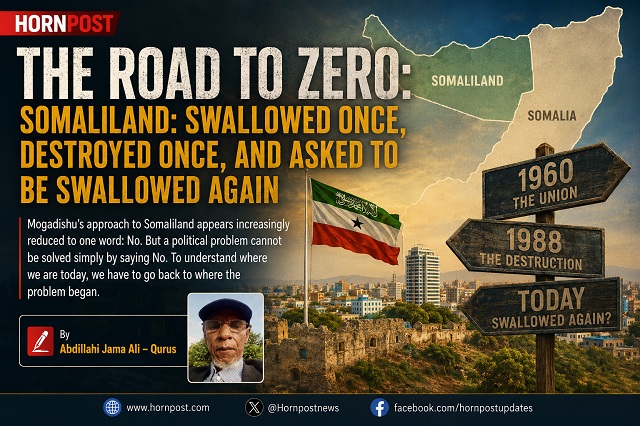
HARGEISA, Somaliland (HornPost) Mogadishu’s approach to Somaliland appears increasingly reduced to one word: No.
No to Somaliland’s sovereignty.
No to reopening the question of the 1960 union.
No to acknowledging the wounds of the past.
And, most importantly, no to putting a credible political alternative on the table.
But a political problem cannot be solved simply by saying “No.” To understand where the dispute stands today, it is necessary to return to where it began.
Swallowed Like a Python
In 1960, Somaliland did not simply disappear into a naturally constituted Somali state.
Somaliland became independent on June 26, 1960. Five days later, on July 1, it entered into union with the former Trust Territory of Italian Somaliland, which became independent on the same day.
The political aspiration was understandable: Somalis divided by colonial boundaries wanted to unite. But political aspiration is not necessarily the same as constitutional procedure.
The two territories came together through separate legal and political processes, and the mechanism for creating the new republic was never as straightforward as the later official narrative suggested.
The 1960 Constitution referred explicitly to the “Act of Union of the two Somali Territories (Somalia and Somaliland)” and provided for the Constitution to enter into provisional force on July 1, 1960, before being submitted to a popular referendum within one year. It also provided a judicial mechanism for confirming the regularity of that referendum.
This distinction matters.
The union and the constitutional settlement were not necessarily the same legal event.
The constitutional referendum was held later, on June 20, 1961. It approved the Constitution on a nationwide basis, but the result in the former State of Somaliland was markedly different, with opposition dominating the northern vote.
That history should not be reduced to the simple claim that “Somaliland voted for union.”
It did not.
The 1961 referendum was a referendum on the Constitution of the new republic—not a separate, straightforward referendum asking Somaliland whether it wished to enter the union in the first place.
That is why the constitutional history of 1960–61 remains central to the Somaliland question.
The union was politically celebrated, but its legal architecture was never beyond dispute.
Somaliland was swallowed into the new republic like a python swallowing its prey. And once swallowed, the political system proceeded as though the question had disappeared forever.
It had not.
The Constitutional Order Did Not Last
There is another part of the story that is often forgotten.
The constitutional system established after independence did not survive even a decade.
Somalia operated under a parliamentary democratic constitution after independence, holding competitive elections in 1964 and again in 1969. But on October 21, 1969, following the assassination of President Abdirashid Ali Sharmarke, the military seized power. The Revolutionary Council dissolved the National Assembly and suspended the Constitution.
In February 1970, the 1960 Constitution was formally repealed.
The parliamentary republic was gone.
The political parties were gone.
The constitutional institutions were gone.
Somalia entered a new era of military rule under Mohamed Siad Barre.
This is important to the Somaliland argument.
The very constitutional order that Mogadishu invokes today as though it created an immutable political settlement was itself suspended, dismantled and eventually repealed by the government that ruled Somalia.
A new constitutional order was not established until 1979.
So the question must be asked:
What exactly is being defended today when Mogadishu speaks of preserving the “territorial integrity” of the 1960 state?
Is it a political arrangement whose constitutional foundations remain contested?
A constitution that was suspended by military force?
Or simply a territorial claim inherited from a political order that subsequently destroyed its own constitutional framework?
These are not minor historical questions. They go to the heart of the dispute.
From Union to Authoritarianism
The military regime did not merely suspend democratic institutions.
It concentrated political power in the hands of the Revolutionary Council and ruled by decree. The constitutional safeguards of the earlier republic disappeared.
Eventually, the very regime that proclaimed Somali unity became responsible for one of the darkest chapters in the history of the Somali people.
Then Came 1988
If 1960 was the swallowing, 1988 was the destruction.
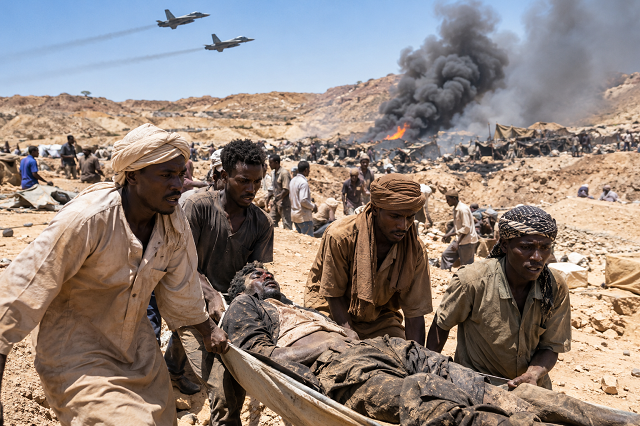
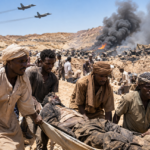
The government of Somalia launched devastating military operations against northern cities, including Hargeisa and Burao.
Major towns were bombed and destroyed. Civilians were killed. Hundreds of thousands were displaced.
For Somaliland, 1988 is not simply a footnote in a broader national history. It is a defining wound.
Yet there has never been a comprehensive national process of acknowledgement, reconciliation and accountability capable of addressing the legacy of those events.
Instead, there is too often an attempt to close the book.
But history does not disappear because governments refuse to read it.
The African Union’s Own Question
This is why the African Union’s engagement with Somaliland matters.
An AU fact-finding mission visited Somaliland in 2005 and examined its historical and political circumstances. Its report recognized that Somaliland’s situation was distinctive within the African context and treated the history of the union and its subsequent breakdown as central to understanding the issue.
That does not automatically settle the question of recognition.
But it does undermine the idea that Somaliland’s case can simply be dismissed as an ordinary secessionist dispute.
The history is more complicated.
The African continent itself has repeatedly emphasized the importance of historical context, colonial borders and political realities.
Somaliland presents an unusual case because it argues that it is not simply trying to redraw an existing colonial boundary. It argues that it is reclaiming a political identity that existed before the union and that the union itself ultimately failed.
That argument deserves to be confronted—not buried.
Swallow It Again?
And this brings us to the present.
Mogadishu invokes “sovereignty and territorial integrity” as though those words alone settle the matter.
But what exactly is being offered to Somaliland?
Where is the political vision?
Where is the proposal capable of persuading Somaliland that a renewed relationship would serve its interests?
Where is the acknowledgement of 1988?
Where is the reconciliation?
Where is the confidence-building?
Where is the new political imagination?
There is no meal on the table. The plates are empty.
Yet Somaliland is being asked to sit down.
What, exactly, is it being asked to eat?
Emotion Is Not a National Strategy
The attitude of Somalia’s leadership in Mogadishu appears too often to be shaped by emotion, political symbolism and publicity rather than by a sober assessment of Somalia’s long-term national interests.
Declaring “Somalia is one” may be emotionally satisfying. Repeating “sovereignty and territorial integrity” may generate applause.
But slogans do not resolve political conflicts.
A serious national strategy must ask a different question:
What political arrangement gives the Somali people the greatest chance of peace, stability, prosperity and cooperation?
That question requires courage.
It requires imagination.
And, above all, it requires facing history rather than attempting to erase it.
The Lid Cannot Remain Tight Forever
Mogadishu appears determined to keep the lid tightly shut on the Somaliland question.
But a lid does not remove pressure. It only contains it.
The longer the question is denied, the greater the pressure underneath becomes.
And the danger is that a policy intended to preserve territorial integrity may ultimately produce the opposite: deeper alienation, permanent confrontation and the loss of any realistic prospect of reconciliation.
There Is Another Road
There is, however, another possibility.
A Two-State Solution
Two sovereign Somali states.
Two neighbours.
One shared history.
Somalia and Somaliland do not have to become permanent enemies because they become two states.
They can trade.
They can cooperate.
They can share security interests.
Their people can move, work and maintain family and cultural ties.
Outstanding questions can be negotiated rather than imposed.
The choice therefore need not be between forced unity and hostility.
It can instead be between an imposed political arrangement that perpetuates conflict and two sovereign neighbours that choose cooperation.
The Last Warning
But the window for such a solution will not remain open forever.
Every generation that passes without reconciliation deepens the distance. Every denial of history hardens resentment. Every attempt to impose a political solution without consent makes compromise more difficult.
And there is a point beyond which political hostility becomes something much harder to reverse.
That point must not be reached.
The Somali Peninsula should not be allowed to become an ever-active political volcano—quiet for a time, then erupting again whenever the unresolved question of Somaliland is pushed beneath the surface.
We should not wait for the eruption.
Mogadishu can continue to say No.
It can continue to invoke sovereignty and territorial integrity.
It can continue to keep the lid tightly shut.
But no lid can contain pressure forever.
Before hostility becomes irreversible, before another generation inherits the failures of the last one, and before the Somali Peninsula becomes a permanent theatre of confrontation, political leaders must have the courage to consider a different future.
Two states. Two neighbours. One shared Somali history.
That may be the last realistic opportunity to turn away from The Road to Zero.
Because if we refuse to find a peaceful road forward, we may eventually discover that there is no road back.
By Abdillahi Jama Ali – Qurus
abdillahijamac9@gmail.com
Hargeisa, Somaliland