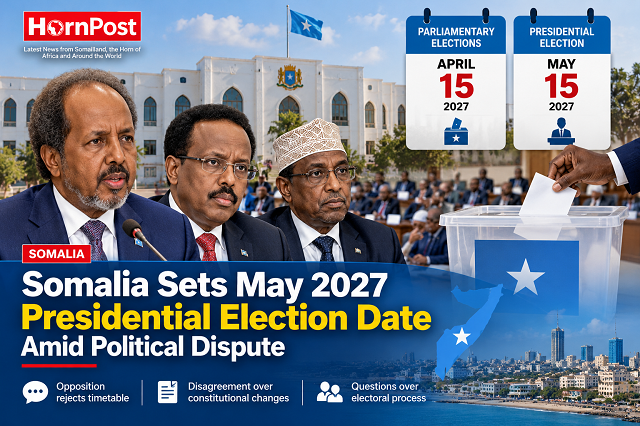
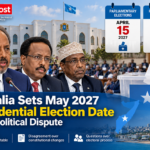
MOGADISHU, Somalia (HornPost) Somalia’s electoral commission has scheduled the country’s next presidential election for May 15, 2027, but the announcement has deepened a political dispute over constitutional changes, the electoral system and the need for agreement between the federal government and opposition leaders.
The National Independent Electoral and Boundaries Commission announced on October 15 that elections for both houses of the federal parliament would take place on April 15, 2027, followed by the presidential vote one month later.
The commission said the timetable was based on the country’s revised constitutional framework and electoral law. The announcement marks a formal step toward the next federal electoral cycle, although significant disagreements remain over how the elections should be conducted.
Opposition Rejects Election Timetable
Opposition leaders have rejected the schedule, arguing that the electoral process lacks the broad political agreement needed to ensure an inclusive and credible vote.
Former President Mohamed Abdullahi Farmaajo and former President Sheikh Sharif Sheikh Ahmed have criticized the timetable, warning that proceeding without an agreement involving opposition groups and federal member states could deepen political divisions.
Sheikh Sharif, who leads the Somali Future Council opposition coalition, said he had challenged the constitutional amendments in the Supreme Court. He warned that competing political positions over the election process could lead to rival elections and further instability.
The opposition argues that constitutional changes adopted earlier this year cannot legitimately extend the mandates of institutions elected under the previous framework. The federal government disputes that position and maintains that the revised constitutional provisions provide the legal basis for the current electoral timetable.
Government Pushes for Direct Elections
President Hassan Sheikh Mohamud’s administration has been pursuing a transition from Somalia’s longstanding indirect electoral system toward direct voting under a multiparty framework.
Under the indirect system, clan elders and delegates play a central role in selecting lawmakers, who then elect the president. The government says direct elections would give citizens a more direct role in choosing their representatives.
However, the proposed transition has faced opposition from political leaders and federal member state administrations, including Puntland and Jubbaland, amid disagreements over constitutional amendments, electoral arrangements and the distribution of political authority.
The opposition has called for negotiations to establish an electoral framework accepted by the major political stakeholders.
Security and Political Challenges Remain
The electoral dispute is unfolding as Somalia continues to face security challenges posed by al-Shabab, the al-Qaida-linked militant group that conducts attacks against government forces and civilians.
The political disagreement also raises questions about how electoral preparations will proceed across the country and whether the federal government and its opponents can reach a common understanding before the scheduled polls.
For the election timetable to gain wider political acceptance, the competing sides will need to address their disagreements over the constitutional framework, the voting system and the role of federal member states.
The commission’s announcement establishes proposed dates for the next federal elections, but it does not resolve the underlying political dispute.
Prepared by:
HornPost staff
info@hornpost.com
www.hornpost.com
MOGADISHU, Somalia