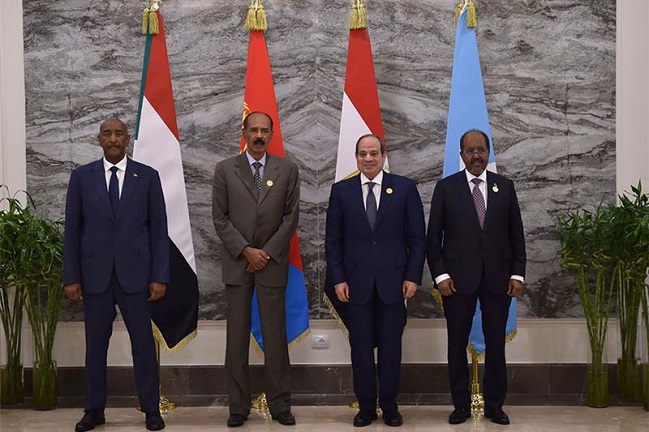
EL ALAMEIN, Egypt — (HornPost) The leaders of Egypt, Eritrea, Somalia and Sudan held a quadrilateral consultative summit in New Alamein on Sunday, focusing on security and stability in the Horn of Africa and the Red Sea region.
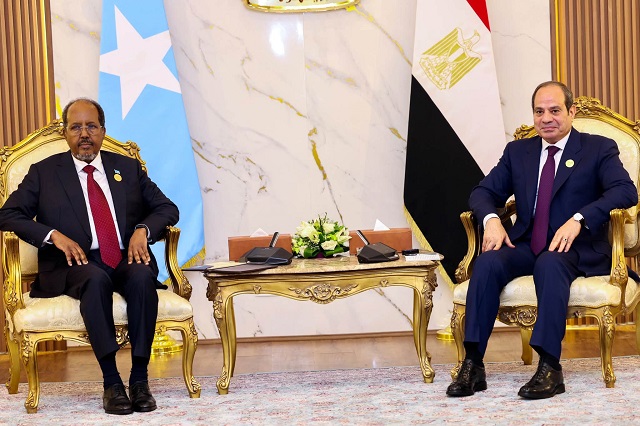
The summit was hosted by Egyptian President Abdel Fattah El-Sisi and attended by Eritrean President Isaias Afwerki, Somali President Hassan Sheikh Mohamud and Sudan’s Sovereign Council Chairman Gen. Abdel Fattah al-Burhan.
Red Sea: Littoral States Assert Responsibility
One of the key issues addressed at the summit was the security of the Red Sea and freedom of navigation.
The four countries reaffirmed the importance of freedom of navigation and emphasized that the governance and security of the Red Sea are primarily the responsibility of the countries bordering it.
The leaders also stressed the need to protect international shipping and maritime security in the Red Sea, the Gulf of Aden and the Bab el-Mandeb Strait.
The position comes as the Red Sea remains strategically important for global trade and faces continuing security challenges.
Somaliland Directly Mentioned
One of the most politically sensitive elements of the summit was the participants’ position on Somaliland.
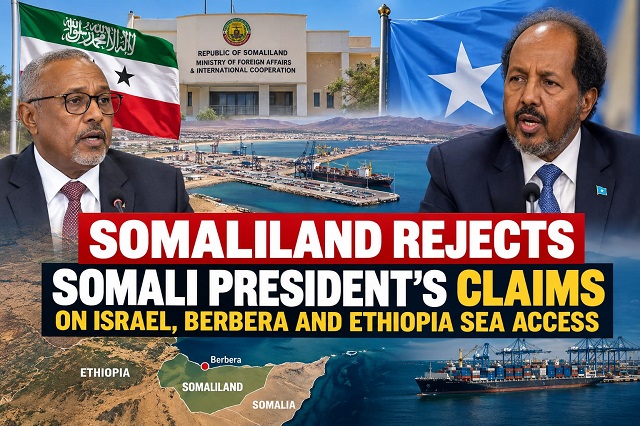
The four countries reaffirmed their support for Somalia’s sovereignty, territorial integrity and unity and rejected what they described as actions that undermine Somalia’s territorial integrity, including the recognition or support of Somaliland.
The position represents a significant diplomatic message at a time when Somaliland’s strategic importance grew because of its location along the Gulf of Aden and its Berbera port, which has emerged as an important commercial and strategic hub.
However, the summit’s final statement did not announce a new joint military force or a specific naval operation. The confirmed position was political and diplomatic, focusing on maritime security, freedom of navigation and the role of Red Sea littoral states.
Ethiopia’s Role in the Regional Equation
Although Ethiopia was not part of the summit, its regional role was indirectly reflected in several of the issues discussed.
Egypt and Eritrea have increasingly emphasized that Red Sea security should remain primarily a responsibility of the countries with Red Sea coastlines, while Ethiopia has sought greater access to the sea.
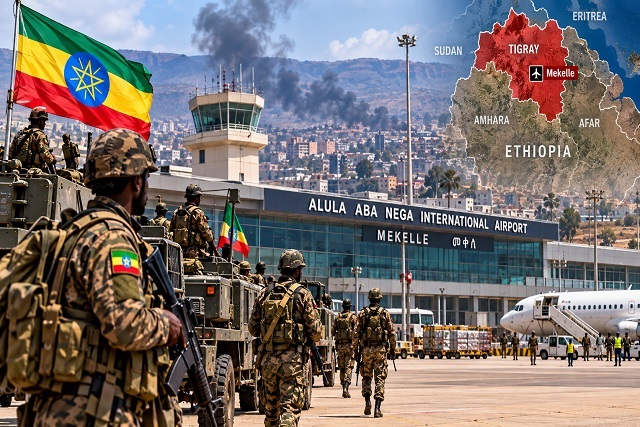
The issue comes amid heightened tensions between Ethiopia and Eritrea and renewed fighting in Ethiopia’s Tigray region, raising concerns about the possibility of a wider regional crisis.
Nile Dispute Also on the Agenda
The summit also addressed transboundary rivers, particularly the Nile.
The four countries called for respect for international law and principles governing shared water resources, including avoiding significant harm to other states and ensuring consultation and prior notification.
The issue is particularly important to Egypt and Sudan amid their longstanding dispute with Ethiopia over the Grand Ethiopian Renaissance Dam (GERD).
A New Regional Coordination Framework
The leaders agreed to strengthen political, economic and security coordination and establish mechanisms to follow up on the decisions reached at the summit.
They also agreed that similar consultations should be held regularly or whenever regional developments require them.
As stated in the communiqué from this meeting, which was released by the Egyptian Presidency
Analysis: What Does the Summit Mean for the Horn of Africa?
The summit was largely shaped by two strategic issues: Somaliland’s recognition and Ethiopia’s push for access to the Red Sea.
First, Egypt, Somalia, Eritrea and Sudan jointly rejected any recognition or support for Somaliland, reaffirming Somalia’s territorial integrity.
Second, the four countries stressed that governance and security of the Red Sea should remain the responsibility of its littoral states, while affirming freedom of navigation. Although Ethiopia was not explicitly named in that Red Sea clause, the position comes amid Addis Ababa’s efforts to secure permanent access to the Red Sea and its wider disputes with Egypt and Eritrea.
In short, the summit sent two clear political messages: opposition to international recognition of Somaliland and resistance to Ethiopia gaining a strategic foothold on the Red Sea.
Somaliland
At the same time, the summit’s emphasis on Red Sea littoral states has wider strategic implications. Somaliland’s extensive Gulf of Aden coastline and Berbera port place it directly within the broader debate over maritime security, shipping routes and regional influence.
The key question going forward is whether the four-country framework will remain primarily a diplomatic consultation mechanism or develop into deeper security and maritime cooperation.
Prepared by:
HornPost staff
info@hornpost.com
www.hornpost.com