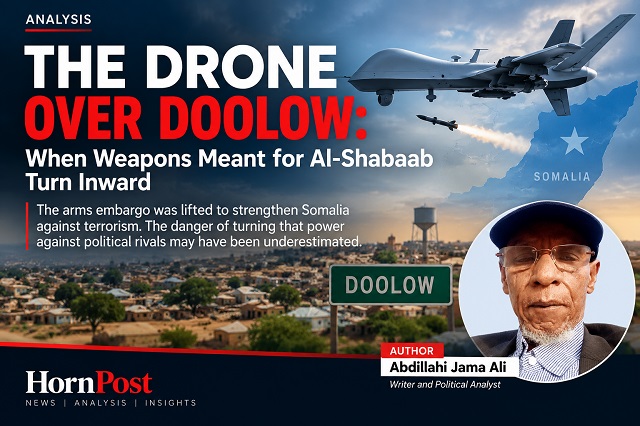
HARGEISA, Somaliland (HornPost) The arms embargo was lifted to strengthen Somalia against terrorism. The danger of turning that power against political rivals may have been underestimated.
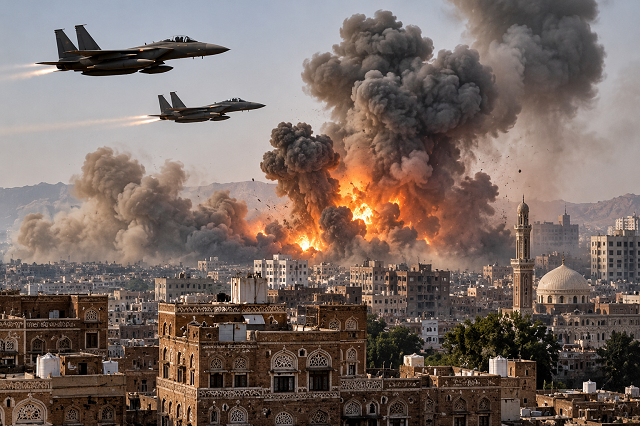
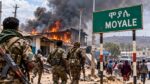
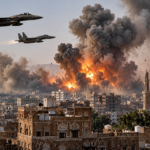
The most disturbing aspect of the reported drone strike in Doolow may not be the missile itself.
It may be the fear it has planted across Somalia’s political landscape.
A Somali general was reportedly targeted by a drone in Doolow. He survived but was injured. His close association with the political camp of former South West President Abdiaziz Laftagareen gives the incident an unmistakable political dimension.
No one has publicly claimed responsibility.
But the deeper story is not simply who launched the drone. It is what the drone has demonstrated—and what it may have made Somalia’s political class believe is now possible.
The Calculation That May Have Gone Wrong
The roots of this problem may go back to the international decision to lift the arms embargo on Somalia.
The objective was understandable. Somalia needed weapons, military equipment and training to confront Al-Shabaab, rebuild its national security forces and gradually assume greater responsibility for its own security.
But another possibility may have been underestimated.
Weapons supplied to a fragile state do not automatically remain weapons against terrorists.
They can become instruments of domestic political competition.
Somalia is not a normal post-conflict state. Federal authority remains contested. Regional governments continue to defend their autonomy, while political alliances frequently overlap with clan interests. Trust between Mogadishu and the federal member states remains fragile.
In such an environment, strengthening the coercive capacity of the central government without equally strengthening the institutions that restrain that power carries a serious risk.
The international community was thinking about Al-Shabaab.
It may not have thought sufficiently about what could happen if those same capabilities were eventually turned inward—against political opponents, regional administrations and rival power networks.
Doolow brings that possibility into sharp focus.
The Drone Changes the Psychology of Politics
A drone does not have to kill its target to achieve a political effect.
It only has to demonstrate that the target can be reached.
That is what makes Doolow so psychologically powerful.
A politician, regional leader or military commander can now ask a frightening question:
If they can reach him there, where am I safe?
The battlefield is no longer necessarily a battlefield.
The home can become a battlefield. The distance between political disagreement and physical danger becomes smaller. And once that perception takes hold, fear becomes a weapon of its own.
You do not necessarily have to eliminate your opponent.
You only have to convince him that you can reach him.
From Security Assistance to Political Coercion
This is the uncomfortable question the international community should now confront.
Military assistance was provided to help the Somali state defeat an armed extremist organisation. But a state is not defined only by its enemies. It is also defined by how it treats those who disagree with it.
If military capabilities intended for counterterrorism become instruments of political coercion, the original security calculation has failed.
The problem is therefore not simply the drone.
It is the combination of advanced military technology, weak political trust and insufficient accountability.
A powerful weapon in the hands of a restrained state can protect citizens.
The same weapon in a highly polarised political system can intimidate them.
Fear Creates New Alliances
This is where the consequences become even more dangerous.
A politician who feels exposed begins looking for protection.
A regional leader begins asking who can provide intelligence, surveillance, technology or deterrence.
A military commander begins wondering whether the state he serves can protect him—or whether he himself could eventually become a target.
When domestic institutions no longer provide sufficient security, political actors begin looking outward.
They search for an external counterweight.
The Israel Question
This gives a different perspective to the controversy surrounding Somaliland’s relationship with Israel.
Eleven months ago, many Somalis strongly criticised Somaliland’s position toward Israel. Some regarded it as unnecessary, dangerous or strategically misguided.
But strategic calculations change when perceptions of threat change.
For a politically vulnerable actor, the question is not always:
Who do I like?
It can become:
Who can protect me?
That is the logic of deterrence.
Israel’s subsequent recognition of Somaliland has made that relationship considerably more consequential than it appeared at the time.
The lesson may not remain confined to Somaliland.
Other Somali political actors who feel threatened may begin asking the same question:
Who can provide the counterweight?
That could mean Israel. It could mean Ethiopia, the UAE, Turkey or another regional or international power.
And that is precisely the danger.
The Walwal Lesson
History offers an important warning.
In December 1934, an armed confrontation took place at Walwal, an oasis in the disputed territory between Ethiopia and Italian Somaliland.
At first glance, it was a local frontier incident. But it occurred in an already tense strategic environment.
Italy used the incident to intensify its confrontation with Ethiopia. Diplomatic efforts failed. In October 1935, Mussolini’s Italy invaded Ethiopia.
Seven months later, Italian forces entered Addis Ababa.
Walwal did not, by itself, cause the war. The larger causes lay in Italian expansionism, Ethiopia’s strategic position and Mussolini’s ambitions.
But Walwal became the trigger around which a much larger confrontation crystallised.
That is the lesson worth remembering today.
A local incident can become a national or regional crisis when it occurs in an already combustible political environment.
Doolow is not Walwal.
There is no reason to assume that Doolow will lead to war. But the similarity lies somewhere else.
Both incidents demonstrate how a single confrontation can acquire a significance far beyond the immediate event when trust has collapsed and political tensions are already high.
From Doolow to the Wider Region
The danger is not necessarily another Somali civil war.
It may be something more gradual.
One political camp acquires foreign weapons and technology. Its opponents seek foreign protection. Another power enters. Then another.
External actors begin competing for influence through Somali political factions.
And Somalia’s internal political dispute becomes part of a much larger strategic competition.
This is how domestic politics becomes internationalised.
Just like Sudan.
It is also how a country can lose control of the forces it has invited inside its political arena.
The Real Cost of Fear
The greatest damage caused by Doolow may therefore not be measured in casualties or destroyed buildings.
It may be measured in the decisions made afterwards.
Who will trust Mogadishu?
Who will seek protection elsewhere?
Who will arm themselves?
Who will invite another foreign power into Somalia?
Who will conclude that political survival requires an external guarantor?
These are the questions that matter.
Because once fear becomes embedded in political calculations, every faction begins preparing for the possibility that the next strike may be directed at them.
The Question Behind the Drone
The question surrounding Doolow should not be reduced to:
Who launched the drone?
The larger question is:
What has the drone made Somalia’s political class believe is now possible?
The international community lifted the arms embargo to help Somalia fight Al-Shabaab. That objective was legitimate.
But a strong state is not simply a state with drones, weapons and soldiers.
A strong state is one in which power is restrained by law, institutions and accountability.
Military capability without political restraint can strengthen the state.
But it can also strengthen whoever controls the state against whoever opposes it.
That distinction is critical.
The danger was always that weapons intended to defeat Somalia’s enemies could eventually be used to intimidate Somalia’s political opponents.
If Doolow is a warning of that possibility, it should not be ignored.
Because once fear enters politics, politicians stop asking only:
Who governs Somalia?
They begin asking:
Who can protect me?
And that is the moment when a domestic political conflict begins to invite foreign powers into the Somali house.
Walwal reminds us that history’s dangerous turning points do not always announce themselves as wars.
Sometimes they begin as incidents.
The drone may have struck Doolow. But what it has set in motion may travel much farther.
Author: Abdillahi Jama Ali – Qurus
abdillahijamac9@gmail.com
Hargeisa, Somaliland