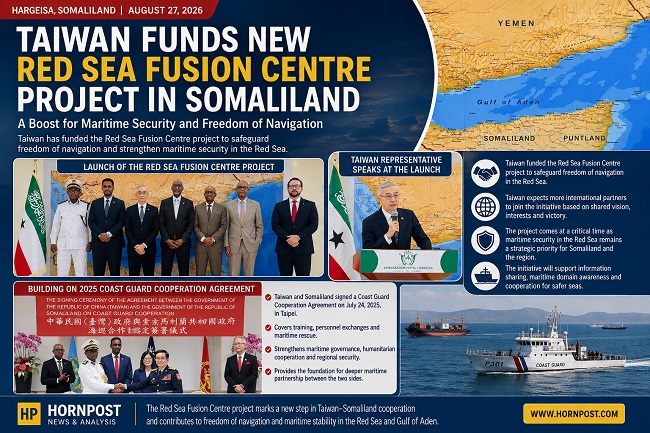
HARGEISA, Somaliland (HornPost) Taiwan has founded a new Red Sea Fusion Centre project in Somaliland aimed at strengthening maritime security and protecting freedom of navigation in the Red Sea, according to the Taiwan Representative Office in Somaliland.
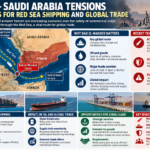
The project comes as maritime security has become an increasingly important regional and international concern amid continuing threats to commercial shipping in the Red Sea and Gulf of Aden.
The Taiwan Representative Office said the project is intended to help safeguard freedom of navigation in the Red Sea and indicated that Taiwan’s support could encourage additional international stakeholders to participate based on shared interests, objectives and benefits.
In a statement published by the Taiwan mission, the project was described as an initiative to strengthen maritime security and freedom of navigation in one of the world’s most strategically important waterways.
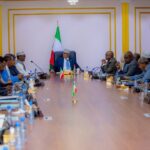
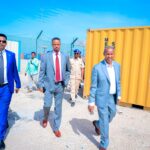
The project was presented in the presence of Somaliland Coast Guard Commander Admiral Ahmed Hurre Hariye, Interior and National Security Minister Abdalle Mohamed Arab, Minister of Presidency Khadar Hussein Abdi, the director-general of Somaliland’s Ministry of Foreign Affairs and the representative of Taiwan in Somaliland, according to the announcement.
The development adds a new dimension to growing maritime cooperation between Somaliland and Taiwan.
Building on the 2025 Coast Guard Agreement
The new project follows an earlier maritime security agreement signed by Somaliland and Taiwan in Taipei on July 24, 2025.
Under the Taiwan-Somaliland Coast Guard Cooperation Agreement, the two sides agreed to strengthen cooperation in areas including personnel exchanges, training and maritime rescue.
Taiwan’s Ocean Affairs Council confirmed that the agreement was signed by Taiwan Coast Guard Administration Director-General Chang Chung-lung and Somaliland Coast Guard Commander Admiral Ahmed Hurre Hariye.
The ceremony was witnessed by Somaliland’s then-Minister of Foreign Affairs and International Cooperation Abdirahman Dahir Adam Bakal and Taiwan’s Ocean Affairs Council Minister Kuan Bi-ling.
Taiwan described the agreement as an important step in strengthening maritime cooperation with Somaliland and promoting cooperation in maritime governance, humanitarian assistance and regional security.
The agreement also established a formal framework for cooperation in areas such as training exchanges, personnel exchanges and maritime search and rescue.
From Coast Guard Cooperation to Maritime Information Sharing
The new Red Sea Fusion Centre project represents a potential expansion of that relationship from bilateral coast guard cooperation toward a broader focus on maritime information and security coordination.
The timing is significant.
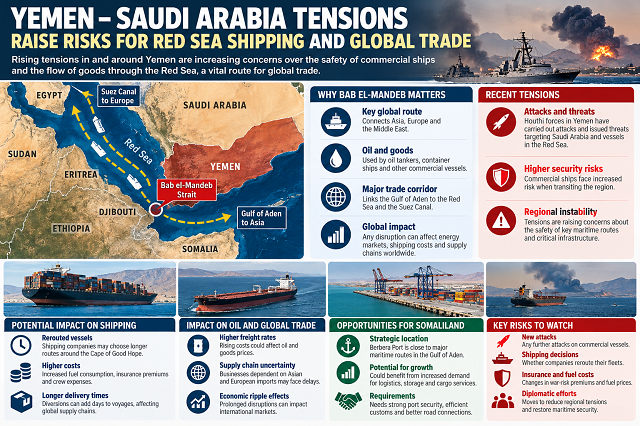
The Red Sea and Gulf of Aden remain critical international shipping corridors connecting the Indian Ocean with the Suez Canal and Mediterranean markets. The European Union has extended its maritime security operation in the Red Sea through February 2027 to help safeguard freedom of navigation and protect commercial vessels from ongoing threats. Middle East, North Africa and the Gulf
The International Maritime Organization and other international institutions have likewise emphasized the importance of maritime information-sharing and coordinated responses to piracy and other maritime threats in the region.
Against that backdrop, Somaliland’s location on the Gulf of Aden gives the project a wider strategic context.
Somaliland has a long coastline facing one of the world’s busiest maritime corridors, while the port of Berbera has become an increasingly important commercial and logistical hub.
Taiwan Sees Somaliland as a Maritime Partner
Taiwan’s maritime cooperation with Somaliland has developed alongside broader efforts to strengthen ties between the two sides.
When the coast guard agreement was signed in 2025, Taiwan’s Ocean Affairs Council said the partnership reflected closer cooperation between two like-minded democratic partners and highlighted maritime governance, humanitarian assistance and regional security. cga.gov.tw
Taiwan President Lai Ching-te also said at the time that the agreement opened a new chapter in maritime cooperation and expressed interest in developing broader cooperation with like-minded countries.
The Somaliland government has likewise emphasized maritime security and the development of its blue economy as important areas of cooperation with Taiwan.
A Strategic Maritime Moment for Somaliland
The latest project comes at a time when maritime security is becoming increasingly important to Somaliland and the wider Horn of Africa.
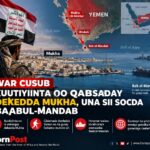
The resurgence of piracy in waters around Somalia, continued threats to commercial shipping in the Red Sea and Gulf of Aden, and the growing strategic competition around the Bab el-Mandeb have increased the importance of maritime surveillance, information sharing and rapid coordination.
A maritime information-fusion capability can potentially help authorities combine information from different sources to build a clearer picture of activity at sea and improve responses to security incidents.
For Somaliland, the project could therefore support broader efforts to strengthen its coast guard, maritime domain awareness and protection of its coastline.
For Taiwan, meanwhile, the initiative provides another avenue for international maritime cooperation at a time when Taipei is seeking deeper partnerships with countries that shared an interest in maritime security and international navigation.
What the New Project Could Mean
The significance of the Red Sea Fusion Centre project extends beyond the immediate bilateral relationship.
If additional international stakeholders join the initiative, as Taiwan has suggested, the project could evolve into a broader platform for maritime information sharing and cooperation in the western Gulf of Aden and Red Sea environment.
That would potentially connect Somaliland more closely with international efforts to protect shipping, combat piracy, strengthen maritime surveillance and maintain freedom of navigation.
The 2025 Coast Guard Cooperation Agreement provides the institutional foundation.
The new project could represent the next step.
Together, the two developments point to a gradual expansion of Taiwan-Somaliland maritime cooperation from coast guard training and rescue operations toward wider maritime security and information-sharing activities.
For Somaliland, the strategic importance is clear: its geography places it directly alongside one of the world’s most important maritime corridors.
For Taiwan, the partnership provides an opportunity to demonstrate its capacity to contribute to international maritime security despite its limited formal diplomatic recognition.
And for the wider Horn of Africa, the development highlights how local coastal security initiatives are increasingly becoming part of a much larger international effort to protect the Red Sea and Gulf of Aden.
Background: 2025 Taiwan-Somaliland Coast Guard Agreement
The July 2025 agreement was officially documented by Taiwan’s Ocean Affairs Council and its Ministry of Foreign Affairs. It was signed in Taipei during a Somaliland delegation’s visit and covered personnel exchanges, training cooperation and maritime rescue.
Taiwan’s Coast Guard Administration said the agreement was intended to strengthen maritime security cooperation and contribute to maritime order, humanitarian assistance and regional peace and security.
The agreement therefore provides important context for understanding the latest Red Sea Fusion Centre project: the new initiative is not an isolated development, but part of a maritime relationship that has been expanding since the 2025 coast guard agreement.
Prepared By:
Abdikarim Saed Salah
HornPost News Desk
Info@hornpost.com
www.hornpost.com