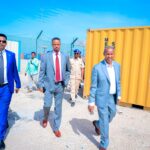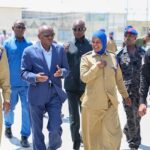
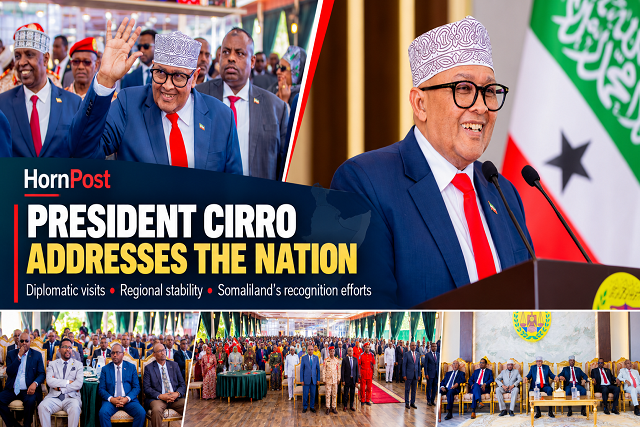

Washington (HornPost) President of the Republic of Somaliland Abdirahman Mohamed Abdullahi “Irro” has arrived in Washington for his first official working visit to the United States since taking office. The visit comes at a dramatically different moment for Somaliland than the diplomatic environment faced by previous Somaliland administrations.
According to the Somaliland presidency, the agenda includes strengthening diplomatic relations, security and economic cooperation, attracting investment and advancing Somaliland’s international recognition campaign.
The delegation includes senior officials responsible for foreign affairs, defense and civil aviation, alongside economic and foreign-policy advisers.
But the significance of this visit goes beyond another diplomatic engagement in Washington.
Somaliland is entering this conversation with a different strategic profile, a new international diplomatic breakthrough and a much stronger argument about why its geography matters to U.S. interests.
The central question is therefore no longer simply whether Somaliland can persuade Washington to listen.
It is whether Washington is prepared to translate Somaliland’s growing strategic relevance into a substantially deeper relationship.
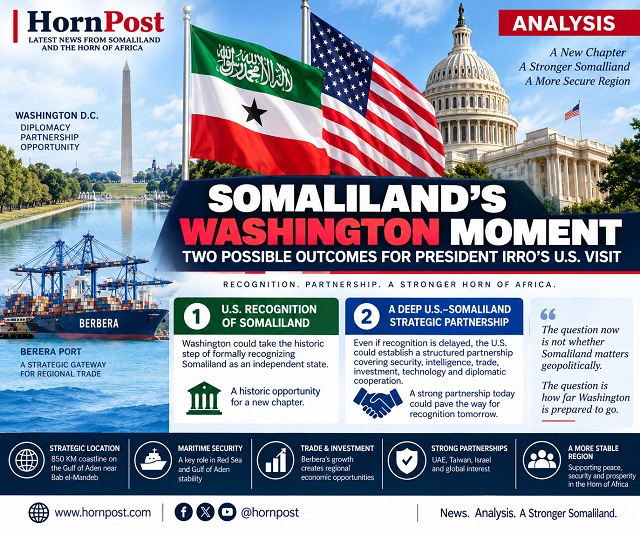
There are two possible outcomes.
The first is the outcome Somaliland ultimately wants most: formal U.S. recognition.
The second is the creation of a deep, structured strategic partnership between Washington and Hargeisa that could eventually create the political and security conditions for recognition.
Both would represent a major shift.
Why Somaliland Is Attracting Greater International Attention
Somaliland’s strategic importance begins with geography.
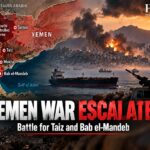
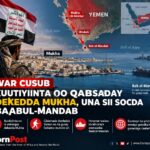
The territory has an approximately 850-kilometer coastline along the Gulf of Aden, placing it close to one of the world’s most important maritime regions and near the Bab el-Mandeb gateway connecting the Gulf of Aden to the Red Sea.
This distinction is important: Somaliland’s coastline is primarily along the Gulf of Aden, rather than the Red Sea itself. Its strategic value comes partly from its proximity to the Bab el-Mandeb and the wider Red Sea maritime system.
That geography has become more valuable as security risks around the Red Sea and Gulf of Aden have increased.
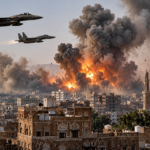
The attacks by Iran-aligned Houthi forces in Yemen have disrupted commercial shipping and made maritime security one of the central strategic concerns of the region.
At the same time, the wider Middle East has experienced increasing instability, while competition among the United States, China, Türkiye, Gulf states and other powers has expanded into the Horn of Africa.
For Somaliland, geography has therefore become an increasingly powerful diplomatic asset.
Berbera Is No Longer Simply a Port
The transformation of Berbera Port has added another dimension to Somaliland’s strategic importance.
DP World has invested heavily in the port and developed it as a regional trade and logistics hub. The company describes Berbera as a strategic gateway to East Africa, with modern container facilities, deep-water capacity and connections to regional markets.
The development of the Berbera Economic Zone has further expanded the concept from a traditional port into a broader logistics and commercial platform.
The implications are significant.
Berbera can potentially serve not only Somaliland but also landlocked Ethiopia, whose enormous population and expanding economy require reliable access to international markets.
This makes Somaliland more than a coastal territory.
It makes it a potential economic bridge between Ethiopia and global maritime trade.
For Washington, that matters because ports, logistics corridors and maritime security are increasingly interconnected.
The UAE Factor
The United Arab Emirates has played a major role in the transformation of Berbera.
DP World’s investment has helped make the port one of the most important emerging logistics assets in the Horn of Africa, while the UAE has maintained broader economic and security ties with Somaliland.
The strategic value of Berbera has also attracted international attention because of its proximity to the Bab el-Mandeb and the wider Red Sea security environment.
Reports in 2026 have pointed to expanded military infrastructure and growing interest in Berbera as a potential security platform for regional and international partners. Such reports should be treated carefully where specific military arrangements have not been publicly confirmed by all parties.
Nevertheless, the broader strategic reality is difficult to ignore:
Berbera is increasingly viewed through both an economic and security lens.
That changes Somaliland’s value to the United States.
Taiwan Changed Somaliland’s Diplomatic Profile
Somaliland’s relationship with Taiwan also matters in understanding why its Washington strategy is different today.
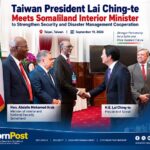
Somaliland and Taiwan established representative offices in 2020 and have developed cooperation in areas including health, education, technology and governance.
In June 2026, Somaliland reaffirmed its relationship with Taiwan during the opening of a new representative office, despite opposition from China and Somalia. Reuters described the relationship as part of Somaliland’s broader effort to establish international partnerships despite its historically limited recognition.
From Washington’s perspective, this relationship has another dimension.
Taiwan is a major geopolitical issue in U.S.-China competition.
Somaliland’s willingness to maintain ties with Taiwan places Hargeisa within a broader network of geopolitical relationships involving China, the United States and strategically located states.
This does not automatically translate into U.S. recognition.
But it gives Somaliland another argument:
Hargeisa is not simply asking Washington for diplomatic recognition; it is presenting itself as a potential strategic partner in a region where U.S. and Chinese interests increasingly intersect.
The Israel Breakthrough Changed the Equation
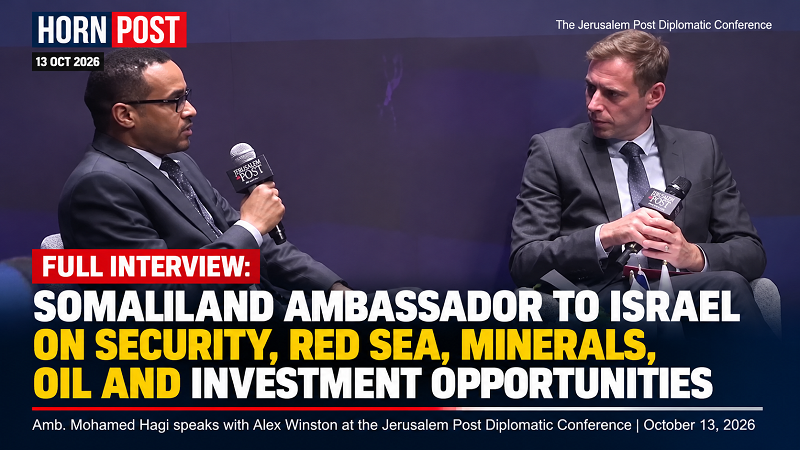
The biggest development distinguishing President Irro’s Washington visit from earlier Somaliland diplomatic missions is Israel’s recognition of Somaliland.
On Dec. 26, 2025, Israel became the first country to formally recognize Somaliland as an independent and sovereign state. The decision was accompanied by a mutual-recognition declaration and an announcement of plans for cooperation in areas including agriculture, health, technology and economic development.
The recognition generated strong opposition from Somalia and several regional governments, as well as the African Union.
But from Somaliland’s perspective, the diplomatic significance is enormous.
For decades, Somaliland’s central diplomatic challenge was that no U.N. member state had formally recognized its independence.
That barrier has now been broken.
The question has therefore changed from:
“Can Somaliland ever get recognition?”
to:
“Will other strategically important countries follow Israel?”
The United States is arguably the most important country in that calculation.
Why Irro’s Visit Is Different From Previous Presidential Trips
Previous Somaliland presidents travelled abroad seeking recognition, investment and diplomatic support.
President Irro is travelling to Washington at a different moment.
He arrives after Israel’s recognition.
He arrives amid heightened Red Sea security concerns.
He arrives while Berbera’s strategic and commercial infrastructure has expanded.
He arrives as U.S.-China competition increasingly influences international politics.
He arrives while Ethiopia is searching for reliable maritime access.
And he arrives at a time when Washington is reassessing strategic access and partnerships across the Red Sea and Horn of Africa.
This gives his delegation a different argument.
The argument is no longer simply:
“Recognize us because we deserve recognition.”
It is increasingly:
“Recognize us — or deepen your strategic partnership with us — because Somaliland can contribute to U.S. interests in one of the world’s most strategically important regions.”
That is a fundamentally different diplomatic proposition.
The Turkey Factor
Another major development that cannot be ignored is the growing role of Türkiye in Somalia.
Ankara has significantly expanded its diplomatic, military and economic relationship with Mogadishu.
Türkiye’s role in Somalia means Washington is no longer operating in a regional environment dominated by the traditional U.S.-Somalia security relationship.
Türkiye has become an increasingly important security and political actor in Somalia and the wider Horn of Africa.
For Somaliland, this creates both a challenge and an opportunity.
The challenge is that Ankara strongly supports Somalia’s territorial integrity and maintains close relations with Mogadishu.
The opportunity is that the growing number of external powers competing for influence in the Horn of Africa makes Somaliland’s strategic location more valuable.
The United States therefore has to consider not only Somalia’s traditional role but also the wider geopolitical competition surrounding the region.
Outcome One: U.S. Recognition
The first possible outcome is the most ambitious:
The United States formally recognizes Somaliland.
This would be a historic development.
It would transform Somaliland’s international position and potentially trigger a much wider diplomatic process.
U.S. recognition would also have implications for:
- Red Sea security
- Gulf of Aden maritime security
- U.S. access to strategic infrastructure
- Ethiopia’s maritime ambitions
- Regional trade
- Counterterrorism cooperation
- U.S.-China competition
- Relations between Washington and Mogadishu
But recognition would also carry significant diplomatic costs.
Somalia would strongly oppose it.
The African Union would face a major political dilemma.
Egypt, Türkiye, Djibouti and other regional actors could view the move through the lens of Somalia’s territorial integrity and regional stability.
For Washington, therefore, recognition would not be a simple bilateral decision.
It would be a regional geopolitical decision.
Outcome Two: A Taiwan-Style Strategic Partnership
The second possible outcome may be more realistic in the immediate term.
Instead of formal recognition, Washington could establish a much deeper and more structured relationship with Hargeisa.
This could include:
Security cooperation.
Intelligence sharing.
Maritime security.
Counterterrorism cooperation.
Trade and investment.
Technology partnerships.
Political engagement.
Expanded diplomatic representation.
Military and logistical cooperation.
Such a relationship could resemble, in certain practical respects, the strategic depth of U.S. relations with Taiwan without necessarily constituting formal diplomatic recognition.
This would not satisfy Somaliland’s ultimate objective.
But it could create the strategic foundation for recognition later.
In fact, such an arrangement could be more politically manageable for Washington in the short term while still giving Somaliland a major diplomatic victory.
Recognition or Strategic Partnership?
This is the central strategic question confronting President Irro.
Which comes first?
Recognition followed by strategic partnership?
Or strategic partnership followed by recognition?
Hargeisa should ideally pursue both.
But diplomacy often works through stages.
A structured U.S.-Somaliland partnership could increase Washington’s practical stake in Somaliland’s security and economic success.
The deeper those interests become, the more difficult it could become for Washington to treat Somaliland simply as a diplomatic question involving Somalia’s territorial claims.
This is why a strategic partnership could eventually become a pathway to recognition rather than an alternative to recognition.
What Somaliland Is Offering Washington
President Irro’s delegation is not going to Washington empty-handed.
Somaliland can offer several strategic assets.
1. Maritime Geography
Its position near the Gulf of Aden and Bab el-Mandeb places it close to one of the world’s most important shipping corridors.
2. Berbera Port
A modernizing port provides a potential platform for trade, logistics and regional connectivity.
3. Regional Security
Somaliland presents itself as a relatively stable actor in a volatile neighborhood.
4. Ethiopia
Berbera offers an alternative commercial corridor to Ethiopia, one of Africa’s largest economies and most populous countries.
5. Red Sea Security
Somaliland’s location gives it potential relevance to monitoring and protecting maritime routes.
6. Strategic Partnerships
Its relationships with Israel, Taiwan and the UAE demonstrate its willingness to build partnerships beyond traditional regional alignments.
These factors do not automatically guarantee U.S. recognition.
But collectively they strengthen Somaliland’s strategic case.
What Washington Must Decide
The United States also has a decision to make.
Is Somaliland simply another unresolved political dispute in the Horn of Africa?
Or is it becoming a strategically valuable partner whose location, stability and infrastructure could contribute to American interests?
That decision will depend on how Washington evaluates several competing priorities.
The United States must consider its relationship with Somalia.
It must consider counterterrorism.
It must consider the Red Sea and Bab el-Mandeb.
It must consider China.
It must consider Türkiye’s expanding role.
It must consider Ethiopia.
And it must consider whether a closer relationship with Somaliland would enhance or undermine regional stability.
This is why President Irro’s visit matters.
The Two Outcomes Are Not Mutually Exclusive
There is a tendency to present the choice as either recognition or partnership.
That may be too simplistic.
The two outcomes can form part of the same strategic process.
Strategic partnership can create the conditions for recognition.
Recognition can then formalize and deepen that partnership.
The immediate objective for Hargeisa should therefore be to leave Washington with something concrete.
That could be recognition.
But if recognition is not immediately achievable, Somaliland should seek a written, structured and institutionalized strategic framework with the United States.
The difference between a successful visit and a symbolic visit will ultimately be measured by what happens after the delegation leaves Washington.
The Real Test Begins After Washington
The most important question may not be what President Irro says in Washington.
It is what Washington does after he leaves.
Will American officials increase diplomatic engagement?
Will Congress become more involved?
Will security cooperation expand?
Will American investment increase?
Will Berbera become more important to U.S. maritime strategy?
Will Washington establish a clearer formal mechanism for engagement with Hargeisa?
And ultimately:
Will the United States move closer to recognizing Somaliland?
Those are the indicators that will reveal whether this visit represents a genuine turning point.
A New Diplomatic Moment for Somaliland
President Irro’s Washington visit comes at a moment when several strategic developments are converging around Somaliland.
Israel has broken the recognition barrier.
Berbera has developed into a major regional logistics asset.
The Red Sea and Bab el-Mandeb have become central to global maritime security.
Ethiopia continues to seek reliable access to the sea.
Türkiye has expanded its role in Somalia.
China’s relationship with Taiwan remains a major element of global geopolitical competition.
And the United States is reassessing its strategic interests across the wider Red Sea and Horn of Africa region.
This convergence gives Somaliland an opportunity that previous administrations did not possess in the same form.
But opportunity is not the same as outcome.
Diplomacy requires strategy, patience and concrete agreements.
The Choice Before Washington
Ultimately, President Irro’s visit presents Washington with two broad choices.
The first is historic: recognize Somaliland as a sovereign state and establish a new strategic relationship with Hargeisa.
The second is incremental but potentially transformative: establish a deep, structured partnership covering security, intelligence, maritime affairs, trade, investment, technology and diplomatic engagement — creating the foundation for possible recognition in the future.
For Somaliland, the second should not be viewed as a substitute for the first.
It could be the road toward it.
The fundamental question is therefore no longer simply whether Somaliland wants recognition.
The question is whether the United States is prepared to recognize Somaliland’s growing strategic value — and translate that recognition of strategic reality into a new relationship.
For President Irro, Washington is more than another diplomatic stop.
It is a test of whether Somaliland’s new geopolitical moment can be converted into concrete American engagement.
And for Washington, the question is equally consequential:
Is Somaliland merely a disputed political question — or a strategic partner waiting to be recognized?
Analysis by
Abdikarim Saed Salah
www.hornpost.com
HARGEISA, Somaliland

Abdikarim Saed Salah
Abdikarim Saed Salah is Editor-in-Chief and Founder of HornPost.com, an independent Hargeisa-based news platform covering Somaliland, the Horn of Africa, East Africa, the Red Sea and international affairs. A journalist, television presenter, producer and geopolitical analyst, he has more than 15 years of experience in broadcast journalism, digital media, reporting and diplomacy. He works with Horn Cable TV and focuses on politics, elections, security, foreign policy and conflict. He holds a BA in Journalism and an MA in International Relations.