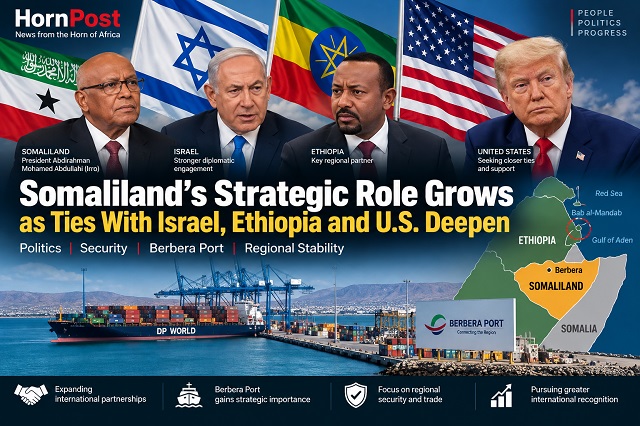
HARGEISA, Somaliland (HornPost) — Somaliland is stepping up diplomatic and security engagement with Israel, Ethiopia and the United States as the strategically located territory seeks international recognition and attempts to strengthen its position in the increasingly competitive Red Sea and Horn of Africa region.
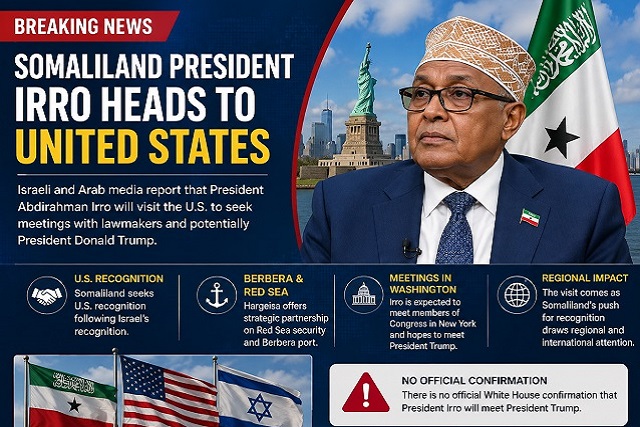
President Abdirahman Mohamed Abdullahi, known as Irro, has made international diplomacy a central focus of his administration. His latest effort took him to Washington, where he is seeking closer U.S. relations and support for Somaliland’s recognition, months after Israel became the first country to formally recognize Somaliland’s independence.
The U.S. has not followed Israel in recognizing Somaliland. Washington continues to recognize Somalia’s sovereignty and territorial integrity, but U.S. officials have maintained working relations with authorities in Hargeisa, particularly on maritime security, counterterrorism, trade and investment.
The latest diplomatic push comes as Somaliland argues that its location on the Gulf of Aden makes it an important potential partner for countries seeking greater security around the Red Sea and Bab al-Mandab Strait.
Israel relationship reshapes regional politics
Israel’s recognition of Somaliland in December 2025 dramatically changed the diplomatic landscape surrounding the territory.
The move was welcomed by Somaliland but strongly rejected by Somalia and opposed by several regional organizations and governments that continue to support Somalia’s territorial integrity. Israel and Somaliland have since expanded diplomatic contacts, including the establishment of diplomatic missions.
The relationship has also generated debate over security cooperation and the possible use of Somaliland’s strategic facilities.
Somaliland officials have denied reports that Israel has established a military base in the territory. Somaliland’s defense minister said in June that there was no Israeli military presence and no negotiations to establish an Israeli base, dismissing such reports as rumors.
Other reports have alleged that construction and security activity around Berbera could have military implications. Those claims remain disputed and should be distinguished from confirmed diplomatic and commercial cooperation.
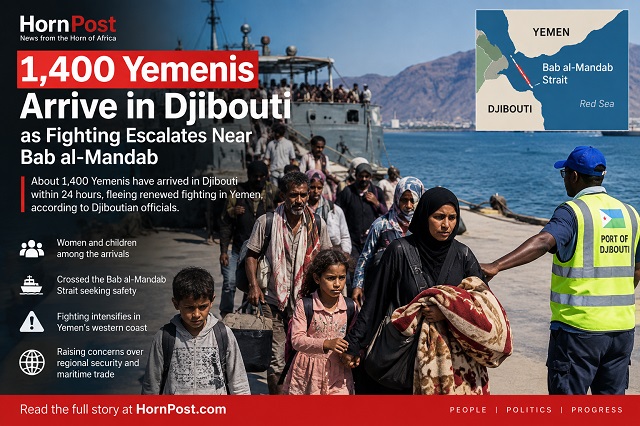
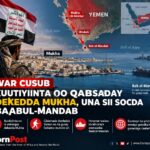
Israel’s interest in Somaliland is closely linked to the territory’s location. Somaliland lies across the Gulf of Aden from Yemen, near the Bab al-Mandab Strait, a major maritime chokepoint connecting the Red Sea with the Gulf of Aden and the Indian Ocean.
Ethiopia remains a key regional partner
Ethiopia is another major component of Somaliland’s foreign policy.
The two sides have maintained close relations since January 2024, when Ethiopia and Somaliland signed a memorandum of understanding concerning Ethiopia’s potential access to the sea.
The agreement triggered a major diplomatic crisis with Somalia, which argued that Ethiopia had no right to negotiate over Somaliland territory without Mogadishu’s consent.
Türkiye later mediated between Ethiopia and Somalia, producing the Ankara Declaration in December 2024. The agreement reaffirmed Somalia’s sovereignty and territorial integrity while providing a framework for negotiations over Ethiopian access to the sea.
Despite the diplomatic dispute, Somaliland has continued to signal that it is open to cooperation with Ethiopia on maritime access and trade.
Somaliland officials have said Ethiopia’s economic need for reliable sea access can be addressed through cooperation involving Berbera Port. Somaliland’s foreign minister also described Ethiopia as an important regional partner.
The issue has gained additional significance following recent comments by Israel’s ambassador to Ethiopia, who said Israel supports Ethiopia’s efforts to obtain reliable access to the Red Sea.
The Israeli position adds another dimension to the growing links between Ethiopia, Somaliland and Israel.
Berbera becomes increasingly strategic
At the center of Somaliland’s economic and geopolitical strategy is Berbera Port.
The port has undergone major development with investment from Dubai-based DP World and is positioned as an important commercial gateway to the Gulf of Aden and the wider Horn of Africa.
Berbera’s location also gives it potential importance for Ethiopia, a landlocked country that depends heavily on neighboring states for access to international maritime trade.
The port is increasingly being viewed not simply as a commercial facility but as part of the wider competition over trade routes, maritime security and influence around the Red Sea.
International interest in Berbera has increased as regional tensions have intensified, particularly because the port lies relatively close to Yemen and the Bab al-Mandab Strait.
Reports have also highlighted ongoing construction and security-related development around Berbera Airport. Some have linked the activity to possible future military uses, although the precise nature and ownership of any such facilities remain contested.
Security concerns grow
Somaliland’s expanding international relationships are also creating new security challenges.
The territory is located close to Yemen, where instability and attacks linked to the wider Red Sea conflict have threatened maritime traffic.
Any expansion of foreign military or intelligence cooperation in Somaliland could therefore attract greater attention from regional armed groups and rival powers.
At the same time, Somaliland authorities see international security cooperation as an opportunity to strengthen their ability to protect their coastline, ports and commercial infrastructure.
The territory has also emphasized its record of relative internal stability compared with parts of Somalia, presenting that stability as one of the main arguments for greater international engagement.
The U.S. remains the key diplomatic target
Despite Israel’s recognition, Washington remains the most important target of Somaliland’s diplomatic campaign.
President Irro’s visit to Washington is aimed at strengthening political, economic and security ties while making the case for U.S. recognition.
Somaliland officials argue that formal recognition would reflect the territory’s long-standing self-government and strategic importance.
The United States, however, has so far maintained its existing position regarding Somalia’s territorial integrity while exploring areas for practical cooperation with Hargeisa.
For Somaliland, the challenge is therefore to turn growing strategic interest into concrete diplomatic gains without becoming overly dependent on any single foreign power.
As competition intensifies across the Red Sea, Somaliland’s location, Berbera Port and relationships with Israel, Ethiopia, the UAE and the United States are likely to keep Hargeisa at the center of regional geopolitical calculations.
The coming months could determine whether Somaliland’s expanding network of strategic partnerships translates into broader international recognition — or whether regional opposition continues to limit its diplomatic progress.