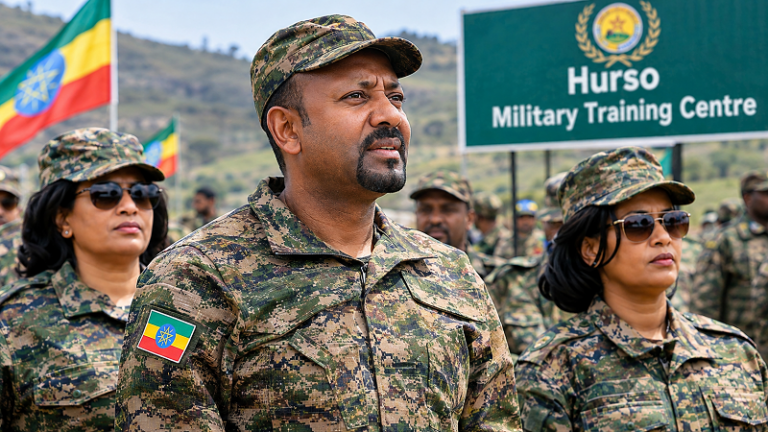
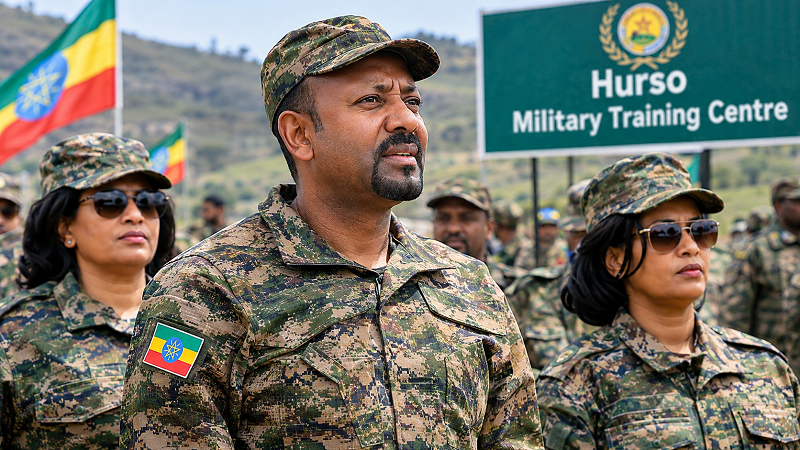
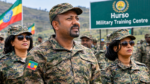
ADDIS ABABA, Ethiopia (HornPost) — Ethiopian Prime Minister Abiy Ahmed announced that senior government officials, including cabinet ministers and other high-ranking public servants, were participating in military training at the Hurso military training center.
Abiy said the program was designed to help government leaders understand and implement the principles of what he described as Ethiopia’s shared National Grand Strategy.
The prime minister shared photographs on social media showing himself alongside senior officials taking part in military exercises. The participants appeared in military-style training uniforms.
Among those identified in the photographs were Muferiat Kamil, president of the House of Federation; Finance Minister Dr. Fitsum Assefa; and Health Minister Dr. Mekdes Daba. Other participants included ministers, deputy ministers and senior government officials.
Abiy Explains the Purpose of Military Training
In his social media statement, Abiy said members of the ruling Prosperity Party’s government leadership were attending the program at Hurso.
He argued that military training could help public officials develop discipline, physical fitness, teamwork and a stronger sense of responsibility.
Abiy also described military science as an important source of leadership development, saying it could help individuals combine physical strength, intellectual ability and moral discipline.
He linked the program to his government’s broader national development agenda, which he said required a common understanding of national priorities among political and administrative leaders.
Ethiopia’s National Grand Strategy
Abiy outlined several principles that he said formed the foundation of the country’s National Grand Strategy.
These included maintaining national security, building a strong country that does not seek conflict with others, and developing national objectives through a process that connects local communities with the highest levels of government.
He argued that military training could help senior officials understand these principles and translate them into government policies and practical action.
In another part of his statement, the prime minister emphasized the relationship between military discipline and civilian leadership.
“Soldiers have targets, while civilians have goals. Both aim for victory. When the two are combined, we create a generation capable of achieving its objectives,” he said.
The program therefore reflects Abiy’s stated effort to bring military principles of discipline, coordination and preparedness into the work of civilian government institutions.
Training Details Remain Unclear
The Ethiopian government did not publicly specify when the training program began or how long it was expected to last.
It was also unclear whether all cabinet members and senior government officials would participate or whether the program involved selected representatives of government institutions.
The photographs released by Abiy provided a public glimpse of the exercises and confirmed the participation of several senior officials.
Ethiopia’s Military Modernization and Regional Security
The training took place against a wider backdrop of Ethiopia’s efforts to strengthen its military capabilities and address security challenges at home and across the Horn of Africa.
Ethiopia has continued to invest in military equipment and defense technology. On October 28, 2026, Abiy announced that the country had received Russian-made Su-35 fighter jets and expected to acquire four S-400 air defense systems under an agreement with Moscow.
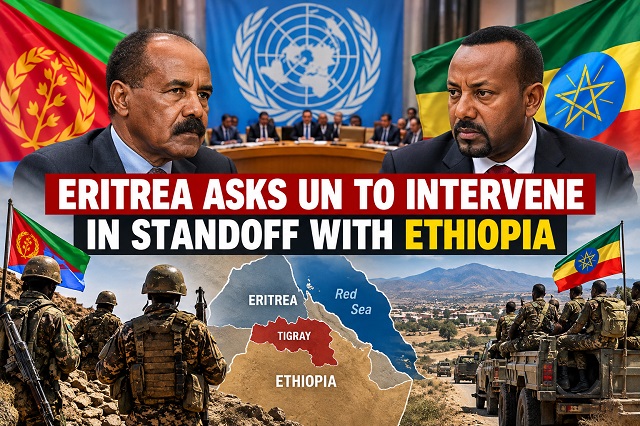
The announcement came amid renewed fighting in northern Ethiopia and heightened tensions between Addis Ababa and neighboring Eritrea. Ethiopia has accused Eritrea of supporting armed groups in the region, an allegation that Asmara has denied.
The renewed tensions have raised concerns about the possibility of another confrontation between the two neighboring countries, which fought a devastating border war from 1998 to 2000 before restoring relations in 2018.
Russia has also maintained diplomatic and military relations with Ethiopia. Russian Foreign Minister Sergey Lavrov previously expressed Moscow’s willingness to support efforts to resolve tensions between Ethiopia and Eritrea.
The military training program at Hurso adds another dimension to Abiy’s emphasis on national security, leadership discipline and institutional preparedness.
However, the prime minister has not publicly detailed how the training will translate into specific changes in government policy or the management of Ethiopia’s security institutions.
HornPost Staff Reporter
Hargeisa, Somaliland
info@hornpost.com