ADDIS ABABA, Ethiopia (HornPost) Ethiopia has renewed its push for access to the Red Sea, while Somalia says it is prepared to allow Ethiopia to use two or three Somali ports for commercial imports and exports if the arrangement is negotiated directly with Mogadishu.
The two developments come as tensions across the Horn of Africa are rising because of renewed fighting in northern Ethiopia and growing disagreements over control and security in the Red Sea.
Prime Minister Abiy Ahmed reiterated Ethiopia’s determination to secure an outlet to the sea after taking the oath of office for another five-year term.
“Based on the principle of give and take, we will work diligently to ensure that Ethiopia has an outlet to the sea,” Abiy told parliament, according to reports from AP and other international media.
Abiy did not specify which port or coastline Ethiopia was seeking.
Somalia offers commercial access
Somalia President Hassan Sheikh Mohamud has separately said Mogadishu is ready to allow Ethiopia to use two or three Somali ports for commercial purposes.
Mohamud told Al Jazeera that Somalia does not oppose Ethiopia gaining access to the sea for trade, provided any arrangement is negotiated directly with the Somali government and remains under Somali sovereignty.
The Somali president said Ethiopia had expressed its need for maritime access but had not yet submitted a formal proposal specifying the type of arrangement it wanted.
The offer could provide Addis Ababa with another potential route for maritime trade at a time when Ethiopia is seeking to reduce its dependence on Djibouti.
Ethiopia currently conducts most of its maritime trade through Djibouti, which has become the country’s principal commercial gateway.
A different approach from the Somaliland deal
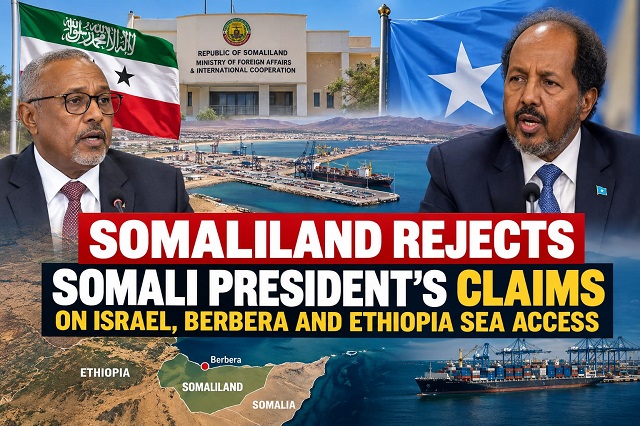
Somalia’s offer also marks a significant distinction from the dispute created by Ethiopia’s January 2024 memorandum of understanding with Somaliland.
That agreement envisaged Ethiopian access to a stretch of coastline near Berbera and triggered a major diplomatic crisis between Addis Ababa and Mogadishu.
Somalia rejected the agreement, arguing that Ethiopia had violated Somalia’s territorial sovereignty.
The dispute eventually led to a diplomatic process involving Somalia and Ethiopia, with both governments agreeing to pursue a negotiated solution.
Somalia’s latest position appears to draw a line between commercial access to Somali ports and arrangements involving territory or military access that bypass the federal government.
Ethiopia insists on a broader Red Sea role
The question of maritime access, however, goes beyond commercial shipping.
Ethiopia has increasingly argued that its size, population, geography and economic interests give it a legitimate role in discussions over Red Sea security and maritime infrastructure.
Ethiopia’s Foreign Ministry said Monday that any serious discussion of regional maritime affairs and security architecture must take Ethiopia’s interests and its geographic connection to the Red Sea into account. Somalia Today
Ethiopia lost direct access to the Red Sea in 1993 following Eritrea’s independence.
The country has since relied heavily on neighboring states, particularly Djibouti, for international maritime trade.
Coastal states push back
Ethiopia’s renewed demand has met resistance from several Red Sea countries.
Egypt, Eritrea, Somalia and Sudan said after their New Alamein summit that governance of the Red Sea is the responsibility of the coastal states, while calling for freedom of navigation and peaceful regional cooperation. Al Jazeera
The position places Ethiopia in a difficult diplomatic environment because Addis Ababa is seeking greater maritime access while simultaneously facing a serious deterioration in relations with Eritrea.
Ethiopia and Eritrea severed diplomatic ties last week after Ethiopia accused Eritrea of supporting the armed opposition alliance fighting federal forces. Eritrea rejected the accusation.
Berbera remains part of the equation
The debate also has implications for Somaliland and Berbera.
Berbera is strategically located on the Gulf of Aden and has developed into a significant commercial port following investment by DP World. Ethiopia has previously viewed Berbera as a potential alternative gateway for some of its trade.
The renewed focus on Somali ports could therefore create competition between different maritime corridors serving Ethiopia, including Djibouti, Berbera and ports in Somalia.
For Mogadishu, offering commercial port access could provide an opportunity to strengthen economic ties with Addis Ababa while keeping negotiations firmly under federal authority.
For Ethiopia, access through Somali ports could provide another option for diversifying its maritime trade.
But a commercial port agreement would still face practical questions, including infrastructure capacity, road and rail connections, customs arrangements, security and the cost of transporting goods inland.
A wider regional calculation
The timing of the proposal is significant.
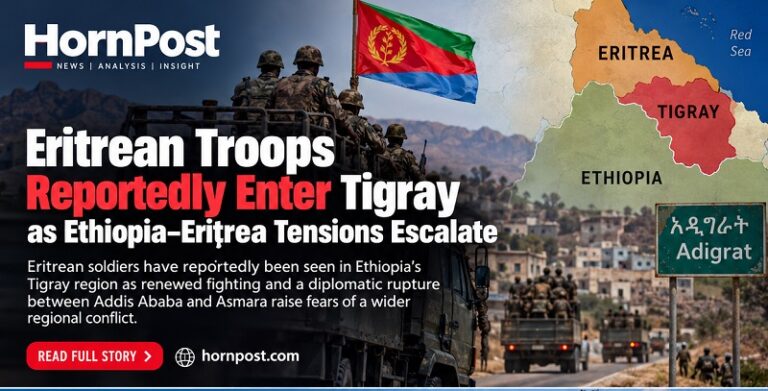
Ethiopia is simultaneously facing renewed conflict in Tigray, deteriorating relations with Eritrea and disagreement with several neighbors over Red Sea governance.
Reuters have warned that the interconnected conflicts and rivalries in the Horn of Africa could allow the Tigray crisis to develop into a wider regional confrontation. Reuters
Against that backdrop, Somalia’s proposal offers a potential diplomatic and commercial channel between Mogadishu and Addis Ababa.
Whether it develops into a formal agreement will depend on negotiations between the two governments.
For now, Ethiopia’s message is clear: Addis Ababa considers maritime access a long-term strategic priority. Somalia’s response is equally clear: commercial access may be possible, but any agreement must be negotiated with Mogadishu and remain under Somali sovereignty.
That distinction could become increasingly important as competition over ports, trade routes and Red Sea security reshapes the Horn of Africa.
Prepared by:
HornPost staff
info@hornpost.com
www.hornpost.com