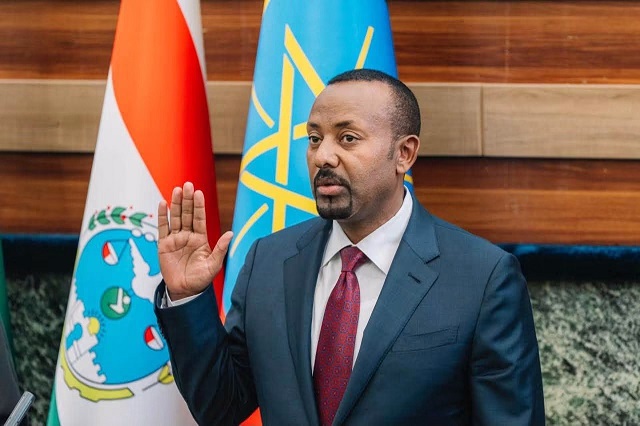
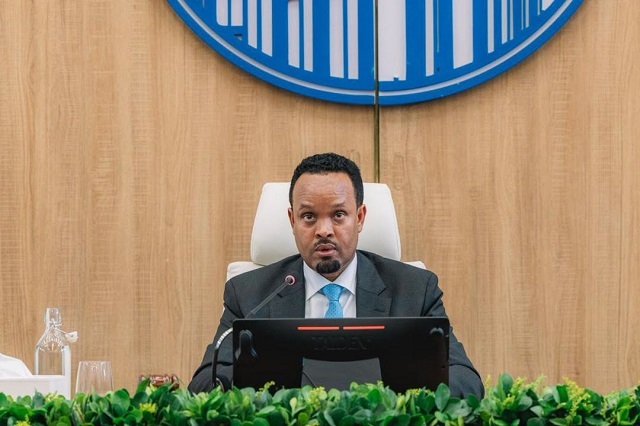
ADDIS ABABA, Ethiopia — (HornPost) Ethiopian Prime Minister Abiy Ahmed was sworn in on Monday for a new five-year term, formally extending his tenure as head of government as the country’s newly elected parliament began its seventh parliamentary cycle.
Abiy took the constitutional oath during the inaugural session of the newly elected House of Peoples’ Representatives in Addis Ababa. The ceremony marked the formal establishment of a new federal government following Ethiopia’s June 1 general election.
The ruling Prosperity Party secured a commanding parliamentary majority in the election, giving it the constitutional mandate to form and lead the federal government.
Ethiopian state media reported that the party won 438 of the contested parliamentary seats.
New five-year mandate
The Ethiopian government describes Abiy’s latest appointment as his second five-year term, while international reporting has also described it as his third term in office, reflecting his initial appointment as prime minister in 2018 and subsequent electoral mandates.
The swearing-in was attended by President Taye Atske-Selassie, senior government officials and members of the newly constituted parliament.
The formation of the new administration comes as Ethiopia faces significant political, security and economic challenges, including renewed fighting in the northern Tigray region and heightened tensions with neighboring Eritrea and other countries in the Horn of Africa.
Red Sea access remains a priority
In his address following the swearing-in, Abiy reiterated Ethiopia’s determination to secure reliable access to the Red Sea, an issue that has become a major component of Addis Ababa’s foreign and regional policy.
Abiy said Ethiopia would pursue maritime access through what he described as a principle of mutual benefit and cooperation. The Ethiopian government has repeatedly argued that reliable access to the sea is important to the country’s long-term economic and strategic interests.
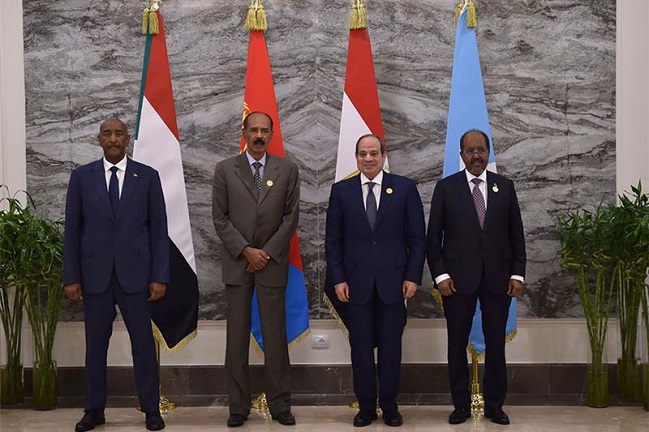
The issue has generated tensions with neighboring coastal states, particularly Eritrea, Somalia, Egypt and Sudan, amid broader disputes over regional security and the Nile.
National dialogue and economic reforms
The new administration is also expected to focus on implementing recommendations emerging from Ethiopia’s National Dialogue process, alongside economic and institutional reforms.
According to Ethiopia’s Government Communication Service, the government has identified political dialogue, economic reform, public-sector reform, anti-corruption measures and institutional development among its priorities for the new parliamentary period.
The new parliamentary term therefore begins at a critical juncture for Ethiopia, with the government facing the challenge of translating its electoral mandate into political stability, economic development and improved relations with neighboring countries.
Prepared by:
HornPost staff
info@hornpost.com
www.hornpost.com