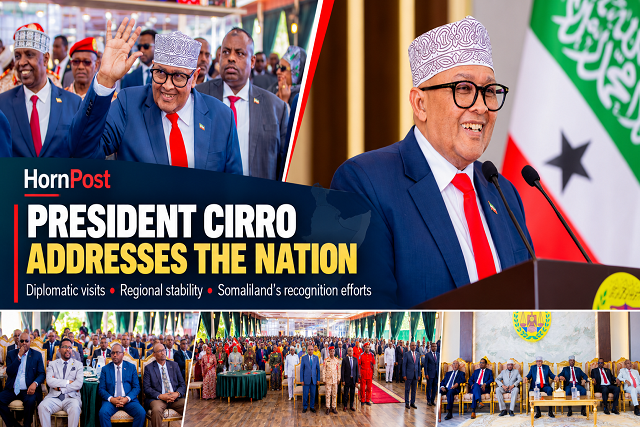
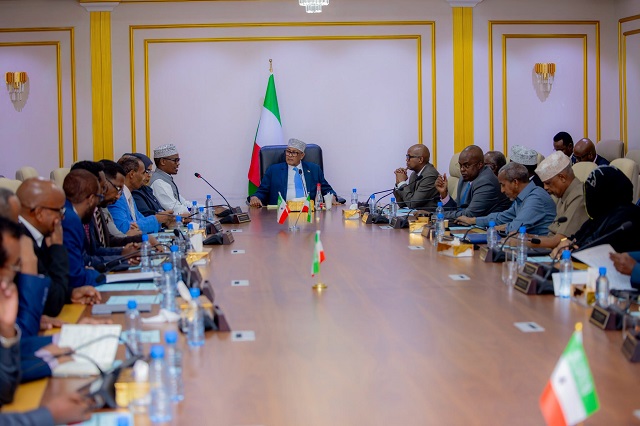
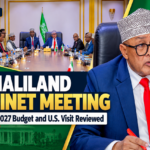
HARGEISA, Somaliland — (HornPost)— The Somaliland Cabinet has reviewed the country’s security situation, rising fuel prices and the release of national examination results during its 73rd session, chaired by President Abdirahman Mohamed Abdullahi Irro at the Presidential Palace.
According to a statement issued by the Somaliland Presidency, ministers received reports from the ministries responsible for interior and national security, trade and tourism, and education, focusing on developments affecting security, the economy and education.
Security Situation
Minister of Interior and National Security Abdalle Mohamed Arab told the Cabinet that the overall security situation across Somaliland remained stable.
He said recent clashes in parts of the Awdal and Salal regions were coming to an end and that stability had returned to the affected areas. The government, he said, was continuing efforts to promote peace, reconciliation, coexistence and dialogue among local communities.
The minister also announced restrictions on the carrying of weapons in areas recently affected by violence.
According to the presidential statement, civilians and groups not belonging to the security forces are prohibited from carrying weapons in those areas. Security forces have been instructed to take legal action against anyone violating the order and to confiscate weapons found in their possession.
The announcement comes as the government seeks to consolidate calm in areas that have experienced recent tensions and prevent renewed violence.
Fuel Prices and Cost of Living
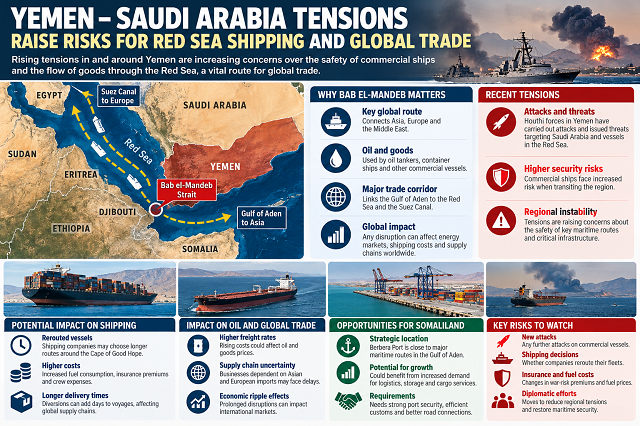
The Cabinet also discussed rising fuel prices and their impact on the cost of living, the wider market and the exchange rate of the Somaliland shilling.
Trade and Tourism Minister Abdirahman Hassan Noor told ministers that additional petrol supplies had arrived in the country, while diesel shipments were expected to arrive soon.
The government says the additional supply is expected to ease pressure on fuel prices and contribute to greater stability in the fuel market.
The Ministry of Trade and Tourism is also monitoring market conditions and working with fuel importers and traders to ensure adequate supplies and prevent price increases that are not justified by actual market conditions.
The ministry said it would continue efforts to stabilize the fuel market, protect consumers’ purchasing power and reduce the economic pressure caused by fluctuations in fuel prices.
2026 National Examination Results
Education Minister Prof. Ismail Duale Yusuf briefed the Cabinet on the release of Somaliland’s 2026 national examination results for middle and secondary schools.
The results were officially announced on Aug. 25, 2026.
The minister outlined the examination process, including the administration of the exams, marking, verification and publication of the results. He credited the National Examinations Office and the Ministry of Education with efforts to ensure that the results were produced transparently and without bias.
The Cabinet’s review comes shortly after the government announced the results of the examinations for Grade 8 middle-school students and Grade 12 secondary-school students across Somaliland.
Brief Analysis
The three issues discussed at the Cabinet meeting — security, fuel prices and education — reflect some of the most immediate pressures facing the Somaliland government.
The security discussion is particularly significant because the government’s decision to enforce restrictions on civilian weapons in recently affected areas suggests an attempt to prevent local tensions from developing into prolonged armed confrontations.
The fuel issue carries an equally important economic dimension. Fuel prices affect transportation, food distribution, electricity generation and the wider cost of living. The government’s emphasis on increased fuel supplies and market monitoring therefore indicates that stabilizing fuel prices is becoming an important economic priority.
The release of the 2026 examination results, meanwhile, represents a major education milestone and places renewed attention on the performance of Somaliland’s education system, examination standards and the transition of students into higher levels of education.
Taken together, the Cabinet’s agenda shows a government attempting to address security, economic pressure and human-capital development simultaneously — three areas that will remain central to Somaliland’s political and economic stability.
Prepared by:
HornPost staff
info@hornpost.com
https://www.hornpost.com/
HARGEISA, Somaliland