DUBAI, United Arab Emirates —(HornPost) — Tensions between Iran and the United Arab Emirates have sharply escalated after Abu Dhabi accused Tehran of launching two ballistic missiles toward the UAE, prompting the Emirati government to suspend trade and financial transactions with Iran.
The UAE Defense Ministry said its air-defense systems detected two ballistic missiles launched from Iran on Tuesday. One missile fell outside UAE territorial waters, while the other landed inside the country’s territorial waters. Emirati authorities said their assessment indicated that the missiles were targeting maritime traffic.
Iran has denied responsibility for the alleged missile attack, saying such accusations could damage regional trust.
UAE Suspends Trade and Financial Transactions With Iran
Following the incident, the UAE announced the suspension of all trade, commercial exchanges and financial transactions with Iran until further notice.
The move represents a significant deterioration in relations between the two countries, which had recently been working to reduce tensions and restore economic and diplomatic ties.
The UAE has sought to avoid becoming directly involved in the broader regional conflict, but repeated attacks on vessels connected to the country have increased pressure on Abu Dhabi.
The Wall Street Journal reported that the UAE says seven of its ships have been attacked this month, further increasing concerns over the safety of commercial shipping in the Strait of Hormuz.
Strait of Hormuz Under Growing Pressure
The latest confrontation is taking place against the backdrop of an increasingly dangerous situation in the Strait of Hormuz, one of the world’s most important energy shipping routes.
Shipping traffic through the waterway remains at exceptionally low levels. Preliminary Kpler data showed only six commodity vessels transited the strait on Aug. 17, compared with a 10-day average of 11. No very large crude carriers or LNG tankers were recorded during that period.
Iran has maintained that the Strait of Hormuz will remain closed until the United States meets conditions set by Tehran, while Washington has disputed Iran’s characterization of the waterway’s status.
The prolonged disruption has already affected global energy markets.
Oil Prices Rise
Brent crude futures settled at $91.02 per barrel on Tuesday, the highest closing level in more than three weeks, while U.S. West Texas Intermediate crude reached $84.94 per barrel. Reuters
Analysts warn that continued disruption to shipping through Hormuz could put further upward pressure on energy prices if major oil and gas shipments remain constrained.
The Strait normally carries a significant share of global oil and liquefied natural gas shipments, making any prolonged disruption a major risk to international energy markets.
Bab el-Mandeb Also Under Pressure
The crisis is not limited to the Strait of Hormuz.
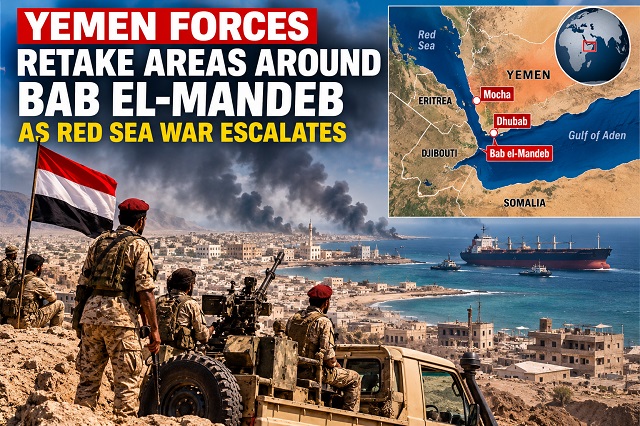
Shipping through the Bab el-Mandeb Strait, which connects the Red Sea with the Gulf of Aden, also remains below normal levels.
Kpler data showed 19 commodity vessels passed through Bab el-Mandeb on Monday, compared with a 10-day average of 26.
That creates a growing concern that the world’s two critical maritime chokepoints — Hormuz and Bab el-Mandeb — could simultaneously experience elevated security risks.
For the Horn of Africa, this development is particularly significant because Djibouti, Somaliland and Somalia sit along the approaches to the Gulf of Aden and Bab el-Mandeb.
A Wider Regional Risk
The latest Iran-UAE confrontation comes as diplomatic efforts to resolve the wider Iran conflict remain stalled.
The combination of missile threats, attacks on commercial vessels, reduced shipping traffic and uncertainty surrounding negotiations has created a highly volatile security environment across the Gulf and Red Sea.
For the UAE, the immediate priority is protecting its territory and maritime interests while avoiding a wider confrontation with Iran.
For Iran, control over or leverage around the Strait of Hormuz remains an important strategic tool in its confrontation with the United States and its regional partners.
Why This Matters for Somaliland and Djibouti
The developments could have significant implications beyond the Gulf.
If shipping companies increasingly avoid Hormuz, the strategic importance of alternative maritime routes through the Gulf of Aden, Bab el-Mandeb and Red Sea could increase.
That could place greater attention on ports and logistics hubs such as Berbera and Djibouti, while also increasing the importance of maritime security along the Horn of Africa coast.
However, the same crisis could also increase risks for shipping in the region if tensions spread from Hormuz toward the Red Sea and Gulf of Aden.
The key question for the Horn of Africa is whether the current Iran-UAE confrontation remains concentrated around the Gulf — or whether the pressure eventually spreads toward Bab el-Mandeb and the Red Sea.
Prepared by:
HornPost Staff
info@hornpost.com
www.hornpost.com