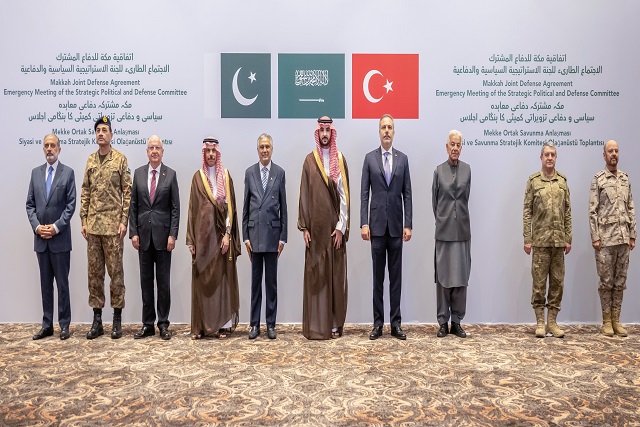


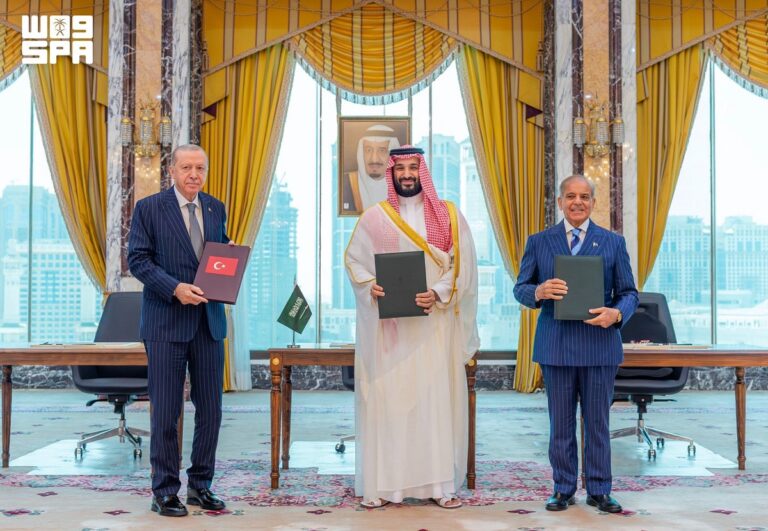
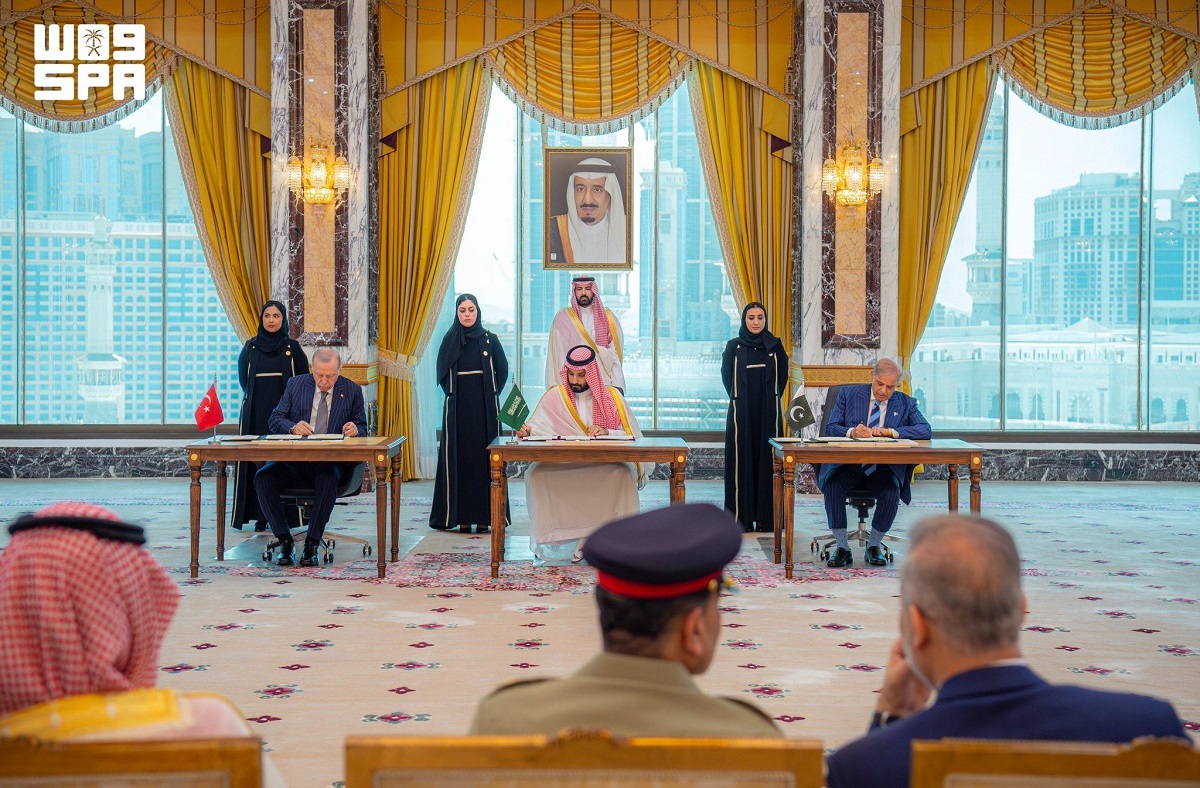
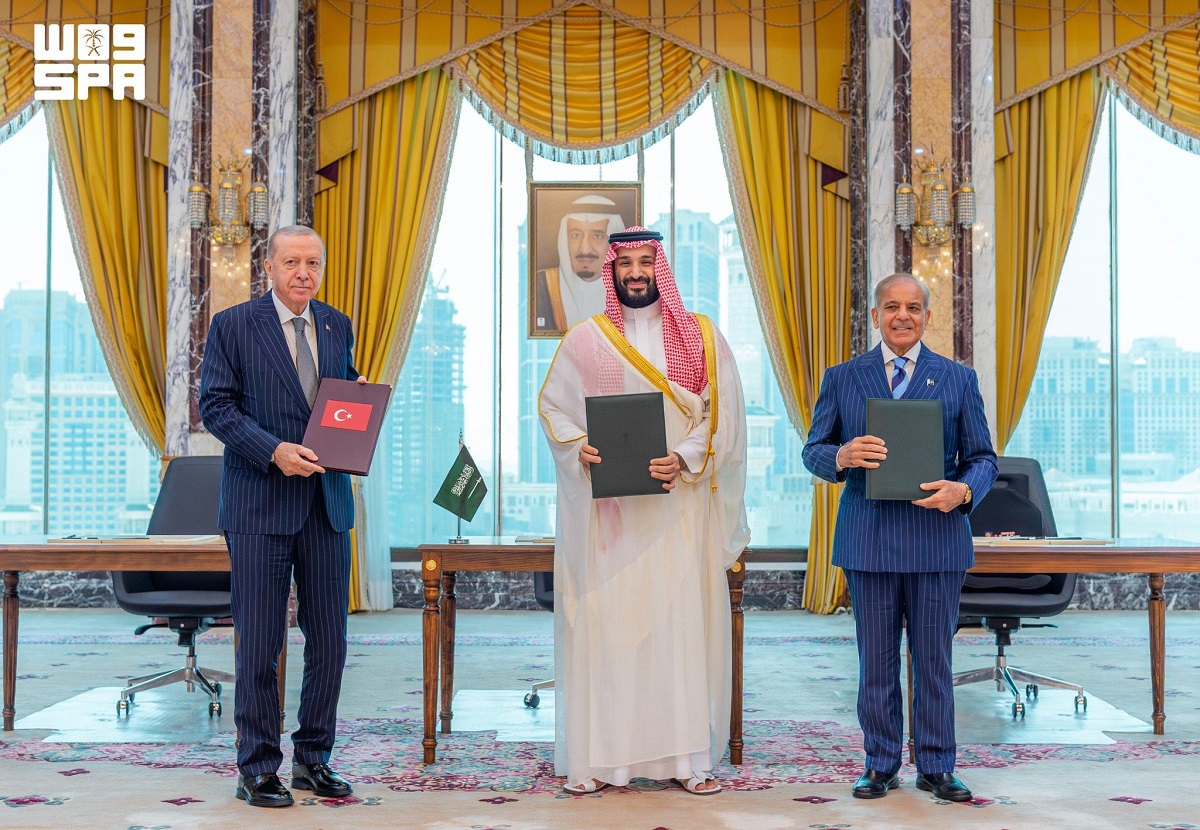
Makkah, Saudi Arabia (Horn Post) The Makkah Joint Defense Agreement signed by Saudi Arabia, Türkiye and Pakistan represents one of the most significant strategic security initiatives in the Muslim world in recent years. While the joint statement emphasizes collective defense, regional stability and deterrence, the agreement also reflects a broader geopolitical shift toward stronger security cooperation among three influential regional powers.
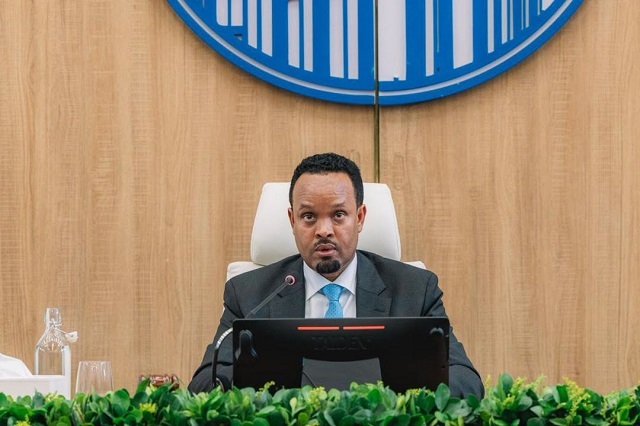
Signed in Makkah by Saudi Crown Prince Mohammed bin Salman, Turkish President Recep Tayyip Erdoğan, and Pakistani Prime Minister Shehbaz Sharif, the agreement establishes a framework for coordinated defense cooperation based on shared security interests, military collaboration and political coordination.
Unlike a traditional military alliance focused on offensive operations, the agreement presents itself as a collective security mechanism designed to deter external aggression, improve defense coordination and strengthen regional stability. According to the joint statement, an attack against one member would be regarded as an attack against all three, underscoring a mutual defense commitment similar in principle to other collective security arrangements.
A New Strategic Triangle
The agreement brings together three countries with complementary strengths:
- Saudi Arabia contributes financial resources, leadership in the Arab and Islamic worlds, and growing defense modernization.
- Türkiye offers one of NATO’s largest militaries alongside an advanced domestic defense industry producing drones, armored vehicles and naval systems.
- Pakistan adds a large, experienced military force, strategic geographic positioning and nuclear deterrence capabilities.
Collectively, these assets create a powerful strategic partnership capable of influencing security dynamics across the Middle East, the Red Sea, the Gulf, South Asia and parts of the Horn of Africa.
Beyond Military Cooperation
The language of the agreement extends beyond defense, emphasizing peace, stability and economic development. By linking security with prosperity, the three governments argue that enhanced defense cooperation will create conditions favorable for trade, investment and regional development.
This reflects an increasingly common approach among regional powers, where security partnerships are integrated with broader economic and diplomatic objectives.
Regional Implications
The timing of the agreement is significant amid ongoing conflicts and geopolitical competition across the Middle East, including instability in the Red Sea, maritime security challenges, regional proxy conflicts and shifting global alliances.
For Saudi Arabia, Türkiye and Pakistan, deeper defense cooperation may improve intelligence sharing, military interoperability, joint exercises and defense-industrial collaboration while strengthening their collective diplomatic influence.
Potential Impact on the Horn of Africa
The agreement could also have indirect implications for the Horn of Africa, a region where all three countries maintain expanding political, economic or security interests.
Saudi Arabia remains deeply involved in Red Sea security and regional diplomacy. Türkiye has established extensive defense and development partnerships in Somalia and elsewhere, while Pakistan has strengthened military cooperation with several African and Gulf partners.
Greater coordination among the three could influence maritime security, counterterrorism efforts and broader regional engagement along one of the world’s most strategically important trade corridors.
Strategic Outlook
Although the practical implementation of the Makkah Joint Defense Agreement will depend on future institutional mechanisms and military coordination, its political significance is already clear. The pact signals a shared intention by Saudi Arabia, Türkiye and Pakistan to assume a more coordinated role in shaping regional security.
If translated into sustained defense cooperation, intelligence integration and joint strategic planning, the agreement could emerge as a major pillar of security architecture across the Middle East and the wider Islamic world, while reinforcing stability along critical maritime routes linking the Gulf, the Red Sea and the Indian Ocean.
Prepared by:
Horn Post Staff