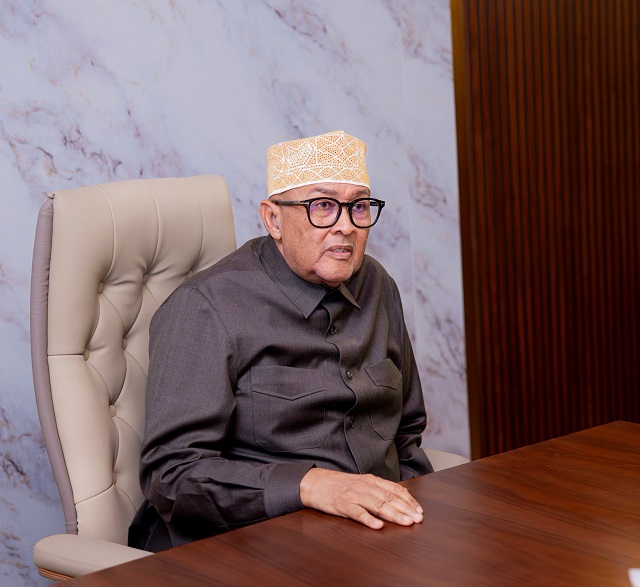
HARGEISA, Somaliland — Somaliland President Abdirahman Mohamed Abdullahi “Irro” is seeking to position the self-governing territory as a strategic partner in efforts to improve security around the Red Sea, while using its geographic location and security role to strengthen its case for international recognition.
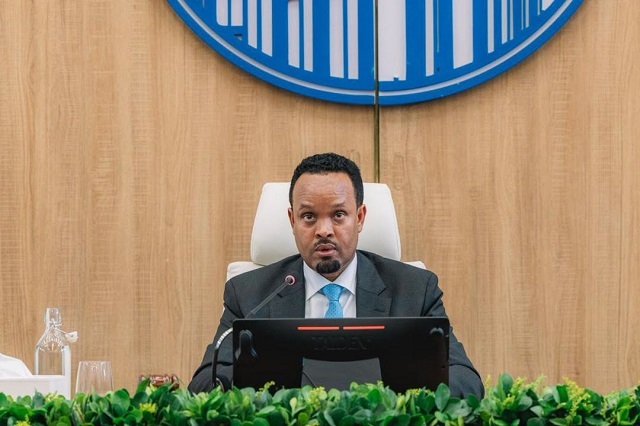
In an interview with The Economist, President Irro said Somaliland had been overlooked by the international community for decades and argued that the territory deserves greater international attention.
“The world has been ignoring Somaliland for 35 years,” Irro told The Economist.
The president, who was sworn into office in December 2024, has made international recognition a central issue during his administration.
Somaliland’s Strategic Location
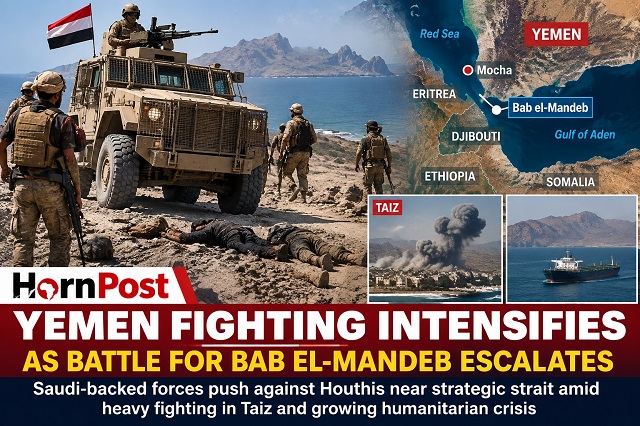
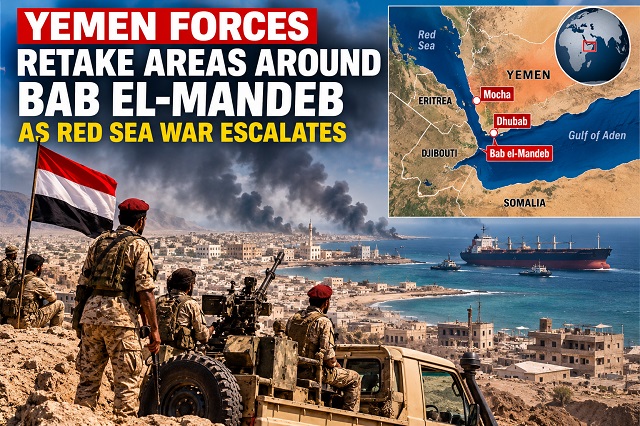
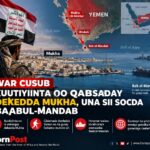
Somaliland occupies a strategically important position along the Gulf of Aden, near the maritime routes connecting the Red Sea, Bab el-Mandeb and the wider Indian Ocean.
That location has increasingly attracted international attention as security threats and disruptions have affected commercial shipping across the Red Sea and Gulf of Aden.
For Somaliland, the strategic argument is straightforward: its location gives it the potential to contribute to maritime security while strengthening its diplomatic relevance.
The government has increasingly presented Somaliland not only as a political entity seeking recognition, but also as a potential security and economic partner for countries concerned about the stability of one of the world’s most important maritime corridors.
Recognition Remains at the Center of Somaliland’s Foreign Policy
President Irro’s comments to The Economist highlight the connection between Somaliland’s security ambitions and its long-running campaign for international recognition.
Somaliland declared its independence from Somalia in 1991 and has operated with its own government and institutions for decades, but its claim to sovereign statehood has not been broadly recognized internationally.
Irro argues that the international community should look beyond Somaliland’s disputed diplomatic status and examine its role in regional stability.
The president’s approach reflects a broader effort by Hargeisa to present Somaliland’s geographic position as a strategic asset rather than simply a political issue.
Israel’s Recognition Changed the Diplomatic Landscape
The issue gained additional international attention after Israel formally recognized Somaliland, according to the material published by The Economist.
That recognition was described as a major development because it represented the first formal recognition of Somaliland by a United Nations member state.
For Somaliland’s leadership, the development provides an important diplomatic opening as it seeks to encourage other governments to reconsider their positions toward Hargeisa.
However, broader international recognition remains the central challenge facing Somaliland.
Red Sea Security Could Become a Diplomatic Opportunity
The security situation surrounding the Red Sea and Gulf of Aden has increased the strategic importance of countries located along the maritime corridor.
Somaliland’s leadership sees an opportunity to turn this geography into diplomatic leverage.
By offering cooperation on maritime security, port infrastructure and regional stability, Hargeisa can seek to demonstrate that Somaliland has a practical role to play in international efforts to secure commercial shipping and protect vital maritime routes.
This approach could allow Somaliland to shift part of the international discussion from the question of whether Somaliland should be recognized toward the question of what role Somaliland can play in regional security.
Berbera at the Center of the Strategy
The strategic importance of Somaliland is closely connected to Berbera, its major port on the Gulf of Aden.
The port provides Somaliland with an important economic and geographic asset and has the potential to strengthen the territory’s position within regional trade and logistics networks.
As international concerns over maritime security grow, the wider Gulf of Aden could become increasingly important for shipping, logistics and regional security cooperation.
For Somaliland, that creates both an opportunity and a challenge.
Its ability to translate geographic importance into diplomatic influence will depend on whether it can convince international partners that it can provide a stable and reliable environment for maritime and commercial activity.
A Recognition Strategy Built Around Strategic Relevance
President Irro’s message to The Economist suggests that Somaliland’s foreign policy is increasingly linking recognition, maritime security and strategic geography.
Rather than relying exclusively on historical and legal arguments for independence, Hargeisa is also seeking to demonstrate the practical value of engaging directly with Somaliland.
The strategy is particularly significant at a time when instability around the Red Sea and Gulf of Aden has made the Horn of Africa more important to international security calculations.
For Somaliland, the question is whether its strategic location can help transform international interest into sustained diplomatic engagement — and eventually broader recognition.
What This Means
The Economist’s interview with President Irro highlights a central feature of Somaliland’s current foreign-policy strategy: using its geographic position and potential contribution to Red Sea security as part of the argument for international recognition.
The challenge for Hargeisa will be converting strategic interest into concrete diplomatic support.
Source attribution:
This article is based in part on an interview with Somaliland President Abdirahman Mohamed Abdullahi “Irro” published by The Economist. HornPost has independently rewritten and contextualized the material for its readers.
Prepared by
HornPost staff
info@hornpost.com