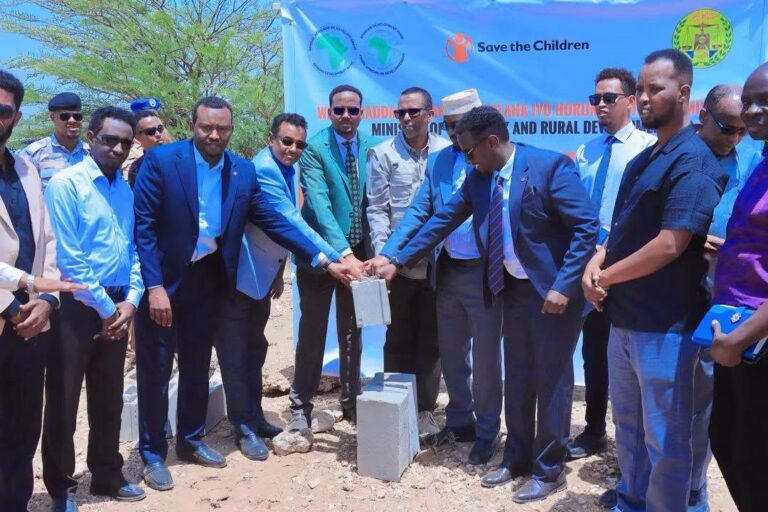
GABILEY, Somaliland (HornPost) Minister of Livestock and Rural Development of the Republic of Somaliland, Dr. Omar Shucayb Mohamed, and a large delegation arrived in Gabiley, where the minister laid the foundation stone for a new abattoir aimed at improving the livestock value chain and supporting public health.
Speaking at the foundation-laying ceremony, Minister Omar said the facility would help improve livestock services, enhance meat quality and create greater economic opportunities for pastoralists and livestock traders in Gabiley.
The minister said the political change in Somaliland, which he said was strongly supported by residents of Gabiley, had contributed to the launch of a series of development projects across the region.
He credited the progress first to God and then to Somaliland President Abdirahman Mohamed Abdillahi Irro, saying the new abattoir was part of a broader series of development projects that are either completed, underway or being launched.
Minister Omar also emphasized the importance of modern infrastructure to support livestock health, production and meat marketing.
Gabiley Regional Governor welcomed the project, saying the abattoir would contribute significantly to improving public services and strengthening the regional economy.
The governor also said he was pleased to see the implementation of the project alongside other development initiatives in the region, describing them as part of the development agenda of the Waddani-led government and President Irro’s administration.
The Mayor of Gabiley said the municipality considers the project particularly important because it will help address the needs of residents and livestock traders.
Members of the Gabiley Municipal Council also expressed their support, describing the abattoir as an important investment that could improve services and expand economic opportunities for the local community.
Representatives of Save the Children said the organization is committed to implementing the project to help communities in Gabiley access quality livestock services while contributing to public health, job creation and the development of the livestock value chain.
Officials from the African Development Bank (AfDB) said the project is part of the bank’s support for livestock development and strengthening the resilience of pastoral communities.
They emphasized the importance of modern infrastructure capable of increasing livestock productivity and creating new economic opportunities.
The project is being implemented through a partnership between the Somaliland Ministry of Livestock and Rural Development and the African Development Bank, with Save the Children responsible for implementation.
The initiative is designed to strengthen resilient infrastructure and services for communities whose livelihoods depend heavily on livestock.
Analysis:
The project is more than just the construction of a slaughterhouse. If properly completed and managed, it could address some of the long-standing challenges facing Somaliland’s livestock economy.
🔹 Improving meat quality and public health:
A modern abattoir can provide better inspection, hygiene and handling of meat, helping reduce health risks and improve consumer confidence.
🔹 Adding value to livestock:
Somaliland’s economy heavily depends on livestock, but much of the sector remains focused on the sale of live animals. Modern slaughtering and meat-processing facilities could allow more value to be captured locally.
🔹 Creating market opportunities:
A properly regulated abattoir could strengthen the connection between livestock producers, traders, meat businesses and regional markets, potentially creating new employment and business opportunities in Gabiley.
🔹 Supporting pastoral communities:
Better livestock infrastructure can benefit pastoralists by improving access to organized markets and potentially increasing the value of animals sold through formal channels.
🔹 A test of implementation:
The bigger question is not only whether the abattoir will be built, but whether it will receive the necessary veterinary services, reliable water and electricity, skilled workers, quality-control systems and effective management after completion.
For Gabiley, a major agricultural and livestock-producing region, the project could become an important economic asset if it is connected to a wider strategy for livestock production, meat processing, cold-chain infrastructure, marketing and exports.
The project therefore represents an opportunity—but its long-term impact will depend on how effectively the facility is completed, managed and integrated into Somaliland’s wider livestock value chain.
Prepared by:
HornPost Staff
info@hornpost.com
www.hornpost.com