Hargeisa, Somaliland (HornPost) Saudi Arabia’s new Mecca Joint Defence Agreement with Türkiye and Pakistan had barely been established when the Houthis provided it with an early and highly revealing test.
The result does not necessarily mean the alliance has failed. But it does raise an important question about what the agreement can actually deliver when one of its members comes under attack.
The agreement, signed in Makkah on Aug. 7, states that an armed attack against any one of the three countries will be regarded as an attack against all three. That gives the pact an Article 5-style collective-defence character, although it is not NATO and its practical response mechanisms are still developing.
Then came a Houthi challenge to Saudi Arabia.
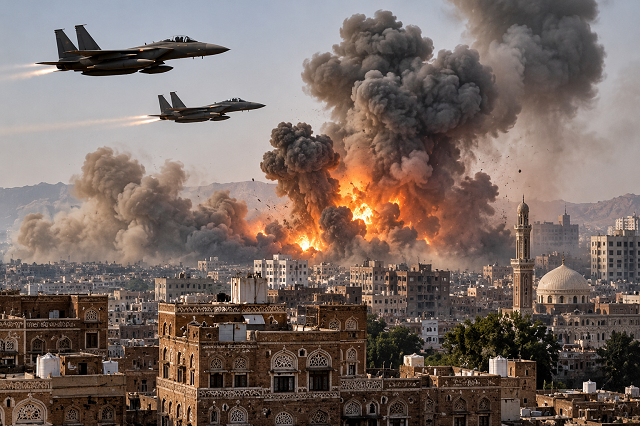
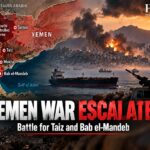
In August, Houthi forces attacked a Saudi Aramco facility in Jazan, according to Reuters, in an escalation that came shortly after the defence agreement was signed. The attack immediately raised a difficult question:
What does collective defence actually mean when one member comes under attack?
There was no publicly reported Turkish or Pakistani military intervention on a scale that demonstrated the kind of immediate collective military response associated with the strongest interpretations of an Article 5-style commitment.
That does not mean Türkiye or Pakistan would never fight alongside Saudi Arabia. The circumstances of a future attack could be very different.
But the timing is difficult to ignore.
The alliance was announced — and almost immediately confronted with a real-world security challenge.
The litmus paper went in.
It did not turn red.
So what exactly is Saudi Arabia buying?
That question takes us beyond the impressive language of the agreement.
What Saudi Arabia Brings to the Table
Saudi Arabia brings something both Türkiye and Pakistan have strong reasons to value:
financial power, strategic geography and access to a major regional market.
Türkiye, meanwhile, has developed a growing defence industry capable of supplying Saudi Arabia with drones, missiles, naval systems and other military technologies.
Pakistan brings a large and experienced military establishment, strategic expertise and nuclear capability.
But Pakistan’s nuclear weapons remain under Pakistani national control and are designed primarily for Pakistan’s own strategic deterrence.
They are not a Saudi military asset.
That distinction matters.
Saudi Arabia can purchase Turkish defence equipment and deepen military cooperation with Pakistan. But there is a fundamental difference between acquiring weapons and acquiring strategic independence.
Buying military hardware is not the same as becoming militarily independent.
The Saudi Paradox
Saudi Arabia has the financial resources to purchase some of the world’s most sophisticated military systems.
But modern military power is not contained in the weapon itself.
It depends on:
- Intelligence
- Surveillance and reconnaissance
- Communications
- Logistics
- Maintenance
- Spare parts
- Training
- Software
- Ammunition
- Domestic industrial capacity
- Command and control
- Operational experience
A country can therefore possess billions of dollars’ worth of advanced military equipment and still depend heavily on foreign partners to operate, maintain and sustain that equipment during a prolonged conflict.
This is the Saudi paradox.
Riyadh can buy more weapons without necessarily becoming more strategically autonomous.
Strategic Autonomy — or Diversified Dependence?
Saudi Arabia appears increasingly interested in reducing its dependence on any single external power.
That is understandable.
For decades, the United States has been central to Saudi Arabia’s security architecture. Riyadh’s expanding relationships with Türkiye, Pakistan and other powers can therefore be seen as an attempt to create more strategic options.
But there is a fundamental distinction between diversifying partnerships and achieving strategic independence.
If the United States provides one capability, Europe another, Türkiye another and Pakistan provides military cooperation, Saudi Arabia may not have eliminated dependence.
It may simply have diversified it.
The real question is whether these relationships translate into actual military protection when Saudi Arabia faces a serious attack.
The Houthi episode has made that question harder to ignore.
The Money at the Centre of the Table
The arrangement can be viewed as a strategic exchange.
Saudi Arabia brings financial strength, energy resources and a strategically important position in the Gulf and Red Sea region.
Türkiye brings defense technology, military experience and a growing defense-industrial base.
Pakistan brings military depth and strategic weight.
Each country has something the others want.
But Saudi Arabia must distinguish between purchasing security capabilities and purchasing security guarantees.
Weapons can be bought.
Training can be bought.
Defense agreements can be signed.
Joint exercises can be conducted.
But the political willingness to fight another country’s war cannot simply be purchased like a missile system.
That is where the real uncertainty begins.
The Mecca Alliance Is Still Being Built
The alliance should also be judged in the context of what has happened since the original agreement.
On Aug. 31, senior Saudi, Turkish and Pakistani officials met in Istanbul and agreed to further institutionalize cooperation under the Makkah Joint Defence Agreement.
They agreed to establish a secretariat in Saudi Arabia and strengthen cooperation in defence industries, joint production, technology and military capabilities.
This matters because an alliance is not created simply by signing a document.
It requires institutions.
It requires command structures.
It requires intelligence-sharing mechanisms.
It requires interoperability.
And, most importantly, it requires political decisions about what each member is actually prepared to do when another member is attacked.
The Mecca alliance is therefore still in the process of proving what it can become.
The Houthi Test
The Houthis have already demonstrated their ability to threaten Saudi territory and critical infrastructure.
Saudi Arabia has direct experience with the cost of the Yemen conflict and has spent years developing its own military response to the Houthi threat.
The recent attacks therefore provided something more important than rhetoric.
They provided a real-world test of deterrence.
The absence of an obvious Turkish or Pakistani military intervention should not automatically be interpreted as evidence that the alliance has failed.
But it does demonstrate the difference between a collective-defence clause on paper and collective military action in practice.
That distinction could become crucial if Saudi Arabia faces a much larger attack in the future.
What Would a Real Test Look Like?
The alliance’s credibility will ultimately depend on what happens during a serious crisis.
Would Türkiye deploy combat forces?
Would Pakistan provide air defence, naval support, intelligence or troops?
Would the three countries coordinate military operations?
Would the response depend on the scale and source of the attack?
Or would each government first calculate its own national interests before deciding how far it was prepared to go?
These questions remain unanswered.
And they are precisely the questions that determine whether an alliance is a genuine security arrangement or primarily a strategic signalling mechanism.
Security or Dependence?
The Mecca Joint Defence Agreement is undoubtedly significant.
It brings together three strategically important states with different but complementary capabilities.
Saudi Arabia has financial power.
Türkiye has a growing defence industry.
Pakistan has military depth and nuclear deterrence.
Together, they can create a more diversified regional security network.
But diversification should not automatically be confused with independence.
Saudi Arabia may succeed in reducing its dependence on Washington without eliminating its dependence on foreign partners altogether.
That could still be strategically valuable.
But it is not the same thing as self-reliance.
The Real Question
The Mecca alliance should therefore not be judged by its most impressive terminology.
It should be judged by what its members do when one of them faces a serious military threat.
The Houthis provided an early test.
The agreement was signed.
The challenge came.
And the expected collective military response was not visibly demonstrated.
Perhaps the alliance will prove itself during a future crisis.
Perhaps its real strength lies in deterrence rather than immediate military intervention.
Perhaps its members are still building the institutional mechanisms required to make the agreement operational.
All three possibilities remain open.
But until the alliance demonstrates how it will respond to a major attack, one uncomfortable question will remain at its centre:
Is Saudi Arabia buying genuine strategic security — or simply paying to diversify the countries on which its security depends?
That is the real Houthi litmus test for the new Mecca defense alliance.
Analysis | September 7, 2026
Author: Abdillahi Jama Ali – Qurus
abdillahijamac9@gmail.com
Hargeisa, Somaliland