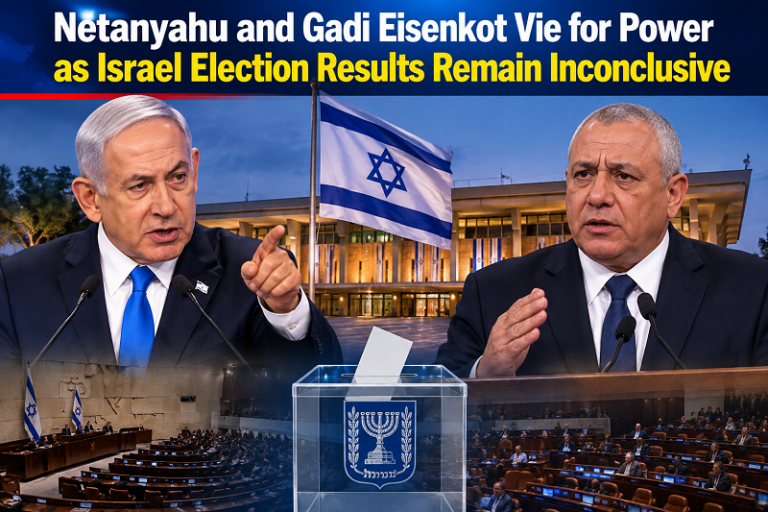
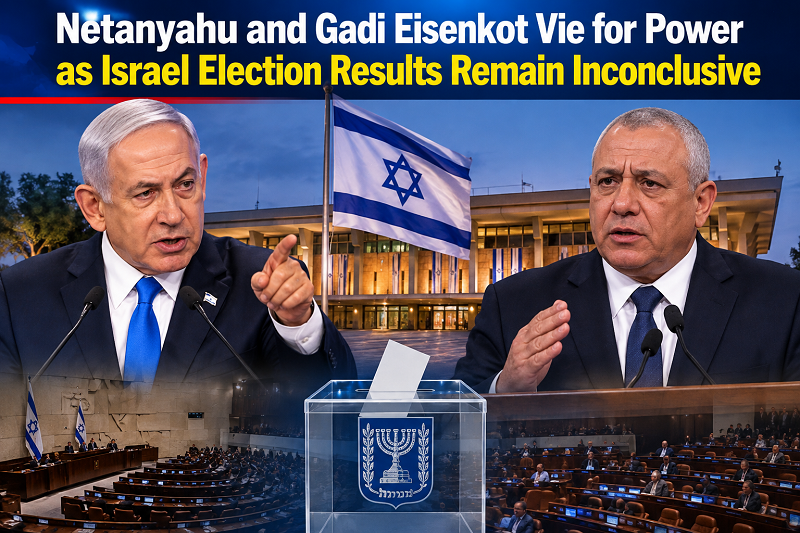
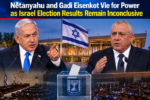
JERUSALEM (HornPost) — Israeli Prime Minister Benjamin Netanyahu and opposition leader Gadi Eisenkot have both claimed a mandate to lead the country after a closely contested parliamentary election, with preliminary results showing neither political bloc securing the majority needed to form a government.
With votes still being counted, Netanyahu’s bloc was projected to win 55 seats, compared with 50 for Eisenkot’s alliance and 15 for Arab parties, according to early results reported by Reuters. A majority in Israel’s 120-seat Knesset requires 61 seats. The figures remain preliminary.
Netanyahu calls for a strong right-wing government
Speaking to supporters at Likud party headquarters in Jerusalem, Netanyahu called for a strong, right-wing nationalist government and highlighted his administration’s military record.
He pointed to Israel’s operations against regional adversaries, including Iran, and emphasized his relationship with U.S. President Donald Trump. Netanyahu argued that Israel should not rely on Arab parties to form its next government.
Netanyahu also said the final results were not yet available, while maintaining that Likud was positioned to emerge as the largest party in parliament.
Eisenkot calls for a new political era
Eisenkot, a former chief of staff of the Israel Defense Forces and leader of the Yashar party, said the election demonstrated public demand for a change in leadership.
“The public has chosen change,” he told supporters, according to his published election-night remarks. He called on Netanyahu to leave political life and pledged to work toward forming a new government.
Eisenkot also emphasized national unity, universal national service and a government that would represent different parts of Israeli society. On security, he warned senior officials against allowing national security institutions to be used for political purposes. He said his proposed government would be committed to dismantling Hamas.
Despite their competing claims, neither leader had secured a clear path to a parliamentary majority as counting continued.
Coalition negotiations ahead
Israel’s political system requires parties to negotiate alliances to form a governing coalition. With both major blocs below the 61-seat threshold, smaller parties could influence the negotiations.
The inconclusive result could lead to an extended period of political bargaining. Netanyahu remains in office as caretaker prime minister while the process of forming a new government unfolds.
Somaliland and Israel’s diplomatic relationship
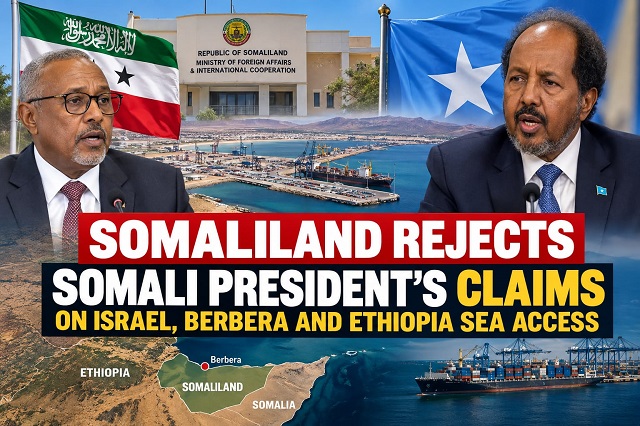
Israel announced its formal recognition of Somaliland on Dec. 26, 2025, under Netanyahu’s government. The announcement marked a significant development in Somaliland’s long-standing pursuit of international recognition and established a basis for formal diplomatic relations between the two sides.
The election has renewed interest in the continuity of Israel’s foreign policy. However, no verified public statement has been identified in which Eisenkot specifically addresses Israel’s recognition of Somaliland. His election-night remarks focused on domestic leadership, national security and government formation.
It would therefore be premature to attribute support for or opposition to Somaliland’s recognition to Eisenkot without a direct statement or documented policy position.
For Somaliland, any assessment of the election’s diplomatic implications should be based on official Israeli government decisions and verifiable statements from the incoming administration, rather than speculation about a candidate’s intentions.
Source: Reuters, AP iyo Times of Israel.
HornPost Staff Reporter
info@hornpost.com
www.hornpost.com
Hargeisa, Somaliland