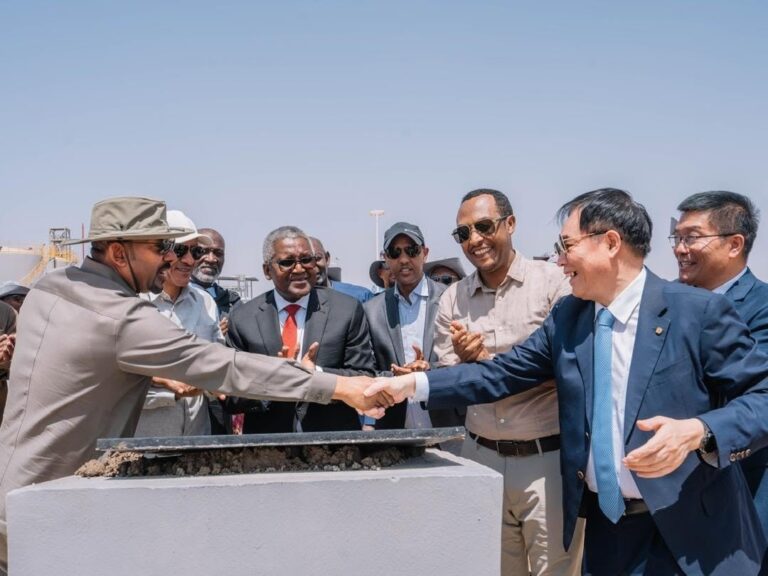
JIGJIGA, Ethiopia (HornPost) — Ethiopian Prime Minister Abiy Ahmed inaugurated the first phase of a natural gas project in the Somali Region on Thursday, Oct. 2, 2025, as the government expanded its investment in the country’s energy sector.
The Ogaden Liquefied Natural Gas (LNG) project, located in Calub, is designed to produce 111 million liters annually in its first phase. A second phase is expected to add another 1.33 billion liters of annual capacity, according to the Ethiopian News Agency.
The government says the wider energy and industrial projects launched in the region are worth about $10 billion, including associated infrastructure.
New Projects Target Energy and Fertilizer Production
Abiy said the gas project would support electricity generation and provide raw materials for fertilizer production.
The government has also begun preparations for a fertilizer plant and an oil refinery in Gode, another town in the Somali Region.
The fertilizer plant is being developed by Ethiopian Investment Holdings in partnership with the Dangote Group. It is expected to have an annual production capacity of 3 million metric tons.
The Gode oil refinery, which is being developed by China’s Golden Concord Group Limited, is designed to process up to 3.5 million metric tons of crude oil and condensate annually. The projects are intended to reduce Ethiopia’s reliance on imported fuel and fertilizer.
Somali Region Takes on Greater Economic Role
The Somali Region has long faced challenges linked to limited infrastructure and investment. The new projects form part of Ethiopia’s broader effort to develop domestic energy resources and expand industrial production.
The region contains natural gas reserves in the Ogaden Basin. Developing those resources could create opportunities for jobs, infrastructure and related industries.
However, the projects will require substantial investment and supporting infrastructure to reach their planned capacity.
Questions Remain Over Delivery and Economic Benefits
If completed as planned, the projects could help diversify Ethiopia’s energy supply and support domestic fertilizer production.
They could also create new economic opportunities in the Somali Region. These benefits, however, will depend on construction progress, reliable infrastructure and the ability to bring the facilities into sustained commercial operation.
Ethiopia continues to face foreign-exchange constraints and high import costs. Expanding domestic production could ease some of that pressure, although the scale of any savings will depend on actual output and operating costs.
The projects’ overall value has been put at about $10 billion by the Ethiopian government. Independent assessments of their financing, implementation timelines and long-term economic impact remain important as construction proceeds.
HornPost Staff Reporter
info@hornpost.com
www.hornpost.com