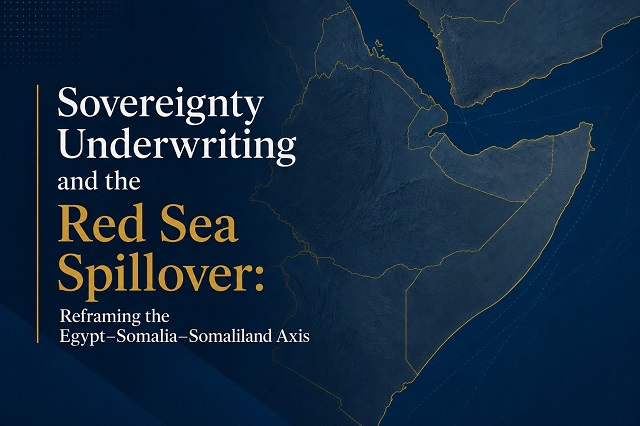
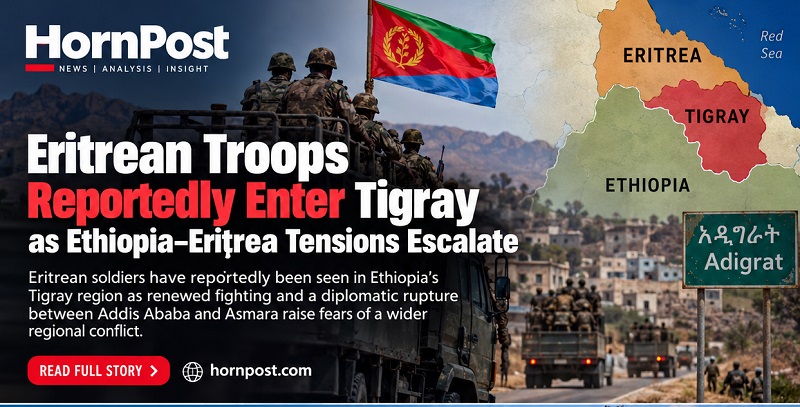
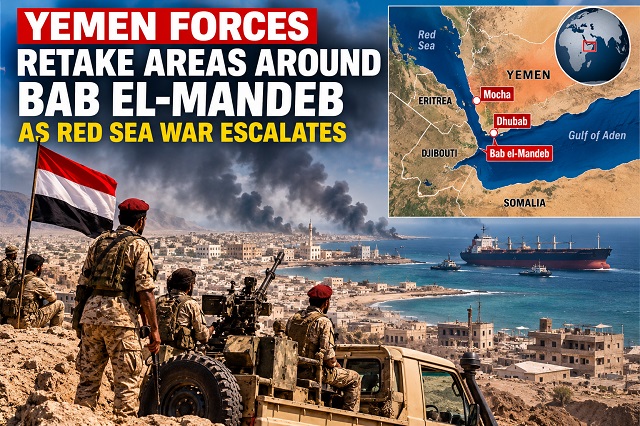
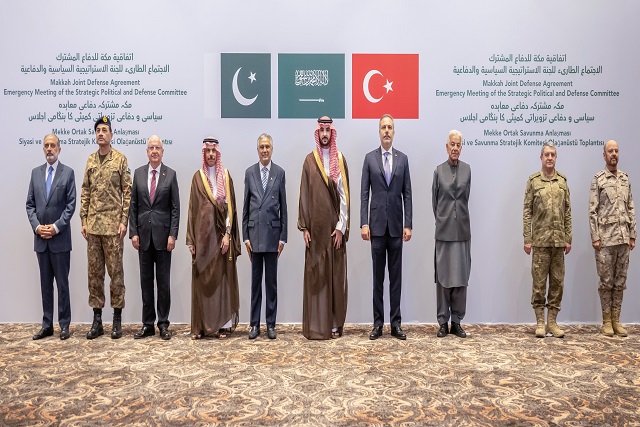
ADDIS ABABA, Ethiopia (Horn Post)— An analysis of Egypt’s Somalia strategy, Somaliland recognition, Ethiopia’s Red Sea ambitions, and how regional rivalries are reshaping Horn of Africa geopolitics.
From Nile Waters to Sea Lanes: A Strategic Recalibration
At first glance, Egypt’s categorical rejection of Somaliland’s recognition appears consistent with long-standing principles of territorial integrity and regional solidarity. Cairo’s diplomatic posture toward Somalia may readily be construed as part of a broader Arab and African consensus against secessionist precedents.
Yet this reading obscures a more consequential strategic reality. The sequencing of events suggests that Egypt’s engagement in Somalia is neither reactive nor purely normative. Its military footprint in Somalia dates back to 2024 preceding the geopolitical shifts often cited as justification. This timing aligns more closely with Ethiopia’s maritime ambitions following its Memorandum of Understanding with Somaliland, signaling a structural shift in regional competition.
What emerges is not a conventional alliance, but a recalibration of Egypt’s strategic posture: the extension of its Nile Basin contest with Ethiopia into the Red Sea theater. The Horn is no longer peripheral to Nile politics—it is increasingly assuming the character of a second front.
Conceptualizing Sovereignty Underwriting
To understand this evolving dynamic, the notion of sovereignty underwriting offers analytical clarity. At its core, sovereignty underwriting describes a pattern in which a regional power invests diplomatic, military, and financial capital in support of another state’s territorial claim—not as an end in itself, but as a means of securing leverage against a third actor.
This differs from classical alliance formation. Traditional alliances are built on shared threat perceptions; sovereignty underwriting, by contrast, is driven by asymmetric utility. The underwriter’s strategic gains often exceed—and may diverge from—the immediate interests of the supported state. In the Horn context, Somalia’s position is existential: preserving territorial unity is foundational to its statehood. Egypt’s involvement, however, is instrumental. Preventing Somaliland’s detachment serves a broader objective—denying Ethiopia independent maritime access that could alter the regional balance of power.
Operationalizing the Strategy: Military Presence and Maritime Infrastructure
The operational dimension of this strategy is both material and diplomatic. Egypt’s deployment of military personnel and advisers to Somalia reflects a long-term security commitment rather than symbolic support. This presence is complemented by infrastructure diplomacy, particularly in ports surrounding Ethiopia’s strategic periphery.
Investments in facilities such as Doraleh in Djibouti and Assab in Eritrea point to a deliberate effort to expand Egypt’s naval reach. These are not solely commercial undertakings; they are strategic assets designed to project influence across key maritime corridors. This dual approach—military basing and port development—creates a layered architecture of influence. It allows Egypt to shape both the security environment and the logistical infrastructure that underpin Red Sea geopolitics.
The Red Sea as an Extension of the Nile Dispute
The convergence of these dynamics suggests a broader transformation: the Nile dispute is no longer confined to hydropolitics. It is expanding into maritime geopolitics. For over a decade, Egypt has sought to counterbalance Ethiopia’s upstream leverage through diplomatic and legal channels. However, Ethiopia’s pursuit of Red Sea access introduces a new variable—one that cannot be addressed through Nile Basin mechanisms alone. By engaging in Somalia’s territorial dispute, Egypt effectively reframes Ethiopia’s maritime ambitions as a violation of sovereignty norms rather than a legitimate economic strategy. This reframing carries considerable strategic weight. It shifts the discourse from development rights to legal and political contestation, thereby broadening the arena in which the rivalry is played out.
Implications for Ethiopia’s Strategic Posture
For Ethiopia, this evolving landscape presents both constraints and opportunities.
First, the securitization of Red Sea access complicates Addis Ababa’s diplomatic maneuverability. What was previously framed as an economic necessity is increasingly perceived through a geopolitical lens.
Second, the emergence of a coordinated axis—linking Cairo, Mogadishu, and potentially other regional actors—introduces new layers of strategic pressure. This axis remains informal in structure, yet its effects are tangible: it shapes narratives, influences alliances, and constrains policy space. At the same time, Ethiopia retains structural advantages. Its economic weight, demographic scale, and centrality in regional integration efforts provide leverage that can be mobilized through proactive diplomacy.
Policy Considerations: Navigating a Multi-Theater Contest
A strategic response requires moving beyond reactive diplomacy. Several policy directions emerge:
1. Reframe the Narrative
Ethiopia must actively articulate its Red Sea access strategy as a component of regional economic integration rather than unilateral ambition. This requires sustained engagement in multilateral forums to counter sovereignty-based framing.
2. Diversify Maritime Partnerships
Reducing dependency on a single corridor or partner will mitigate vulnerability. Expanding engagement with multiple Red Sea and Gulf actors can create strategic redundancy.
3. Strengthen Regional Diplomacy
Engagement with IGAD, the African Union, and Nile Basin institutions should be intensified to prevent the fragmentation of regional consensus.
4. Integrate Security and Economic Policy
Maritime access should not be treated solely as an economic issue. It must be embedded within a broader national security framework that anticipates external counter-strategies.
5. Manage Escalation Risks
While strategic competition may be unavoidable, escalation need not follow. Maintaining open channels with Egypt remains essential to prevent the Red Sea theater from becoming a destabilizing extension of the Nile dispute.
Conclusion: A New Geography of Rivalry
The emerging Egypt–Somalia–Somaliland dynamic signals a shift in the geography of regional competition. The Nile and the Red Sea are no longer separate arenas; they are increasingly interconnected theaters of strategic contestation. Sovereignty underwriting, as a framework, reveals the underlying logic of this shift. It underscores how territorial disputes can be instrumentalized to achieve broader geopolitical objectives.
For Ethiopia, the challenge is not only to respond to immediate pressures but to anticipate the long-term implications of this evolving landscape. The stakes extend beyond access to the sea—they encompass the redefinition of power, influence, and strategic space in the Horn of Africa.
Source: Institute of Foreign Affairs (IFA)
By Emarakel Sileshi ,IFA
Disclaimer:
The content disseminated by the Institute of Foreign Affairs (IFA)
Prepared by:
Horn post staff
Info@hornpost.com
www.hornpost.com