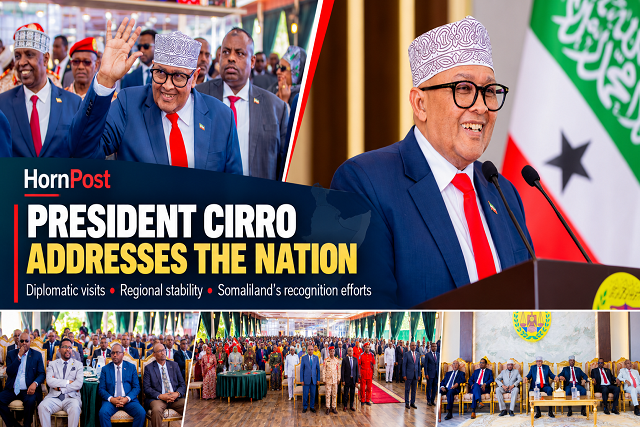
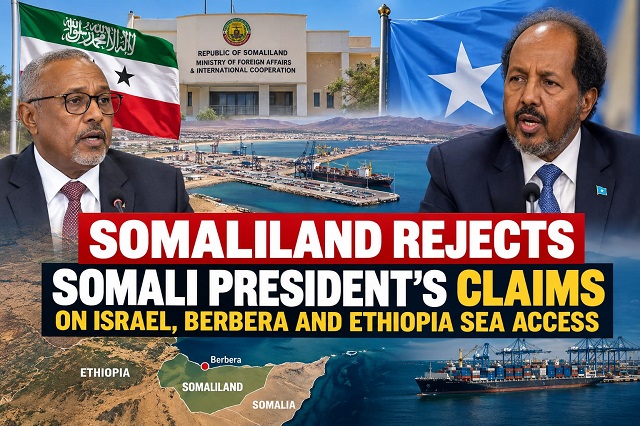


WASHINGTON —(HornPost) Somaliland President Abdirahman Mohamed Abdullahi “Irro” used a major Middle East security forum in Washington to make a broader case for Somaliland as a strategic partner of the United States, linking the territory’s push for international recognition with security cooperation, maritime stability, economic investment and its growing relationship with Israel.
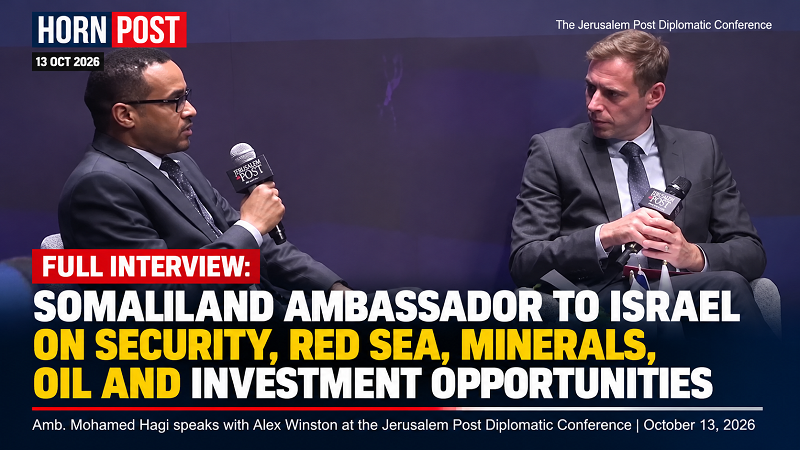
Speaking on the sidelines of the Middle East–America Dialogue (MEAD) conference in Washington, Irro said Israel’s decision to recognize Somaliland had dramatically increased international attention to the territory after more than three decades of seeking recognition.
“There has been much more attention paid to Somaliland following Israel’s recognition,” Irro told The Jerusalem Post. He said the name Somaliland was now appearing across international media in languages including Indian, Arabic and Chinese.
His remarks came as Somaliland intensifies its diplomatic campaign in Washington, seeking to turn the increased international attention generated by Israel’s recognition into closer relations with the United States.
The visit represents one of the most significant efforts by the Somaliland government to place its independence campaign directly before U.S. policymakers while simultaneously presenting the territory as a potential security and economic partner in the strategically important Horn of Africa.
From recognition campaign to strategic partnership
For Somaliland, the argument in Washington is no longer limited to the question of whether it should be recognized as an independent state.
Irro is presenting a broader proposition: that Somaliland’s geographic position, security capabilities, coastline and political alignment could make it useful to Washington at a time of growing instability around the Red Sea, Gulf of Aden and wider Middle East.
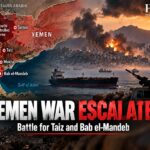
Somaliland lies along the Gulf of Aden, opposite Yemen and close to the Bab el-Mandeb Strait, one of the world’s most important maritime chokepoints.
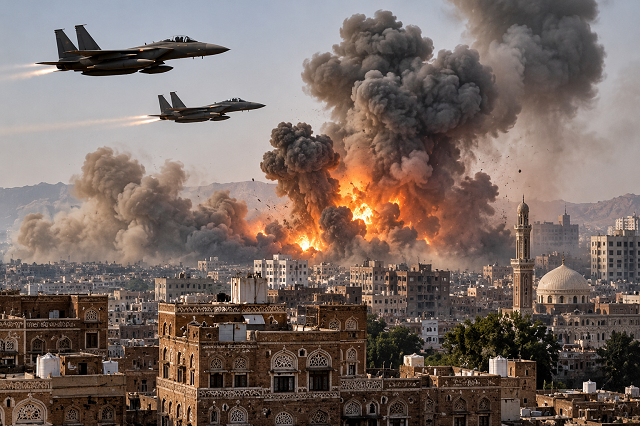
That geography has become increasingly significant as conflict in Yemen and attacks by the Iran-backed Houthi movement have raised concerns over international shipping and regional security.
The United States has maintained relations with Somaliland without formally recognizing its independence. But American lawmakers have increasingly debated whether Washington should change that position.
Sen. Ted Cruz, a prominent supporter of Somaliland in Congress, has previously urged the Trump administration to recognize Somaliland, arguing that its strategic position and security cooperation could serve U.S. interests in the Horn of Africa.
Irro told The Jerusalem Post that he could not point to an American commitment to recognize Somaliland, but said his government had discussed both recognition and security cooperation with U.S. officials.
“We are optimistic,” he said.
That distinction is important. Somaliland is lobbying for U.S. recognition; Washington has not announced that it will recognize Somaliland.
Israel’s recognition changed the diplomatic equation
Israel became the first country to formally recognize Somaliland as an independent state in December 2025, according to The Jerusalem Post. Somaliland declared its independence from Somalia in 1991 and had spent decades seeking international recognition.
For Irro, the significance of the Israeli decision extends beyond the diplomatic relationship between Hargeisa and Jerusalem.
He argues that recognition has changed the visibility of Somaliland itself.
For decades, Somaliland officials have complained that the territory’s democratic institutions, relative stability and separate political system received insufficient international attention.
Israel’s recognition gave Somaliland an opening to place its political status at the center of international debate.
Irro described this as a major change after what he characterized as 35 years of asking the international community to “see” Somaliland.
The diplomatic challenge now is whether Israel’s decision will be followed by other countries.
So far, no other UN member state has formally followed Israel in recognizing Somaliland, according to the current reporting.
That leaves the United States at the center of Somaliland’s diplomatic calculations.
Washington is the next major target
President Abdirahman Irro’s presence in Washington is therefore highly significant.
The president is expected to meet U.S. lawmakers, including Cruz, who has been one of the most vocal congressional supporters of Somaliland’s recognition.
The meetings come at a time when Washington is reassessing its strategic priorities across the Red Sea and the Horn of Africa.
For Somaliland, the objective is to persuade U.S. policymakers that recognition would not simply be a political decision but could also produce strategic benefits.
That argument is built around several areas: counterterrorism, maritime security, regional stability, economic cooperation and access to advanced technology.
The government is also emphasizing Somaliland’s willingness to cooperate with the United States and its allies on security matters.
Somaliland wants advanced military technology
President Abdirahman Irro said Somaliland has enough military personnel to defend itself but needs more advanced weapons, equipment and technology to strengthen its capabilities.
He linked the issue to changing security dynamics in the region, including Turkey’s growing military relationship with Somalia.
Somaliland’s leadership has expressed concern that the expansion of military cooperation between Turkey and Mogadishu could alter the regional balance.
Abdirahman Irro said Somaliland was therefore interested in strengthening security cooperation with Israel, the United States and other partners.
The president said there is currently no Israeli or American security presence in Somaliland, but he did not rule out the possibility of a foreign security presence in the future.
Such cooperation, he suggested, could provide deterrence and create a new balance in the region.
That position would have major geopolitical implications given Somaliland’s location opposite Yemen.
But Abdirahman Irro also sought to draw a line between future security cooperation and speculation about Israeli military operations in Yemen.
Somaliland denies talks on Israeli operations against Houthis
Abdirahman Irro specifically denied that Somaliland and Israel had discussed using Somaliland’s territory or airspace for Israeli military operations against the Houthis in Yemen.
He said Somaliland currently has no conflict with the Houthis and that the two sides had not discussed possible Israeli operations against the group.
The clarification is significant because Somaliland’s location has generated considerable speculation since Israel recognized its independence.
The territory sits across the Gulf of Aden from Yemen and near one of the world’s most important maritime routes.
But Irro’s comments indicate that, at least publicly, Hargeisa is seeking to position its relationship with Israel around broader security cooperation rather than an agreement to facilitate Israeli military operations against the Houthis.
A potential role in Gaza

One of the most striking proposals to emerge from Irro’s Washington visit concerns Gaza.
Irro told The Jerusalem Post that Somaliland would be willing to provide up to 2,000 soldiers for an international stabilization force in Gaza if the United States or Israel formally requested its participation.
He stressed that Somaliland was not volunteering its forces independently but would respond positively if formally asked.
The proposed international stabilization force is expected to eventually involve about 20,000 personnel, with responsibilities including maintaining security, training Palestinian police and facilitating humanitarian assistance.
Irro said Somaliland has an army of approximately 25,000 personnel and a coast guard of around 1,500.
The proposal represents a significant shift in how Somaliland is presenting itself internationally.
Rather than portraying itself solely as a territory seeking recognition, Hargeisa is seeking to demonstrate that it can contribute personnel and capabilities to international security initiatives.
Whether such a contribution ultimately materializes would depend on a formal request and the political and military arrangements governing the proposed Gaza force.
Economic partnership with Israel
Irro’s message also extends beyond security.
He said Somaliland’s relationship with Israel includes cooperation in trade, investment, agriculture, energy, natural resources and water technology.
Water is particularly important because Somaliland has a predominantly dry and semi-arid environment.
During his visit to Israel in June, irro said he met representatives of more than 100 Israeli companies, including businesses interested in Somaliland’s potential oil and gas resources.
He said no concrete major Israeli investment had yet been made but expressed expectations that investment would follow the strengthening of bilateral relations.
The emphasis on water technology could become one of the most practical areas of cooperation.
For Somaliland, improving water access is closely linked to agriculture, livestock, urban development and climate resilience.
The economic argument therefore complements the diplomatic and security case being presented in Washington.
Berbera and the Red Sea factor
Underlying much of Somaliland’s pitch to Washington is geography.
The territory’s coastline overlooks the Gulf of Aden, while Berbera provides access to an important maritime corridor connecting the Red Sea, Gulf of Aden and Indian Ocean.
That makes Somaliland relevant to international shipping and regional security.
The strategic importance of the area has increased as the Red Sea shipping crisis has demonstrated how quickly instability in Yemen can affect global trade.
For Washington, the question is whether Somaliland can become a more formal security partner without creating additional diplomatic costs in its relationship with Somalia.
That is one of the central challenges facing U.S. policymakers.
The cost of recognition for Washington
Recognizing Somaliland would represent a major shift in U.S. policy toward the Horn of Africa.
Somalia strongly opposes Somaliland’s independence and considers the territory part of the Somali state.
Turkey has also opposed Israel’s recognition of Somaliland and remains one of Somalia’s closest military and political partners.
That means Washington would have to weigh the potential strategic advantages of closer relations with Somaliland against the diplomatic consequences of changing its longstanding position on Somalia’s territorial integrity.
The issue is therefore more complicated than whether Somaliland is strategically useful.
The question is whether the United States believes the strategic benefits of recognition would outweigh the political and diplomatic costs.
A new phase in Somaliland’s foreign policy
Irro’s MEAD appearance suggests that Somaliland’s foreign policy is entering a new phase.
For more than three decades, the central objective has been international recognition.
The strategy now increasingly combines recognition with an offer of partnership.
Somaliland is telling Washington that it can contribute to regional security, provide a strategically located partner near major maritime routes, cooperate against terrorism and instability, attract investment and participate in international security initiatives.
Israel’s recognition has given that campaign a new diplomatic opening.
But the next step is considerably more difficult.
Israel has recognized Somaliland. The United States has not.
Congress contains influential supporters, including Cruz, but congressional support is not the same as a change in U.S. foreign policy.
Irro’s statement that Somaliland remains optimistic reflects that distinction.
For Somaliland, the challenge now is to transform the international attention generated by Israel’s recognition into concrete diplomatic, economic and security partnerships.
For Washington, the question is whether Somaliland should remain an informal partner or become something more.
And for the wider Horn of Africa, the debate is no longer confined to Somaliland and Somalia.
It is increasingly connected to Israel, the United States, Turkey, Yemen, the Red Sea, Gaza and the broader contest for strategic influence across one of the world’s most important maritime regions.

Prepared by:
HornPost staff
www.hornpost.com
HARGEISA, Somaliland