DJIBOUTI CITY, Djibouti — (HornPost) Djibouti President Ismail Omar Guelleh outlines 2026 government priorities, focusing on security, youth employment, economic diversification, public spending and digital transformation.
President of the Republic of Djibouti H.E Ismail Omar Guelleh has outlined a new set of government priorities for 2026, calling for stronger national security, greater investment in human capital, economic diversification, tighter management of public spending and accelerated digital transformation.
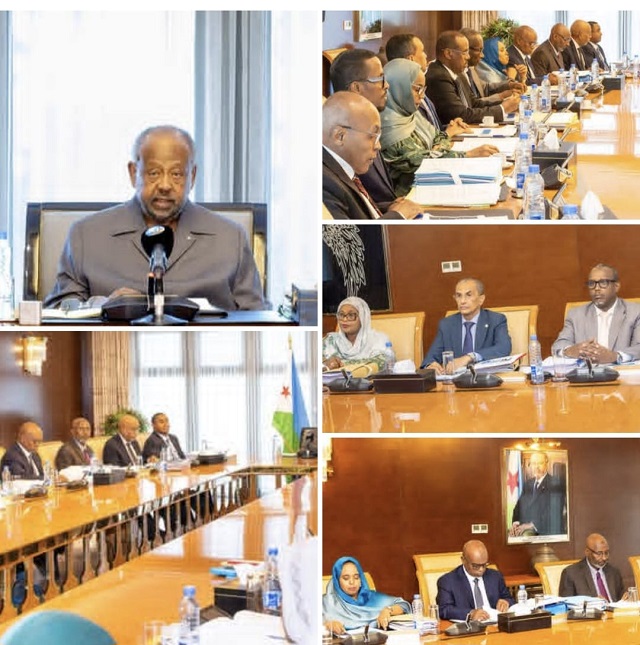
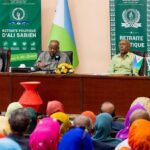
Guelleh presented the priorities Tuesday during a Council of Ministers meeting at the Palace of the Republic, marking the government’s political return for 2026.
In an opening address to the Cabinet, the president said Djibouti’s development efforts must be pursued with greater determination and a stronger focus on the core responsibilities of the state.
He identified security, peace and the protection of citizens’ fundamental rights — including education, vocational training and health care — as essential foundations for national development rather than simply policy objectives.
According to Guelleh, these priorities are closely linked to broader national interests, including national unity, social cohesion and citizens’ confidence in their country.
Djibouti Prioritizes Security and Border Control
Guelleh placed strengthening the core responsibilities of the state at the center of his government’s agenda, citing the increasingly complex geopolitical environment surrounding Djibouti.
“The geopolitical context we are experiencing calls for us to strengthen our vigilance in internal security, the security of our vital infrastructures, and the control of our borders,” Guelleh said.
Djibouti occupies a strategically important position at the entrance to the Red Sea and near the Bab el-Mandeb Strait, making the country a key player in regional maritime security and international trade.
The president said maintaining security and protecting critical infrastructure would remain central to the government’s priorities as regional geopolitical tensions continue to evolve.
Human Capital at the Center of Development Strategy
Beyond infrastructure and Djibouti’s strategic geographic position, Guelleh identified the country’s people as its most important national asset.
“Beyond our infrastructures and our exceptional geographical position, the women and men of the Republic of Djibouti constitute our first wealth,” the president said.
He called for greater investment in human capital and emphasized the importance of ensuring inclusion and equal opportunities for citizens with special needs.
The president also highlighted the role of young people in Djibouti’s future development, calling for stronger vocational and technical education as well as better access to economic opportunities.
“Our youth represent our greatest wealth… we must act with determination to open up real opportunities for them, by strengthening vocational training and technical education, by facilitating access to financing and entrepreneurship, and by improving their professional integration.”
The government’s approach places youth employment, entrepreneurship and skills development among the key areas for strengthening Djibouti’s human capital.
Government Seeks to Diversify Djibouti’s Economy
Economic diversification was another major priority outlined by Guelleh.
The president said Djibouti needs to develop new sources of economic growth beyond its traditional sectors and strategic advantages.
“We need to develop new growth engines, particularly light industries, the digital sector, tourism, renewable energies, and fishing.”
Guelleh also called for greater use of national resources and assets while encouraging innovation and entrepreneurship among young people and women.
He said continued economic progress would also depend on strengthening Djibouti’s key sectors, including logistics, banking and telecommunications.
Djibouti’s location along major international shipping routes has made logistics and port services central to its economy. The government is now seeking to broaden the economic base through sectors such as digital services, tourism, renewable energy and fisheries.
Guelleh Calls for Stronger Control of Public Spending
The president also called for greater discipline and efficiency in government spending.
He said the government must strengthen the country’s macroeconomic framework and accelerate public-finance reforms.
“This necessarily involves strengthening our macroeconomic framework and accelerating reforms in our public finances,” Guelleh said.
He linked the reforms to better allocation of public resources, increased transparency and stronger accountability in the management of public finances.
The president also called for a more results-oriented approach to public spending, emphasizing the need for government expenditure to produce measurable benefits for citizens.
“Better allocation of public resources, greater transparency of budget information in the eyes of our citizens, greater accountability in the management of public accounts… and more results-oriented management of public spending.”
The reforms are intended to improve public-sector efficiency while strengthening citizens’ confidence in the management of state resources.
Digital Transformation Becomes a Government Priority
Digitalization also featured prominently in Guelleh’s 2026 government agenda.
The president described digital transformation as an important tool for modernizing the state and improving public administration.
“The digital transformation of public action is an important lever in our state modernization policy,” Guelleh said.
He called for the acceleration of digital administrative procedures, the digitization of public services and greater interoperability between government information systems.
“In this regard, we must accelerate the digitalization of administrative procedures, the dematerialization of public services, and the interoperability of our systems.”
Guelleh also linked digital transformation to the responsible use of data and emerging artificial intelligence technologies.
He said improved governance and digitalization could allow Djibouti to explore the potential of artificial intelligence while ensuring that its use remains responsible and controlled.
A national forum on artificial intelligence is expected to provide a platform for further discussion of the technology’s potential role in Djibouti’s development.
A Broad Development Agenda for 2026
The priorities outlined by Guelleh point to a government agenda that combines security and institutional stability with economic and technological modernization.
The president emphasized that Djibouti’s development should be supported by stronger public institutions, investment in people, economic diversification and improved governance.
The government’s agenda includes:
- Strengthening internal security and border control
- Protecting vital national infrastructure
- Expanding education, vocational training and health services
- Increasing investment in human capital
- Creating opportunities for youth and people with special needs
- Supporting entrepreneurship and access to financing
- Diversifying the economy
- Developing tourism, fisheries, renewable energy and light industry
- Strengthening logistics, banking and telecommunications
- Improving public-finance management
- Increasing budget transparency and accountability
- Accelerating digital government services
- Preparing for responsible adoption of artificial intelligence
Guelleh’s address sets out a development strategy aimed at positioning Djibouti to make greater use of its geographic advantages while investing more heavily in its population, institutions and emerging economic sectors.
The government’s challenge will now be to translate those priorities into concrete policies, investment and measurable results throughout 2026.
Prepared by:
HornPost staff
info@hornpost.com
www.hornpost.com
DJIBOUTI CITY, Djibouti