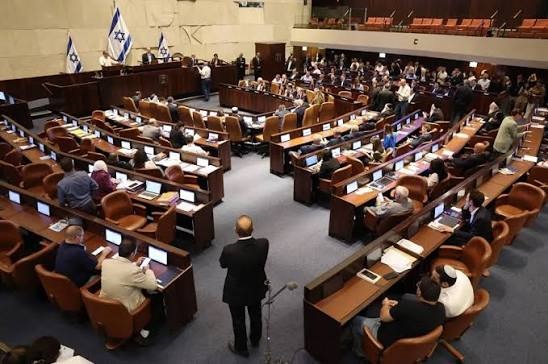
Tel Aviv (Hornpost) The Israeli parliament (Knesset) has narrowly approved a bill seeking to apply Israeli sovereignty over the occupied West Bank, a move that has drawn sharp criticism both domestically and internationally.
The proposal, introduced by Avi Maoz, leader of the far-right Noam party, passed on Wednesday with 25 votes in favor and 24 against. The decisive vote was cast by Knesset Speaker Yuli Edelstein, who broke the tie in favor of the bill—contrary to the stance of Prime Minister Benjamin Netanyahu, who had called for delaying the vote.
Maoz defended his proposal by declaring, “The State of Israel is a sovereign nation, and it’s time to act as one.” His insistence came despite Netanyahu’s appeal for restraint, reportedly aimed at avoiding friction with the United States during the visit of U.S. Vice President J.D. Vance, who is currently in Israel.
Washington has strongly opposed the legislation, describing it as a threat to regional stability and a “direct blow” to any prospects for peace.
Meanwhile, Ofir Katz, head of the Likud coalition, instructed party members to abstain from voting. In a message to Likud lawmakers, he emphasized that while the question of sovereignty was “important,” it should not be decided “through a bill introduced by the opposition at a time when we are coordinating closely with the United States on war objectives.”
Political analysts in Tel Aviv say the move reflects growing pressure from ultranationalist factions inside the ruling coalition, who view the West Bank as integral to Israel’s historic and security identity. The narrow margin of the vote, however, signals deep divisions even within the right-wing bloc.
The bill still faces additional readings before it can become law, but its approval marks a symbolic milestone for the Israeli far right and a major challenge to the Biden administration’s diplomatic approach in the region.
Turkey Denied Role in Gaza Amid Security Concerns:
In a related development, diplomatic sources confirmed that Israel has rejected Turkey’s offer to take part in post-war arrangements in Gaza, citing “security and trust concerns.”
Prime Minister Netanyahu’s office said Israel would not accept any Turkish military or security presence in Gaza once the conflict subsides. Relations between Ankara and Jerusalem remain strained, despite intermittent normalization efforts in recent years.
Analysts note that Turkey’s vocal support for the Palestinian cause and President Recep Tayyip Erdoğan’s frequent criticism of Israeli policy have deepened mistrust between the two governments.
Israel reportedly prefers coordination with Egypt, the United States, and selected Arab partners over Ankara, fearing that Turkish involvement could strengthen Hamas-aligned elements or alter Gaza’s future governance structure.
By HornPost News Desk
Hornpost staff Reporter