

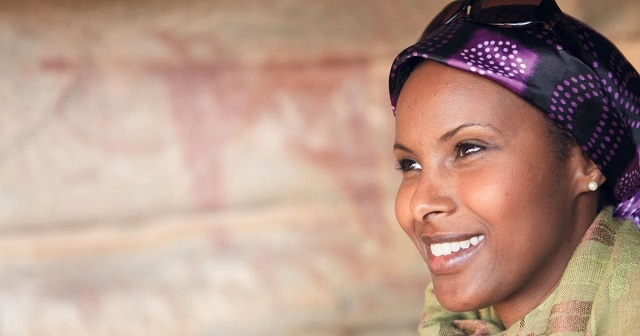
Buried Histories, Living Peace: The Intellectual Legacy in the Horn of Africa
Hargeisa, Somaliland (Horn post) This article presents the theoretical and methodological innovations underlying the Archaeology of Peace, a subfield founded by Dr. Sada Mire through two decades of fieldwork across the Horn of Africa. Drawing upon empirical evidence from rock art sites, sacred landscapes, and medieval settlements in Somaliland and Ethiopia, this research demonstrates that sustainable peace constitutes a materially inscribed, ritually reinforced system of governance with deep historical roots. The article introduces two original theoretical frameworks—the Knowledge-Centered Approach and the Ritual Set methodology—and evaluates their implications for heritage studies, post-colonial archaeology, and international peace-building policy. The National Geographic Society-funded NAGI project (2023–present) represents the first systematic archaeological initiative dedicated exclusively to documenting ancient peace practices globally.
Keywords: Archaeology of Peace; indigenous heritage management; sacred landscapes; post-colonial archaeology; Somaliland; Horn of Africa; conflict archaeology; traditional governance; Knowledge-Centered Approach; Ritual Set
- Introduction: Toward an Archaeology of Sustainable Peace
The archaeological investigation of conflict has produced robust subfields including battlefield archaeology, genocide studies, and heritage destruction analysis. However, the systematic study of peace as a material practice, governance structure, and ideological system remained theoretically underdeveloped until Dr. Sada Mire’s intervention. This article argues that peace is not merely the absence of conflict but a prerequisite for sacred fertility—understood as the growth of humans, animals, crops, and social relations—requiring specific material conditions, ritual performances, and landscape inscriptions.
The theoretical innovations presented here emerge from Mire’s positionality as a Somali-Swedish scholar operating at the intersection of Western academic traditions and indigenous knowledge systems. Born in Hargeisa in 1976 and raised in Mogadishu, Mire experienced the collapse of the Somali state firsthand, including the killing of her father, a senior police official, during ethnic cleansing in 1989. Following civil war eruption in 1991, Mire gained asylum in Sweden as a teenager before completing doctoral training at University College London (Mire 2007a, 2007b, 2008, 2011a). This personal history of displacement and return informs the epistemological commitment to understanding how the Horn of Africa maintained peace for 400 years before descending into four decades of conflict—and what the deep past can teach contemporary peace-building efforts.
The article is structured as follows: Section 2 presents the Knowledge-Centered Approach and the Ritual Set methodology; Section 3 examines sacred landscapes and the materiality of peace through case studies; Section 4 details the NAGI project and National Geographic sponsorship; Section 5 analyzes rock art evidence; Section 6 discusses indigenous governance systems; Section 7 addresses policy implications; and Section 8 concludes with future directions for the Archaeology of Peace.
- Theoretical Frameworks
2.1 The Knowledge-Centered Approach: Decolonizing Heritage Methodology
The Knowledge-Centered Approach was first articulated in Mire (2007a), “Preserving Knowledge, not Objects: A Somali Perspective for Heritage Management and Archaeological Research” (African Archaeological Review 24(3-4): 49-71). This framework argues that “objects and monuments are not necessarily important but knowledge, skill and memory as practiced and symbolized in the landscapes” constitute the primary heritage resource (Mire 2007a: 49).
Previous archaeological interventions in Somalia failed precisely because they “lacked dialogue and incorporation of local views of heritage practice” (Mire 2011a: 71). The colonial legacy of European archaeological practice—characterized by extractive data collection and the removal of material culture to metropolitan museums—created conditions wherein “archaeology is viewed by many Somalis as a distant, foreign phenomenon” (Mire 2011a: 73). The Knowledge-Centered Approach addresses this epistemological rupture by centering oral tradition, practiced memory, and landscape symbolism as primary archaeological data.
This framework proves particularly salient for studying peace, which in Somali and broader Cushitic traditions operates through performed consensus rather than codified law. The methodology enables recovery of peace-making practices that leave minimal material trace in conventional archaeological terms but constitute rich data when analyzed through indigenous epistemological frameworks (Mire 2015a, 2015b).
2.2 The Ritual Set: A Methodological Framework for Recovering Peace
In Mire (2020), https://www.routledge.com/Divine-Fertility-The-Continuity-in-Transformation-of-an-Ideology-of-Sacred-Kinship-in-Northeast-Africa/Mire/p/book/9781032174853 (Routledge), the Ritual Set was introduced as “a set of material and non-material manifestations and attributes which uses specific examples to shed light on the investigation and (re)interpretation of archaeological material and sites in the region” (Mire 2020: 15).
The Ritual Set identifies specific spaces of consensus and ritual peace-making: sacred enclosures, specific tree species (particularly Olea europaea subsp. cuspidata), springs, and mountain peaks where communities historically gathered to resolve conflicts, seal inter-clan alliances, and perform fertility rites that reinforced social bonds. This framework enables archaeologists to move beyond identification of conflict markers (weaponry, defensive architecture, trauma patterns) to recognize the material signatures of sustained peace governance—including ritual architecture, votive deposits, and landscape modifications that facilitate communal gathering and consensus-building.
The Ritual Set methodology integrates archaeological survey, ethnographic observation, historical textual analysis, historical linguistics, ethnobotany, and archaeozoology (Mire 2020). This interdisciplinary approach allows movement beyond narrow national or conflict-centered narratives to interpret shared regional heritage as an indigenous Archaeology of Peace.
- Sacred Landscapes and the Materiality of Peace
3.1 The Nagi/Nagaa Concept: Indigenous Peace Ideology
Central to the Archaeology of Peace is the indigenous Somali concept of nagi/nagaa—a complex term denoting peace, prosperity, and sacred fertility that operates as both descriptive condition and prescriptive ideology. Ethnographic and archaeological research demonstrates that this concept has underpinned state formation in the Horn of Africa for approximately 3,000 years, transforming across religious transitions (pre-Christian indigenous beliefs, Christianity, Islam) while maintaining core social function (Mire 2020).
The nagi/nagaa ideology posits peace as prerequisite for fertility—understood not merely as human reproduction but as the growth of animals, crops, and social relations. This conceptual framework explains the co-occurrence of peace-making rituals and fertility ceremonies at archaeological sites across Ethiopia and Somaliland. Documentation of sacred landscapes, enclosures, water sources, and trees reveals their dual function as sites of both agricultural fertility rituals and conflict resolution mechanisms (Mire 2015a, 2015b, 2020).
3.2 Case Study: Aw-Barkhadle and Multi-Religious Peace Architecture
Archaeological investigation of Aw-Barkhadle (Mire 2015a) provides empirical demonstration of the Archaeology of Peace’s analytical power. This 4 km² site, identified as the potential lost first capital of the Awdal kingdom (a medieval Islamic empire), exhibits remarkable multi-religious complexity: pre-Islamic phallic stones, Christian graves marked with Orthodox crosses, and Islamic mausoleums coexist within a single sacred landscape.
Critically, survey revealed gravestones marked with Coptic crosses and Stars of David, indicating the presence of Christians and Jews alongside Muslims in this pilgrimage center (Mire 2015a: 102). This ecumenical materiality challenges modern narratives of religious division in the Horn of Africa and demonstrates how the site functioned as a space of interfaith peace-making for centuries. The 3 km town wall, mosque foundations, and surrounding burials (13th–19th centuries AD) indicate sustained investment in a sacred landscape facilitating cross-community consensus.
The mausoleum of Saint Aw-Barkhadle, completed in the 19th century, is surrounded by dozens of white-washed tombs belonging to various figures. According to historical chronicles, the saint appears in kinglists of the Walasma dynasty of Ifat and Adal, and the site served as burial place for Garaad Jibril, who revolted against Harar’s ruler Sultan ‘Uthman in the 16th century (Mire 2015a). Philipp Paulitschke’s 1888 account identified the capital of Adal as “AwBerkele,” suggesting the walled settlement functioned as capital of Ifat and Adal at the end of the Middle Ages.
The site’s sacred landscape includes a mountain, trees, stones, and wells associated with deities, most prominently the sky God Waaq, connecting pre-Islamic and Islamic traditions through myths, legends, and ancestor worship (Mire 2015a). This continuity demonstrates how the ideology of peace adapted across religious transformations while maintaining core social function.
- The NAGI Project and National Geographic Sponsorship
4.1 Project Design and Theoretical Objectives
In May 2023, the National Geographic Society awarded Dr. Mire the Wayfinder Award, providing institutional support for expansion of research under the project designation NAGI: Exploring the Forgotten Heritage of Peace-Making in the War-Torn Horn of Africa (National Geographic Explorer Profile). This project represents the first globally recognized archaeological initiative “solely dedicated to the documentation and understanding of the ancient peace practices in Africa and beyond” (Somaliland Sun 2023).
The NAGI project employs cultural heritage and archaeology as departure points to address contemporary global issues of war and famine, utilizing “cultural notions of peace- and fertility-making and their manifestations as a base for its data” (Mire 2020: 18). The project’s interdisciplinary methodology integrates archaeological survey, ethnographic observation, historical textual analysis, historical linguistics, ethnobotany, and archaeozoology to reconstruct long-term institutional frameworks that maintained regional stability.
4.2 Digital Heritage and Public Archaeology Components
The National Geographic sponsorship enables significant public-facing outputs, including a digital exhibition on the Archaeology of Peace and a documentary film produced as part of the Wayfinder grant. These outputs translate academic research into accessible formats designed to influence contemporary policy discussions on conflict resolution and peace-building.
Concurrently, the Horn Heritage Foundation—founded by Mire in 2011 with offices in Hargeisa and The Hague—conducts systematic digital documentation of endangered sites. The Foundation’s drone archaeology program and 3D photogrammetry initiatives have created “the digital recording and 3D virtual tours of Somaliland rock art sites” and “the survey and documentation of Medieval Islamic kingdoms and sacred landscapes, including the drone archaeology of Aw-Barkhadle, capital of Adal Kingdom” (Horn Heritage Foundation).
These technologies serve dual functions: creating permanent archives of fragile sites threatened by erosion, development, and conflict; and democratizing access to heritage for Somali diaspora communities and global audiences. The Foundation has trained over 1,000 Somali students across the Somali region and globally, contributed to development of Somaliland’s National Heritage Act, and created the Horn Heritage Digital Museum.
- Rock Art and Ritual Peace-Making: Empirical Case Studies
5.1 Laas Geel: Deciphering Five Millennia of Peace Symbolism
Mire’s award-winning work on the Laas Geel rock art complex (ca. 5,000 years BP) demonstrates the Archaeology of Peace’s interpretive capacity. The polychrome paintings—among the best-preserved in Africa—depict large votive cows with decorated necks and prominent udders, human figures with arms outstretched in ceremonial poses, and geometric patterns indicating ritual activity.
Interpretation moves beyond conventional pastoralist readings to identify these images as evidence of peace rituals—ceremonies where communities gathered at sacred water sources to perform fertility rites that reinforced social bonds and conflict resolution mechanisms. The standardized human figures, the site’s location at seasonal river confluences, and the symbolic emphasis on cattle fertility (directly linked to social wealth and inter-clan alliance networks in pastoralist societies) all point to a sophisticated ritual landscape where peace was actively performed and materially inscribed.
The Laas Geel shelters, translating to “The Camels’ Well” in Somali, consist of about twenty shelters of varying size, with the largest approximately 10 m long and 5 m deep. The paintings are excellently preserved thanks to their location under granite overhangs. The site is essential to the Horn of Africa’s historical and heritage legacy and is considered a potential World Heritage Site candidate (Horn Heritage Foundation).
5.2 Dhambalin: Archaeological Evidence of Ritual Continuity
The Dhambalin rock shelter, discovered in autumn 2007 and documented in Mire (2008), provides further empirical support for the Archaeology of Peace framework. The site’s polychrome paintings (ca. 5,000 years BP) include the first sheep depictions in Somali archaeology—fourteen animals with red and white coloring lacking the black heads characteristic of modern Somali breeds—suggesting ancient domesticated varieties and long-term pastoral stability (Mire 2008: 158).
Of particular significance for peace archaeology are the human figures: hunters with bows and arrows wearing headgear, accompanied by dogs; a figure sitting on an animal with raised hands interpreted as worshipping cattle; and two clearly male figures with arms outstretched in ceremonial poses (Mire 2008: 160). These outstretched arms echo the ritual poses at Laas Geel, suggesting continuity of peace-making gestures across millennia. The “conspicuous bands drawn on the backs and bellies of cows” attest to ritual decoration associated with fertility and peace ceremonies (Mire 2008: 161).
UNESCO’s Chief of Africa, Lazare Eloundou Assomo, recognized the site’s significance in 2011, and it was subsequently added to the UNESCO World Heritage tentative list (Mire 2008). The site holds extraordinary originality and is essential to understanding the region’s ritual practices.
- The Wagar and Sacred Trees: Material Culture of Fertility and Peace
Mire (2015a) presents the first academic study of the wagar—a sacred wooden sculpture kept by Somali women and used as a medium in fertility and peace rituals. This research demonstrates the wagar’s significance as a “Cushitic symbol of belief in sacred trees within Somali society” and explores its potential link to the Sky-God Waaq—adhered to by Cushitic peoples both before and during the practice of Christianity and Islam (Mire 2015a: 93).
Mire’s personal connection to the wagar—having inherited one from her maternal grandmother—exemplifies the Knowledge-Centered Approach in practice, bridging academic research with indigenous knowledge transmission. Mire and collaborators climbed Somaliland’s Golis Mountains to collect wagar tree branches, connecting ancient practice with living tradition and demonstrating that the Archaeology of Peace investigates not merely past artifacts but ongoing material relationships between communities and sacred landscapes.
The wagar study contributes to the archaeology of religion and historical archaeology in the Horn of Africa, demonstrating how indigenous technologies—including iron and pottery, traditional medicine and surgery, architecture and art—are maintained by custodians who are often the most marginalized in the region (Horn Heritage Foundation).
- Indigenous Governance Systems: The Archaeological Recovery of Xeer
The Archaeology of Peace extends beyond ritual sites to excavate the material foundations of Xeer—the Somali customary law system representing one of humanity’s most enduring conflict resolution mechanisms. Xeer operates as a culturally defined system of folklore and habits, orally transmitted across generations, based on consensus between entitled groups.
The system’s core principles include inter-clan conventions on protection and security, family obligations, and resource-utilization rules regarding water, pasture, and natural resources. Mediation (masalaxo) and arbitration (gar dawe) operate through clan elders (xeer begti), with restorative rather than punitive outcomes: “Somalis who apply xeer are not so much interested in establishing the suspect’s guilt or innocence—it is important to reach consensus (win-win situation).” All participants must abandon the dispute without “losing face,” and the sense of adequacy of sanction being an inconvenience for the whole clan reinforces collective responsibility.
Archaeological documentation reveals that the sacred enclosures, water sources, and trees identified in this research were not merely spiritual sites but the physical infrastructure of the Xeer system—places where disputes were resolved, alliances sealed, and collective responsibility ritually reinforced. The compensation system (mag-diye), where damages are paid in camels to avoid blood revenge, finds its material origins in these sacred landscapes where fertility and peace were understood as inseparable conditions for social reproduction (Mire 2020).
- Policy Implications: Challenging International Humanitarian Law
The Archaeology of Peace carries profound implications for contemporary global policy. Mire argues that current International Humanitarian Law and global treaties have proven unsuccessful in protecting humanity from continuing wars, proposing that lessons from the deep past and traditional governance systems can “raise global awareness and impact policy in peace-making, conflict resolution and reconciliation” (Mire 2020: 22).
The 2018 Hague Talk, “You want world peace? Revise the History Books!”, articulated the central thesis that “understanding beyond the labels of Christianity and Islam reveals a deeper history connecting people in the Horn of Africa”—an “archaeology of cohesion” capable of addressing current narratives of division. The 2020 British Academy Global Perspectives lecture extended this argument to the global political atmosphere, where “even the most powerful democracies of the world are in crisis” (Mire 2020).
The assertion that cultural heritage constitutes a basic human need—articulated in the 2011 New Scientist article and 2014 TED Talk (Mire 2014)—challenges the humanitarian sector’s hierarchical ordering of needs. Mire (2016), “The Role of Cultural Heritage in the Basic Needs of East African Pastoralists” (African Study Monographs 53(Supplementary Issue): 147-157), provides the empirical foundation for this theoretical claim, demonstrating that “without the traditional skills and coping mechanisms that are inherent in the cultural values that glue people together, it is difficult for East African pastoralists to survive” (Mire 2016: 147).
- Critical Assessment and Scholarly Reception
9.1 Academic Recognition
The theoretical contributions presented here have received substantial scholarly recognition. Mire (2020) won the Society of Africanist Archaeologists (SAfA) Book Prize in 2021, making Mire the first archaeologist of non-European descent to receive this award (SAfA 2021; Somaliland Sun 2023). The monograph was praised by Paul Lane as “a genuinely post-colonial approach toward heritage protection and conservation in the country and how best to mobilise knowledge and memory of Somalia’s deep past for the greater benefit of current and future generations” (Lane 2020: 512).
In 2017, Mire was selected by the Hay Festival of Literature and Arts as one of 30 Global Writers and Thinkers for 2017-2027, and https://www.newscientist.com/ named her among the Most Inspiring Women in Science of All Time (National Geographic Explorer Profile).
9.2 Critical Engagements
Academic review of Divine Fertility has identified both strengths and areas requiring further development. A 2024 review in Geeska noted that while the critical perspective on the lack of indigenous scholarship and colonial legacies is “valuable,” the approach “through an ethnic lens, particularly its use of the term ‘Cushitic,’ is problematic” in contexts of active ethnic tension such as contemporary Ethiopia. The reviewer further observed that the “reliance on ethnographic analogy as the basis for the ‘Ritual Set’ presents a challenge, as this method is difficult to apply consistently” across the diverse Ethiopian sites discussed (Tiya, Aksum, Lalibela, Sheikh Hussein).
These critiques highlight the methodological tensions inherent in developing indigenous archaeological frameworks while engaging with comparative regional analysis—a challenge addressed through insistence on locally appropriate theoretical frameworks integrated with rigorous interdisciplinary methodology.
________________________________________________
Author Biography: Author Biography:
Gulaid Yusuf Idaan is a senior lecturer and independent scholar based in Hargeisa, Somaliland. His research focuses on international relations, political analysis, constitutional studies, and the geopolitics of the Horn of Africa.
Author: Gulaid Yusuf Idaan
Corresponding Author: idaan54@gmail,com
Hayaannews Hayaantribune
Abdikarim Saed Salah
Abdikarim Saed Salah is Editor-in-Chief and Founder of HornPost.com, an independent Hargeisa-based news platform covering Somaliland, the Horn of Africa, East Africa, the Red Sea and international affairs. A journalist, television presenter, producer and geopolitical analyst, he has more than 15 years of experience in broadcast journalism, digital media, reporting and diplomacy. He works with Horn Cable TV and focuses on politics, elections, security, foreign policy and conflict. He holds a BA in Journalism and an MA in International Relations.