Horn Post | Political Analysis
Hargeisa (Horn post) Recent remarks by a Somali government official on Al Jazeera Arabic have once again brought the long-running dispute between Somalia and Somaliland to the forefront, underscoring the sharp contrast between narratives emerging from Mogadishu and political realities asserted by analysts in Hargeisa.
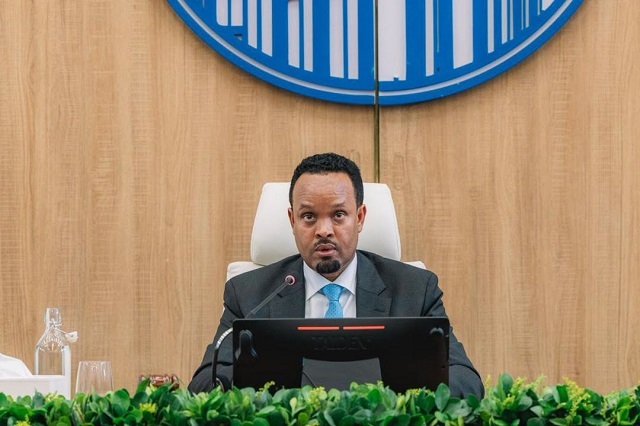
Somalia’s Deputy Minister of Foreign Affairs, Ali Balcad, claimed that Somaliland does not constitute a unified political entity, portraying it instead as fragmented regions and framing the issue largely along clan lines. The comments, widely circulated in regional media, were met with criticism from Somaliland commentators and political observers, who described them as historically inaccurate and detached from geographical and political facts.
Geography and historical foundations
Analysts point out that Somaliland’s status cannot be reduced to administrative or clan-based arguments without overlooking its historical and territorial foundations. Somaliland was formerly a British Protectorate and gained independence on June 26, 1960, before voluntarily entering a union with the former Italian-administered Somalia days later.
That union, conceived in the spirit of pan-Somali unity, was never fully institutionalized through a ratified legal framework accepted by both sides. Its eventual collapse followed years of political marginalization and large-scale violence under Somalia’s former military regime.
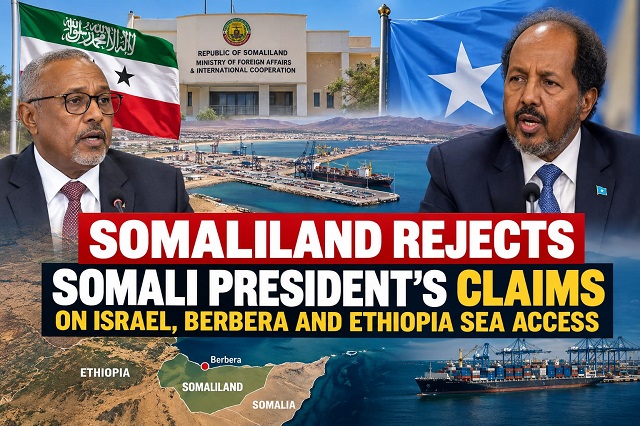
From a geographical perspective, Somaliland occupies a clearly defined territory of approximately 176,120 square kilometers, based on inherited colonial borders. It borders Djibouti to the northwest, Ethiopia to the south and west, and Somalia to the east, and maintains a strategically significant coastline stretching between 740 and 800 kilometers along the Gulf of Aden. Analysts argue that these fixed boundaries challenge portrayals of Somaliland as a loosely defined or fragmented entity.
Legacy of conflict and separation
Between 1987 and 1990, northern regions experienced widespread destruction and civilian casualties during the final years of Somalia’s military government. This period marked a decisive turning point, culminating in Somaliland’s declaration of restored independence in 1991 following a prolonged armed struggle.
Since then, Somaliland has pursued a separate political path, establishing its own governing institutions, security structures, and electoral processes over more than three decades. While its status remains unrecognized by most of the international community, analysts note that its internal political trajectory has differed markedly from that of southern and central Somalia.
Shifting diplomatic dynamics
Observers also link the resurgence of assertive rhetoric from Mogadishu to recent diplomatic developments involving Somaliland. In December 2025, Israel announced its recognition of Somaliland, a move that Somaliland officials describe as a significant diplomatic breakthrough that expanded their access to international engagement.
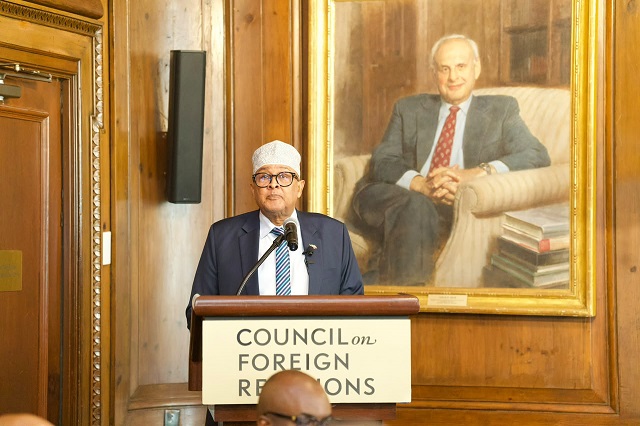
Following that development, Somaliland’s president increased participation in high-profile global forums, including the World Economic Forum in Davos and international economic and governance summits held in Dubai. Supporters of Somaliland interpret these appearances as signs of growing international visibility and acceptance, even as formal recognition remains limited.
Political analysts suggest that Somalia’s reaction reflects concern that Somaliland is achieving levels of global exposure and diplomatic momentum it has sought for decades. From this viewpoint, statements challenging Somaliland’s legitimacy are seen as reactive narratives shaped by shifting regional and international dynamics rather than by new policy developments.
An unresolved political question
Despite these developments, analysts caution that increased diplomatic engagement does not equate to universal recognition, and that Somaliland’s quest for statehood remains unresolved within international legal and multilateral frameworks.
At the same time, they argue that attempts to frame Somaliland purely as an internal Somali administrative or clan issue fail to engage with the historical, territorial, and political complexities that define the dispute.
Outlook
The latest exchange illustrates the enduring divide between Somalia and Somaliland — a divide rooted in history, competing legal interpretations, and divergent political trajectories. Observers note that meaningful progress is unlikely to come through media statements alone, but rather through sustained dialogue that addresses the legacy of the 1960 union, subsequent conflict, and the realities that have emerged over more than three decades of separation.
For now, the competing narratives continue to play out across regional and international platforms, reflecting one of the Horn of Africa’s most persistent and complex political questions.
Prepared by:
Horn post staff reporter
info@hornpost.com
www.hornpost.com
Hargeisa, Somaliland