ANALYSIS on Somaliland–Israel Relations and the New Geopolitics of the Horn of Africa
Host: Mohamed Yusuf Said Analyst: Jibril Qoobay
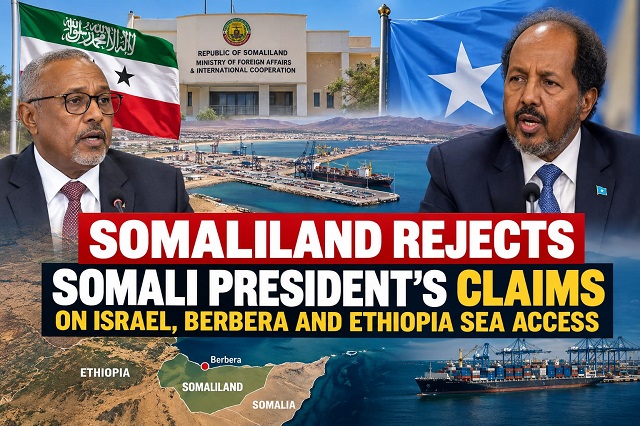
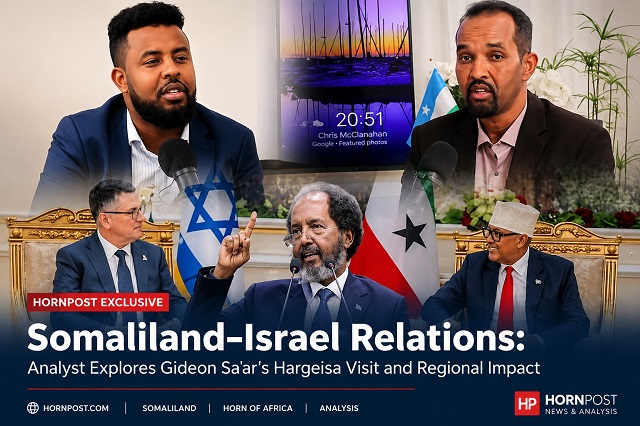
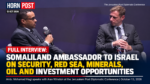
HARGEISA, Somaliland — Journalist Mohamed Yusuf Said hosted political analyst Jibril Qoobay for an in-depth discussion on Israel’s recognition of Somaliland, Israeli Foreign Minister Gideon Sa’ar’s visit to Hargeisa, and the broader political implications of the growing relationship between Somaliland and Israel.
The discussion examined the significance of Israel’s engagement with Somaliland and what the emerging relationship could mean for the political and strategic balance in the Horn of Africa and the Red Sea.
The speakers also considered how Somalia and other regional powers could respond to the development, as well as what future cooperation between Somaliland and Israel could look like.
Israel’s Recognition of Somaliland
A central focus of the discussion was Israel’s recognition of Somaliland and the political significance of the decision.
Qoobay’s analysis placed the development within the wider competition for influence in the Horn of Africa, where several regional and international powers have strategic interests.
The discussion emphasized that the recognition should not be viewed solely through the Somaliland-Somalia dispute. It also needs to be understood in the context of the changing geopolitical environment surrounding the Gulf of Aden, Red Sea and wider Horn of Africa.
For Somaliland, the development represents a significant diplomatic opening after decades of efforts to gain wider international recognition.
For Israel, deeper engagement with Somaliland creates another strategic relationship in a region located close to important maritime routes and major geopolitical interests.
Gideon Sa’ar’s Visit to Hargeisa
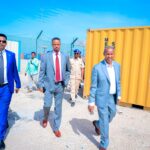
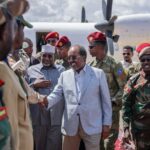
The interview also focused on Israeli Foreign Minister Gideon Sa’ar’s visit to Hargeisa, which was discussed as an important diplomatic signal following the strengthening of relations between Somaliland and Israel.
The visit carries significance beyond the formal meetings between officials.
It signals a willingness by Israel to deepen political engagement with Hargeisa and potentially develop cooperation across several areas.
The discussion considered the message the visit could send to other governments in the region, particularly countries that have strong political, security or economic interests in Somaliland and Somalia.
Somalia’s Response and the Wider Political Dispute
Another major issue raised during the discussion was the likely impact of Israel’s recognition of Somaliland on relations between Somaliland and the Federal Government of Somalia.
The speakers examined the position of Mogadishu and the broader political dispute over Somaliland’s status.
The development introduces another international dimension into a dispute that has remained unresolved for decades.
For Somalia, Israel’s recognition of Somaliland presents a significant diplomatic challenge because it could encourage further international engagement with Hargeisa.
For Somaliland, meanwhile, the relationship provides an opportunity to strengthen its international diplomatic position and expand its engagement with countries outside its traditional partnerships.
A Regional Geopolitical Question
The discussion also placed the Somaliland-Israel relationship within the broader geopolitical competition involving countries such as Ethiopia, Djibouti, Kenya, Egypt, Turkey, Qatar and Saudi Arabia.
These countries have varying interests in the Horn of Africa and Red Sea region.
Changes in the relationship between Somaliland and Israel could therefore have consequences beyond the two parties.
The speakers noted the importance of understanding what different regional governments are doing and how their policies toward Israel, Somalia and Somaliland could evolve.
The discussion also highlighted the importance of developments in Ethiopia, Kenya and the wider Red Sea region, where security, trade and strategic competition increasingly overlap.
Somaliland’s Strategic Position
Somaliland’s geographic position was another important element of the discussion.
Located along the Gulf of Aden, Somaliland sits near one of the world’s strategically important maritime corridors.
That location has contributed to growing international interest in the region, particularly as global powers pay greater attention to Red Sea security and maritime trade.
The emerging relationship with Israel could potentially open opportunities for cooperation in areas such as trade, investment, technology, agriculture and security, although the scope and direction of future cooperation will depend on subsequent diplomatic developments.
Beyond Recognition: What Comes Next?
The discussion ultimately moved beyond the question of recognition to the more important issue of what comes next.
Recognition can establish diplomatic relations, but the long-term significance of the relationship will depend on how the two sides translate diplomatic ties into practical cooperation.
For Somaliland, the priority remains expanding international engagement and strengthening its case for broader recognition.
For Israel, closer relations with Somaliland could provide an additional strategic partnership in a geopolitically important part of the Horn of Africa.
The development could also force other regional governments to reassess their own policies toward Somaliland.
A New Chapter for the Horn of Africa?
The growing Somaliland-Israel relationship comes at a time when the political and strategic environment of the Horn of Africa is undergoing significant change.
The region is increasingly shaped by competition over ports, maritime routes, security partnerships, trade and diplomatic influence.
Against this background, Israel’s recognition of Somaliland and Gideon Sa’ar’s visit to Hargeisa could mark the beginning of a broader political and strategic relationship.
The key question now is whether the relationship will remain primarily diplomatic or develop into a deeper partnership with tangible economic, security and strategic dimensions.
For Somaliland, the answer could have major implications for its long-running international recognition campaign.
For the wider Horn of Africa, it could become another important factor in the region’s rapidly changing geopolitical landscape.
Abdikarim Saed Salah is Editor-in-Chief and Founder of HornPost.com, an independent Hargeisa-based news platform covering Somaliland, the Horn of Africa, East Africa, the Red Sea and international affairs.
A journalist, television presenter, producer and geopolitical analyst, he has more than 15 years of experience in broadcast journalism, digital media, reporting and diplomacy. He works with Horn Cable TV and focuses on politics, elections, security, foreign policy and conflict.
He holds a BA in Journalism and an MA in International Relations.
Essential cookies enable basic functions and are necessary for the proper function of the website.
Name
Description
Duration
Cookie Preferences
This cookie is used to store the user's cookie consent preferences.
30 days
Google's current Sign in with Google client library. It renders the Google sign-in button, or the One Tap prompt, so visitors can log in to your site with their Google account. It replaces the older Google Sign-In platform library.
Set on your own domain by the Sign in with Google client library. Records whether the visitor has dismissed the One Tap sign-in prompt and for how long it should stay hidden, plus the time the library last loaded and a browsing session id used for the same purpose. Sites that pass a custom state_cookie_name will see that name instead.
180 days
g_csrf_token
Set on your own domain by the Sign in with Google client library and submitted together with the sign-in credential, so your site can confirm the sign-in came from its own page and not from a forged cross-site request.
5 minutes
Statistics cookies collect information anonymously. This information helps us understand how visitors use our website.
Google Analytics is a powerful tool that tracks and analyzes website traffic for informed marketing decisions.
Used only with old Urchin versions of Google Analytics and not with GA.js. Was used to distinguish between new sessions and visits at the end of a session.
End of session (browser)
__utmz
Contains information about the traffic source or campaign that directed user to the website. The cookie is set when the GA.js javascript is loaded and updated when data is sent to the Google Anaytics server
6 months after last activity
__utmv
Contains custom information set by the web developer via the _setCustomVar method in Google Analytics. This cookie is updated every time new data is sent to the Google Analytics server.
2 years after last activity
__utmx
Used to determine whether a user is included in an A / B or Multivariate test.
18 months
_ga
ID used to identify users
2 years
_gali
Used by Google Analytics to determine which links on a page are being clicked
30 seconds
_ga_
ID used to identify users
2 years
_gid
ID used to identify users for 24 hours after last activity
24 hours
_gat
Used to monitor number of Google Analytics server requests when using Google Tag Manager
1 minute
_gac_
Contains information related to marketing campaigns of the user. These are shared with Google AdWords / Google Ads when the Google Ads and Google Analytics accounts are linked together.
90 days
__utma
ID used to identify users and sessions
2 years after last activity
__utmt
Used to monitor number of Google Analytics server requests
10 minutes
__utmb
Used to distinguish new sessions and visits. This cookie is set when the GA.js javascript library is loaded and there is no existing __utmb cookie. The cookie is updated every time data is sent to the Google Analytics server.