
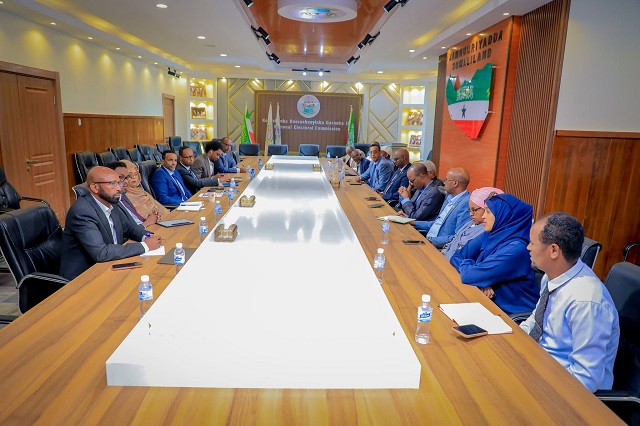
HARGEISA, Somaliland (Horn post) The Somaliland National Electoral Commission has issued a statement following a high-level meeting held with leaders of Somaliland’s three officially recognized national political parties, as preparations continue for future elections amid prolonged delays, political disagreements and renewed debate over voter registration procedures.
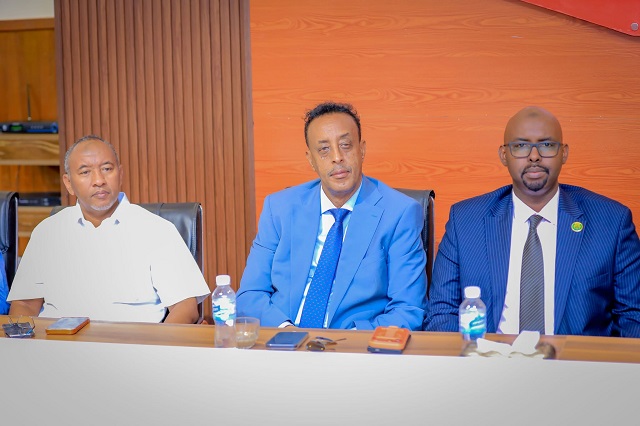
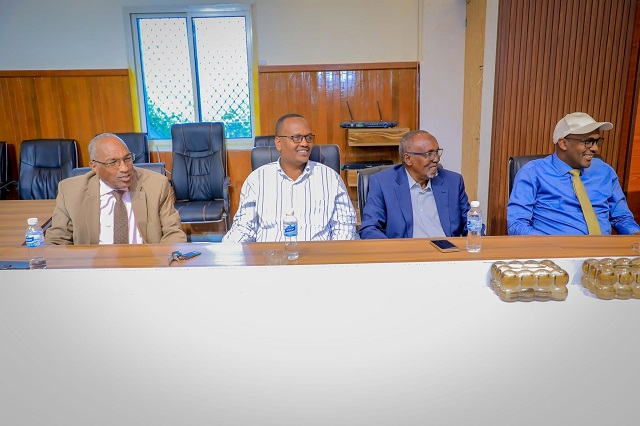
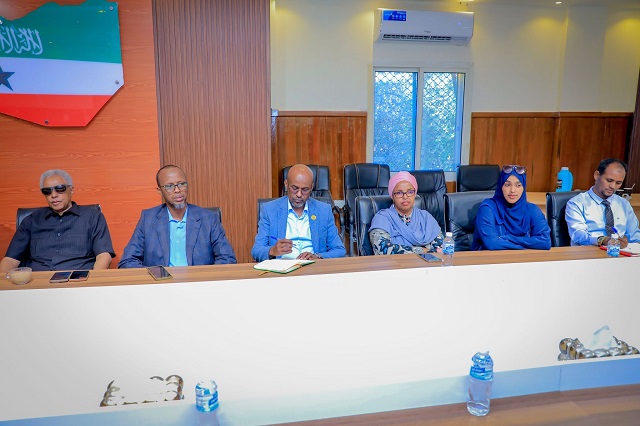
The National Electoral Commission (NEC) met on Friday with senior officials from the three national political organizations — KAAH Political Party, Kulmiye Party, and the ruling Waddani Party — where commissioners provided updates on ongoing institutional work and preparations for upcoming voter registration activities.
According to the commission, discussions focused on four major issues currently shaping Somaliland’s electoral roadmap.
First, commissioners briefed party officials on the meeting they held last week with Abdirahman Mohamed Abdullahi Irro, where broader election preparations and institutional coordination were discussed.
Second, the commission explained the successful agreement recently reached with opposition party KAAH after weeks of disagreements, an understanding that effectively restored formal cooperation between both sides after earlier tensions surrounding electoral procedures.
Third, NEC officials reported on a recent official visit to Finland, where Somaliland’s electoral commissioners held meetings with Finnish institutions specializing in election management, democratic governance and members of the Somaliland diaspora community.
Commission officials said the Finland trip provided valuable discussions with international democracy institutions and generated recommendations expected to support Somaliland’s future electoral planning.
Fourth, the commission informed political parties that it is currently finalizing a new voter registration framework, which will soon be formally presented to all election stakeholders across Somaliland for consultation before implementation begins.
Following the meeting, the three political parties separately released statements outlining their positions on the discussions.
Officials from opposition party Kulmiye, led by the party’s First Deputy Chairman Abdiaziz Mohamed Samale, confirmed their participation in the joint meeting and said the commission had briefed all parties regarding ongoing election-related preparations and technical operational activities.
Opposition party KAAH also released a statement saying its senior leadership participated in the meeting alongside representatives from Waddani and Kulmiye, where discussions centered on accelerating election preparations, organizing voter registration processes and strengthening institutional cooperation between political parties and the electoral commission.
KAAH publicly welcomed the efforts being undertaken by the electoral commission to improve transparency, efficiency and operational readiness in Somaliland’s electoral system.
The party reaffirmed what it described as its commitment to playing an active role in ensuring the successful implementation of free and credible elections.
Meanwhile, the ruling Waddani Party said its senior leadership also attended the meeting, during which the electoral commission briefed political parties on ongoing technical preparations and administrative work linked to voter registration and future election planning.
The meeting comes at a politically sensitive moment in Somaliland after elections originally scheduled for this year — including local council elections and parliamentary elections for the House of Representatives — were officially delayed.
The controversy deepened further after House of Elders of Somaliland (Guurti) voted to extend the terms of both local councils and the House of Representatives by two years and Three months, a move that triggered strong criticism from election candidates, civil society groups and broader democratic stakeholders across Somaliland.
Political analysts say the latest meetings suggest authorities are now shifting focus toward preparing future elections and voter registration exercises that will take place after the controversial extension period expires.
One of the largest unresolved disputes continues to center around how Somaliland should conduct voter registration.
The disagreement primarily involved conflicting positions among the three political parties.
The KAAH Party has argued that Somaliland should begin an entirely new voter registration process from the ground up, including establishing a completely new biometric data center.
KAAH leaders say the current voter registration database is outdated because the original registration system began in 2016, meaning nearly ten years have passed and substantial demographic changes have occurred, including physical facial changes among registered voters, requiring a complete national reset.
By contrast, both Kulmiye and Waddani have argued that Somaliland should only register new voters who were previously unregistered rather than abandoning the existing voter database and starting over completely.
Despite this long-running dispute, observers noted that Friday’s meeting ended without publicly resolving the disagreement, and no official position was announced regarding which registration model Somaliland will ultimately adopt.
Somaliland’s democratic system has increasingly faced criticism in recent years as repeated political term extensions have become a recurring feature of the country’s governance structure.
Observers note that elections in Somaliland have increasingly failed to occur within constitutionally expected timelines, raising broader concerns about the future credibility of the territory’s democratic institutions.
President Abdirahman Irro had previously promised that all elections during his administration would take place on schedule.
However, critics now point out that the first major election cycle under his presidency has already been postponed for nearly three years after the recent extension decision, raising questions about whether Somaliland’s democratic institutions are continuing down the same path of repeated electoral delays seen under previous administrations.
Political observers say the coming months will determine whether Somaliland can rebuild confidence in its democratic institutions or whether election delays will continue undermining one of the Horn of Africa’s most closely watched democratic experiments.
Pictures:
Prepared by:
Horn post staff
Hargeisa, Somaliland