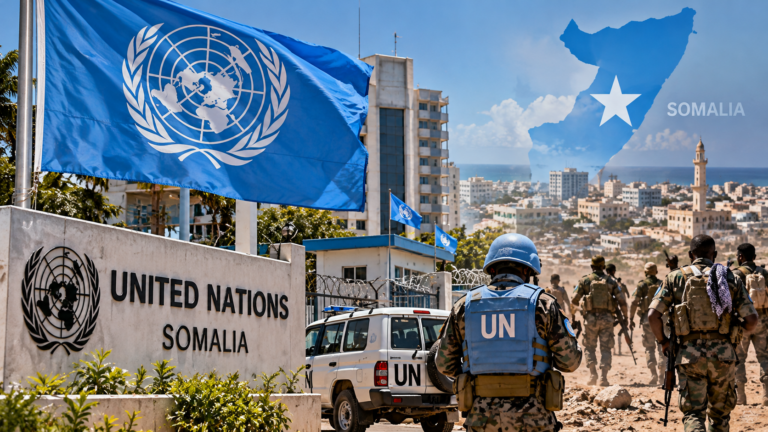
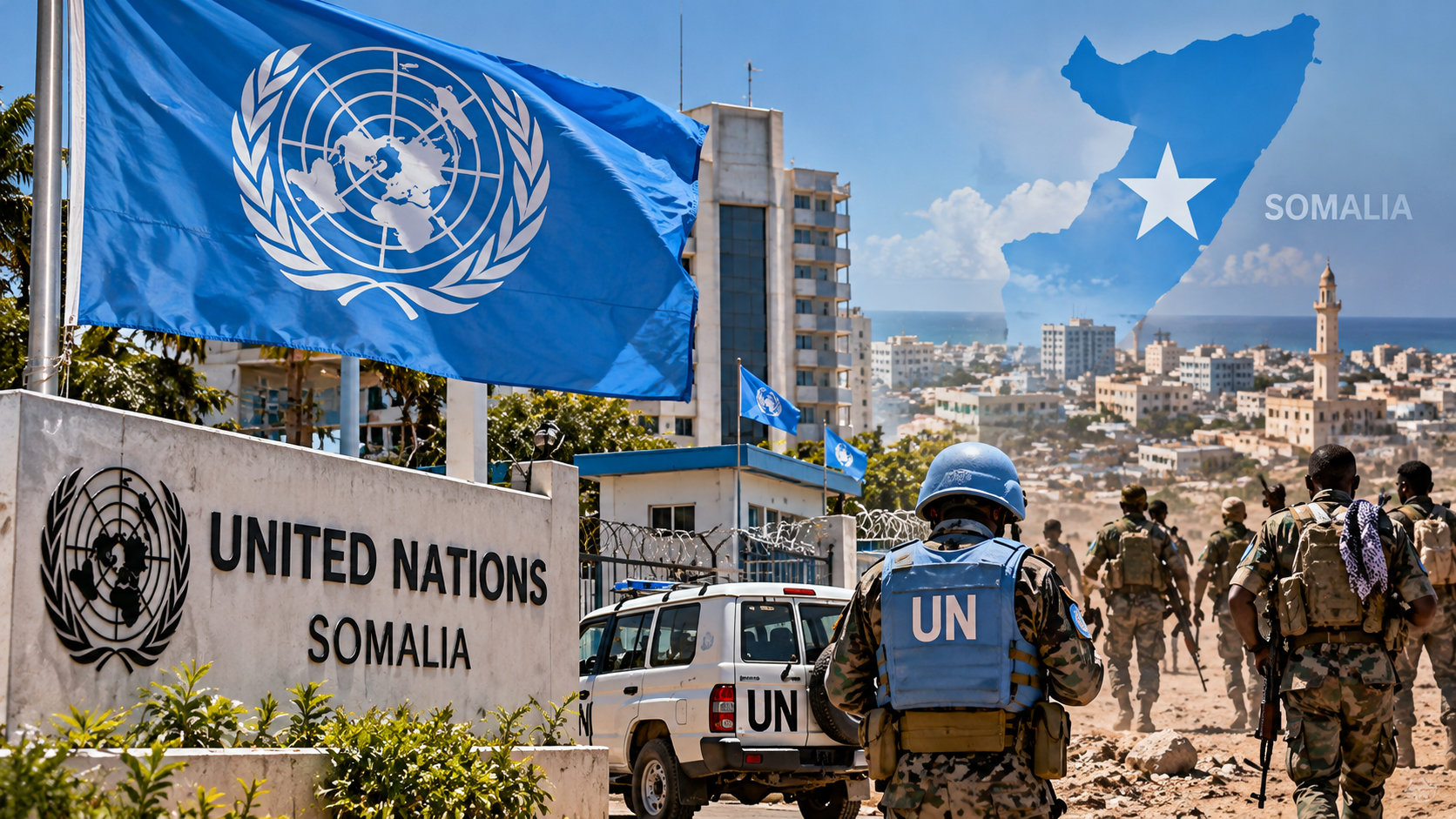
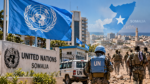
MOGADISHU, Somalia (HornPost) — The United Nations’ political mission in Somalia is ending after more than three decades of international engagement, leaving no agreed replacement to help resolve political disputes as tensions over elections and the president’s mandate continue.
The closure of the U.N. Transitional Assistance Mission in Somalia marks a significant shift in the country’s relationship with the international organization. The government has described the move as a milestone in Somalia’s ability to manage its own affairs, while opposition figures and analysts have warned of risks amid political divisions, militant attacks and worsening humanitarian needs.
Somalia’s government requested the mission’s closure in 2024. The U.N. Security Council subsequently approved a two-year transition designed to transfer its responsibilities to Somali institutions and other U.N. bodies.
The departing mission advised political leaders and supported efforts to resolve disputes. Although its political role is ending, African Union forces will continue supporting Somali troops fighting al-Shabab, while U.N. humanitarian agencies will remain in the country.
A separate U.N. office will also continue providing logistical support, including supplies and transportation, to African Union forces and some Somali security units.
Somalia’s Long Road to Rebuilding
Somalia’s central government collapsed in 1991 after the overthrow of longtime ruler Mohamed Siad Barre. Rival armed factions fought for control, leaving the country without an effective central government as conflict and famine devastated communities.
In 1992, the United States launched Operation Restore Hope to help protect humanitarian relief deliveries. The following year, 18 U.S. soldiers were killed during the Battle of Mogadishu, an episode that contributed to the withdrawal of American forces.
After U.N. peacekeepers withdrew in 1995 without securing a lasting political settlement, the organization established a civilian political office to support reconciliation and state-building.
That work contributed to Somalia’s transition from a prolonged transitional political system in 2012, when a provisional constitution was adopted, a federal parliament was formed and a president was elected.
Subsequent U.N. political missions supported elections, justice institutions and regional administrations under Somalia’s federal system. The missions also helped facilitate efforts to ease tensions between rival regional administrations.
Despite those efforts, disagreements over political authority and the distribution of power between the federal government and member states remain unresolved.
Political Disputes and Security Challenges Persist
The mission’s departure comes as Somalia faces continuing disputes over political leadership and the electoral process. Opposition figures have questioned the president’s right to remain in office, raising concerns about the absence of an agreed mechanism for resolving political disagreements.
Security remains another major challenge. Al-Shabab, an al-Qaida-linked militant group, continues to control areas of rural Somalia and launch attacks in Mogadishu and other parts of the country.
The Associated Press reported that at least 20 soldiers were killed in a recent attack in southern Somalia, citing an officer who survived an ambush. The government did not disclose troop casualties, and the reported death toll could not be independently verified.
Humanitarian pressures are also mounting. Recurring droughts and floods have damaged livelihoods, killed livestock and forced families from their homes. Aid agencies face funding constraints as needs for food, nutrition and emergency assistance remain high.
The end of the U.N. political mission therefore marks both a transition in international engagement and a test of Somalia’s ability to manage political disputes and strengthen its institutions without the same level of dedicated U.N. political support.
Source: AP
Prepared by:
HornPost staff
info@hornpost.com
www.hornpost.com