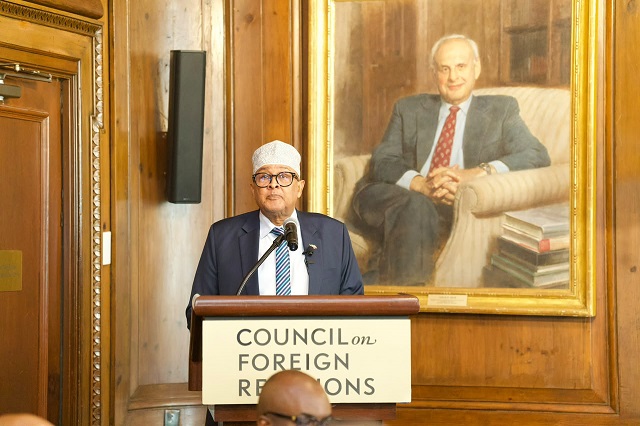
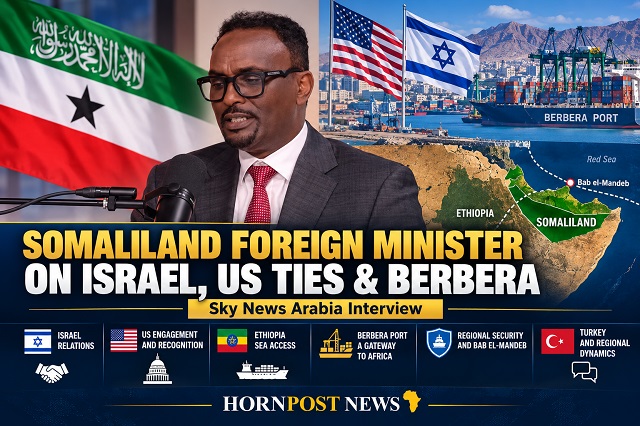
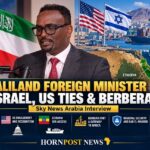
ABU DHABI (HornPost) foreign minister of the Republic of Somaliland Abdirahman Dahir Aden Bakal has defended his government’s diplomatic relationship with Israel, expressed optimism about closer engagement with the United States and reiterated Somaliland’s willingness to help Ethiopia secure access to the sea, outlining Hargeisa’s foreign policy priorities in an interview with Sky News Arabia in 17 minutes long.
Abdirahman Dahir Adan Bakal made the remarks on the Arabic-language program Bil Mantiq, hosted by Mohammed Al Hammadi.
The interview covered Somaliland’s international recognition efforts, regional security, relations with Turkey, Ethiopia’s maritime ambitions and plans to develop Berbera port as a regional trade gateway.
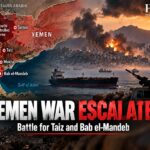
The minister presented Somaliland as a potential contributor to stability around the Red Sea and the Horn of Africa, arguing that its location near the Bab el-Mandeb Strait gives it strategic importance for international shipping.
Somaliland defends diplomatic ties with Israel
Bakal said Somaliland saw no fundamental obstacle to maintaining diplomatic relations with Israel, arguing that governments should be able to choose their international partners according to their national interests.
He said Somaliland and Israel were prepared to cooperate in areas where both sides identified mutual benefits, although he did not specify new agreements, projects or measurable outcomes resulting from the relationship during the interview.
The minister acknowledged that some Arab and Muslim-majority countries had criticized Somaliland’s relationship with Israel. He said Somaliland was willing to engage with those governments to explain its position and hear their concerns.
Bakal argued that diplomatic relations should not be dictated by other countries and said Somaliland was prepared to discuss the issue with regional partners.
His comments came amid wider regional disagreement over Somaliland’s international status and its relationship with Israel.
US engagement and recognition efforts
Asked about President Abdirahman Mohamed Abdullahi’s recent visit to the United States, Bakal described the trip as important and beneficial.
He said the US government had been receptive to Somaliland’s message and expressed confidence that the visit would produce positive results. He added that Hargeisa wanted to strengthen its relationship with Washington and raise cooperation to a higher level.
The minister highlighted Somaliland’s strategic position near the Gulf of Aden and Bab el-Mandeb, alongside its Muslim-majority population and record of maintaining internal stability, as factors he believed could strengthen its case for international engagement.
However, Bakal did not announce a US recognition decision, a formal commitment to recognition or a new bilateral agreement during the interview. His remarks reflected the Somaliland government’s assessment of the diplomatic discussions.
Dispute over alleged Israeli military facilities
The interviewer asked Bakal about statements by Somalia’s president concerning allegations that Israel was building a military or naval base in Somaliland.
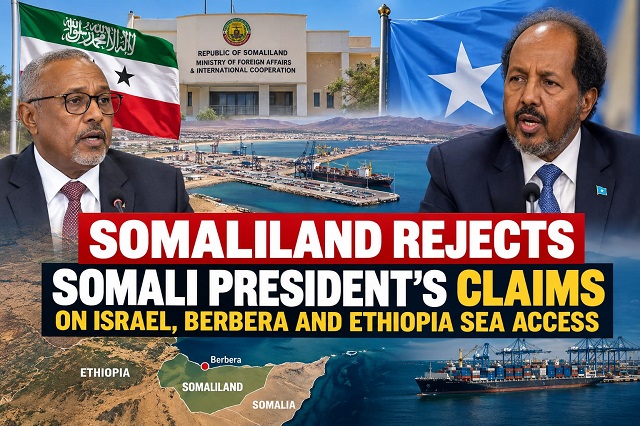
In response, the minister sharply criticized the Somali president and disputed his political legitimacy and knowledge of Somaliland. He argued that Somaliland’s elected leadership had the authority to establish diplomatic relations with countries it considered important to its interests.
The minister did not clearly confirm or deny the specific allegation of an Israeli military or naval base in the portion of the interview provided. The exchange therefore does not establish whether such a facility is being planned or built.
Bakal also referred to Somaliland’s 1990s referendum and its more recent presidential election as evidence of what he described as popular support for Somaliland’s political status and leadership.
His characterization of Somalia’s president and the legitimacy of Somalia’s federal government represents his political position; it was not independently established by the interview.
Somaliland reiterates support for Ethiopia’s sea access
Bakal described Ethiopia as one of Somaliland’s close partners and said his government understood the needs of the landlocked country, which has long sought reliable access to maritime trade routes.
He said Somaliland was prepared to discuss arrangements that would allow Ethiopia to use its coastline and port infrastructure, including Berbera. He described the two sides as having complementary interests and said dialogue could take place at any time.
The minister said Berbera port was operating at approximately 30% to 40% of its capacity, leaving room for greater use. That figure was his estimate during the interview and was not independently verified in the transcript.
He also reiterated Somaliland’s commitment to discussing Ethiopia’s maritime needs, describing the country as an important economic partner.
The issue remains regionally sensitive because access to the sea involves questions of sovereignty, territorial integrity and competing regional interests. The interview did not announce a new implementation timetable or provide details of a final port-access agreement.
Berbera port as a gateway to Africa
Bakal said Somaliland wanted to develop Berbera into a major gateway for African trade, pointing to the port’s modern infrastructure and potential to serve Ethiopian and wider regional markets.
He said the port had been developed with the possibility of Ethiopian use in mind and argued that increased utilization could benefit both economies.
The minister’s vision places Berbera within a broader effort to expand Somaliland’s commercial links and strengthen its strategic role along the Gulf of Aden. However, the interview did not provide new investment figures, shipping forecasts or a timetable for additional infrastructure projects.
Response to Turkey’s position
The interview also addressed Turkey’s military and political relationship with Somalia and Ankara’s criticism of Somaliland’s ties with Israel.
Bakal said Somaliland had no inherent problem with Turkey and remained open to dialogue. He nevertheless argued that Ankara should respect Somaliland’s right to manage its own affairs and choose its diplomatic partners.
Minister Bakal questioned what he described as an inconsistency in Turkey’s position, referring to Turkey’s own long-standing diplomatic relationship with Israel.
The minister did not announce a new diplomatic initiative with Ankara or detail specific negotiations intended to address the disagreement.
Red Sea security and Bab el-Mandeb
Bakal said Somaliland’s location near Bab el-Mandeb gave it an important role in regional maritime security. He cited an estimate that between 12% and 15% of global maritime trade passes through the waterway.
He described Somaliland as one of the region’s more peaceful and stable territories and said it was ready to engage with neighboring countries and other partners on initiatives to support maritime security and regional stability.
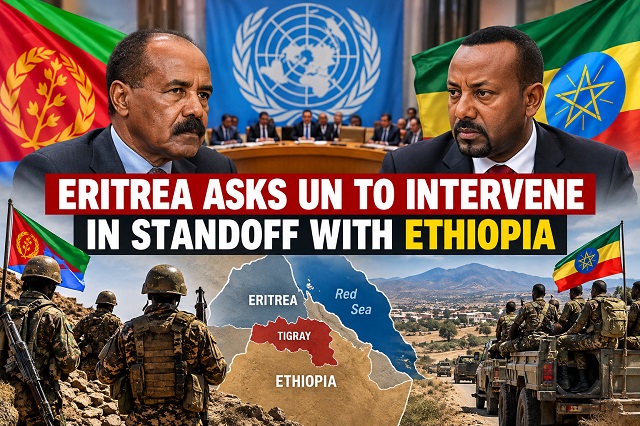
The minister also called for regional disputes, including tensions involving Ethiopia and Eritrea, to be resolved through dialogue. He said Somaliland was concerned about conflict in neighboring countries and was willing to help where possible.
The interview did not set out a specific new maritime-security agreement or joint initiative.
A foreign policy built around strategic partnerships
Across the interview, Bakal presented Somaliland’s foreign policy as an effort to expand diplomatic recognition, strengthen ties with the United States, maintain its relationship with Israel, deepen economic cooperation with Ethiopia and increase the strategic value of Berbera port.
His remarks also exposed areas of regional friction, particularly over Somaliland’s international status, Turkey’s relationship with Somalia and allegations concerning possible Israeli military facilities.
While the minister expressed confidence in Somaliland’s diplomatic prospects, the interview did not announce a new recognition decision by the United States or a new agreement governing Ethiopia’s access to Berbera.
The central message was that Somaliland intends to pursue its own diplomatic and economic partnerships while presenting its location and port infrastructure as assets for wider Horn of Africa and Red Sea security.
Source: Interview transcript supplied from Sky News Arabia’s Bil Mantiq program, hosted by Mohammed Al Hammadi. Statements and figures attributed to the minister have not been independently verified unless otherwise indicated.
HornPost Staff is the editorial byline of HornPost.com, used for collaborative newsroom reporting, editorial content, and reports published by the Horn Post editorial team.
HornPost covers Somaliland, the Horn of Africa, Africa, the Middle East, and major international developments, with reporting focused on politics, governance, diplomacy, security, business, economics, and breaking news.
HornPost is committed to accurate, fair, independent, and responsible journalism.
Essential cookies enable basic functions and are necessary for the proper function of the website.
Name
Description
Duration
Cookie Preferences
This cookie is used to store the user's cookie consent preferences.
30 days
Google's current Sign in with Google client library. It renders the Google sign-in button, or the One Tap prompt, so visitors can log in to your site with their Google account. It replaces the older Google Sign-In platform library.
Set on your own domain by the Sign in with Google client library. Records whether the visitor has dismissed the One Tap sign-in prompt and for how long it should stay hidden, plus the time the library last loaded and a browsing session id used for the same purpose. Sites that pass a custom state_cookie_name will see that name instead.
180 days
g_csrf_token
Set on your own domain by the Sign in with Google client library and submitted together with the sign-in credential, so your site can confirm the sign-in came from its own page and not from a forged cross-site request.
5 minutes
Statistics cookies collect information anonymously. This information helps us understand how visitors use our website.
Google Analytics is a powerful tool that tracks and analyzes website traffic for informed marketing decisions.
Used only with old Urchin versions of Google Analytics and not with GA.js. Was used to distinguish between new sessions and visits at the end of a session.
End of session (browser)
__utmz
Contains information about the traffic source or campaign that directed user to the website. The cookie is set when the GA.js javascript is loaded and updated when data is sent to the Google Anaytics server
6 months after last activity
__utmv
Contains custom information set by the web developer via the _setCustomVar method in Google Analytics. This cookie is updated every time new data is sent to the Google Analytics server.
2 years after last activity
__utmx
Used to determine whether a user is included in an A / B or Multivariate test.
18 months
_ga
ID used to identify users
2 years
_gali
Used by Google Analytics to determine which links on a page are being clicked
30 seconds
_ga_
ID used to identify users
2 years
_gid
ID used to identify users for 24 hours after last activity
24 hours
_gat
Used to monitor number of Google Analytics server requests when using Google Tag Manager
1 minute
_gac_
Contains information related to marketing campaigns of the user. These are shared with Google AdWords / Google Ads when the Google Ads and Google Analytics accounts are linked together.
90 days
__utma
ID used to identify users and sessions
2 years after last activity
__utmt
Used to monitor number of Google Analytics server requests
10 minutes
__utmb
Used to distinguish new sessions and visits. This cookie is set when the GA.js javascript library is loaded and there is no existing __utmb cookie. The cookie is updated every time data is sent to the Google Analytics server.